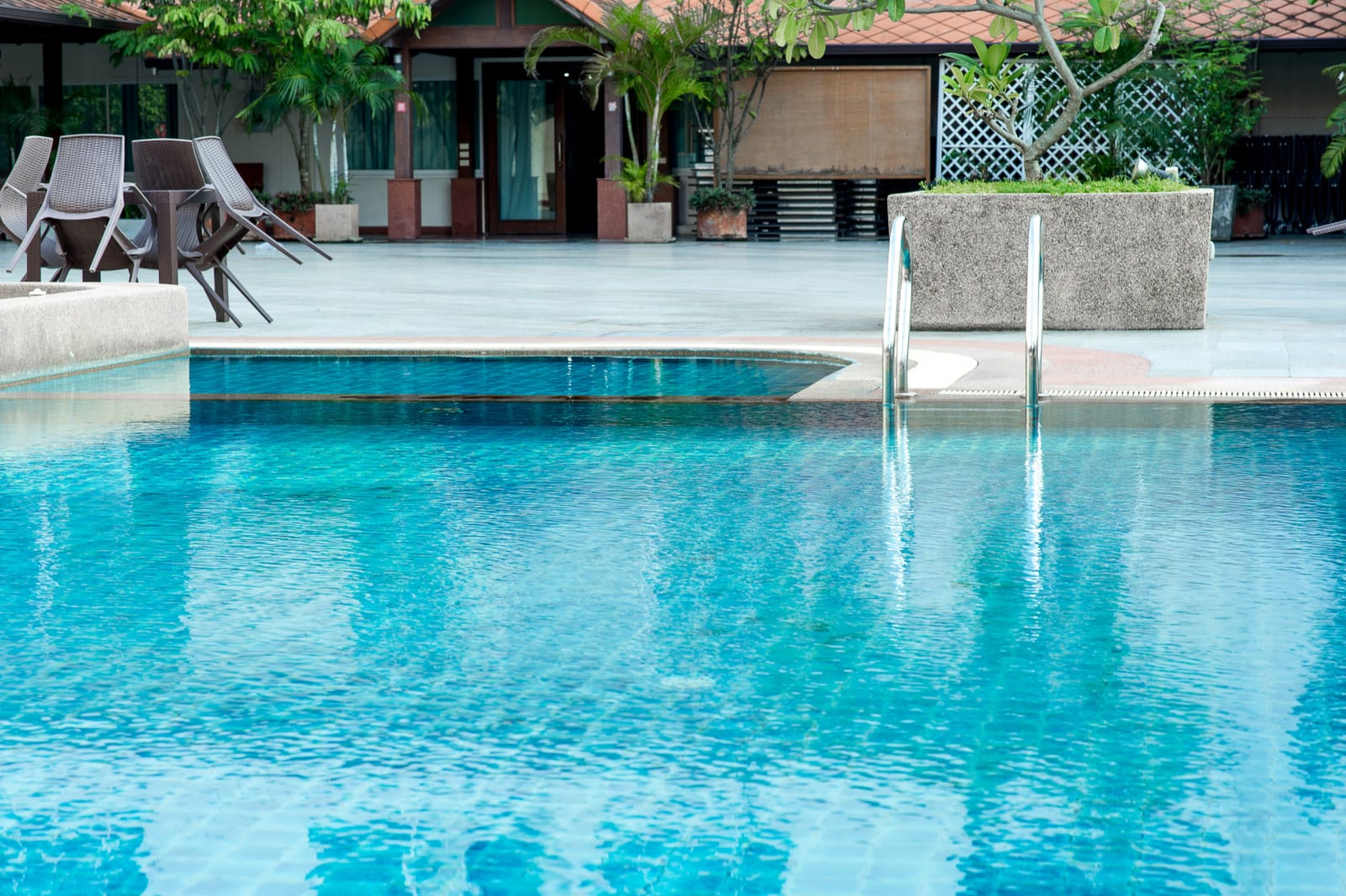
📌 Key Takeaway: Florida's year-round pool season and diverse metro markets — from Casselberry's tight-knit suburbs to Aventura's luxury corridor — make these five cities prime targets for pool service professionals ready to build a profitable, recurring-revenue route.
Why These Five Florida Cities Deserve Your Attention
Casselberry, Lutz, Aventura, St. Petersburg, and Miami Gardens each offer a distinct combination of population density, household income, and residential pool count that creates predictable, recurring demand. Understanding what makes each city tick puts you in a far stronger position to choose the right territory before you commit capital.
Florida's climate is a natural accelerator. Unlike northern states where pools close for five months, Sunshine State pools run 12 months a year — 52 service visits per account annually instead of 28. Any route you build here carries a structural earnings advantage that cold-weather markets simply cannot match.
Income matters too, because it shapes what homeowners will pay for reliable weekly service and repairs. The Census ACS 2024 put Florida's median household income at $74,568, which supports a broad base of households that can afford ongoing pool care. You can verify the statewide figure directly on Census data, dated December 31, 2024.
Casselberry: Steady Volume in Seminole County
Casselberry sits in Seminole County with roughly 29,000 residents. The housing stock skews toward single-family homes built between the 1970s and 1990s — properties that almost universally include screened enclosures with in-ground pools. This older pool inventory creates a maintenance-heavy environment: aging equipment, worn plaster, and deteriorating tile grout mean more billable repair work on top of standard weekly service.
The city's tight-knit character is a business asset. Word-of-mouth referrals travel fast when homeowners trust their neighbors' recommendations, so a technician who delivers consistent, professional service can grow organically without heavy marketing spend. Route density here is favorable — addresses cluster in established neighborhoods, keeping drive time low and stops-per-hour high. Florida's statewide income profile supports that kind of recurring service model, since the market has enough household spending power to sustain ongoing care instead of sporadic cleanups.
Lutz: Tampa Suburb with Room to Scale
Lutz, in Hillsborough County, is a sprawling suburban community of around 25,000 that borders the greater Tampa metro. Lot sizes are larger than in Casselberry, which means longer pool deck perimeters, more water volume, and slightly higher chemical costs — but also customers who expect and budget for premium service.
The Tampa adjacency is strategically valuable. Once you've built density in Lutz, expanding into nearby Wesley Chapel, Odessa, or Land O' Lakes requires minimal repositioning of your truck route. For operators who want to grow from a 40-account base to 150 accounts over two to three years, Lutz offers a logical geographic hub. Explore pool routes for sale to see current availability in this market. Statewide income levels also help support that expansion path, because recurring service is easier to sell when the local market has room in the budget for weekly maintenance.
Aventura: Premium Pricing in Miami-Dade's Luxury Corridor
Aventura is where market dynamics shift dramatically. This Miami-Dade city of roughly 40,000 residents is built around high-rise condominiums, gated communities, and waterfront estates. Pools here are often larger, feature resort-style amenities — spas, waterfalls, infinity edges — and are subject to HOA requirements for documented, licensed service providers.
That regulatory environment works in your favor. Homeowners in Aventura hire insured professionals with branded vehicles and digital service records — not the cheapest option on Craigslist. Monthly billing rates run meaningfully higher than in inland markets, and churn is lower because switching costs (HOA re-approval, documentation gaps) create real friction. The return per account justifies the investment. Florida's median household income, reported by the Census ACS 2024 at $74,568, reinforces why premium service has a market here: the state has enough purchasing power to support both everyday maintenance and higher-end service expectations.
St. Petersburg: Scale and Stability in Pinellas County
With a population exceeding 250,000, St. Petersburg is the largest market in this group and the one that offers the most straightforward path to a high-account-count route. The city's diverse neighborhoods — from Snell Isle waterfront properties to bungalow-dense Kenwood — span nearly every price tier, giving you flexibility to build a mixed portfolio of residential and light commercial accounts.
Commercial accounts — condo associations, apartment complexes, boutique hotels — are worth pursuing in St. Pete because they anchor your revenue base. A single commercial contract can equal eight to ten residential accounts in monthly billing, and commercial clients rarely cancel on short notice. The city's ongoing downtown revitalization has increased short-term rental inventory that requires consistent, documented pool care. That mix of density and demand fits Florida's broader income profile, since service buyers here are spread across a wide range of household budgets rather than concentrated in only one niche.
Miami Gardens: High-Density Residential Demand
Miami Gardens, also in Miami-Dade County, has a population of over 110,000 in a relatively compact geographic footprint. That density is a route operator's friend: you can pack more stops into a shorter drive radius than in sprawling suburban markets. The city is heavily residential, with thousands of single-family homes — many with small-to-medium in-ground pools that require standard weekly maintenance.
Profit margins in high-density markets often exceed those in spread-out suburbs because your labor-to-drive-time ratio improves. A technician spending 15 minutes on a pool and two minutes in transit is far more productive than one spending equal time driving between stops. Building route density in Miami Gardens from day one protects your margins as fuel and labor costs rise. Florida's 2024 income level helps keep that demand steady, because the state has a large enough middle-income base to support recurring service without turning every customer into a price shopper.
Comparing Markets: What the Numbers Mean for Your Business
All five cities share Florida's structural advantages — warm climate, year-round service calendar, and a large installed base of residential pools. Where they diverge is in pricing power and growth strategy.
Casselberry and Lutz suit operators who want a manageable entry point with clear expansion paths into adjacent zip codes. Aventura suits operators willing to invest in a premium market and hold accounts long-term. St. Petersburg suits those who want scale, market diversity, and access to both residential and commercial segments. Miami Gardens suits operators who prioritize route density and operational efficiency over per-account billing rate.
Florida's median household income of $74,568, reported by the Census ACS 2024, is the kind of statewide backdrop that keeps all five markets attractive. It supports a broad pool-owner base, not just a luxury segment, which is why pool service remains a recurring-revenue business instead of a one-time cleanup trade. The best choice depends on your starting capital, your tolerance for longer sales cycles, and whether you want a concentrated premium route or a high-volume density route.
How to Acquire Accounts Without Starting from Zero
Building a route from scratch — door-knocking, waiting for referrals — can take 18 to 24 months to reach a revenue level that supports a technician's salary. Acquiring an existing route compresses that timeline to weeks. Pool routes for sale through Superior Pool Routes come with accounts, documented billing histories, and defined service addresses, so revenue starts on day one.
Routes are priced on monthly recurring billing, and you select the account count and zip codes that match your plan. Training, account-replacement warranty, and ongoing support are included — you're buying a functioning business, not just a list of addresses. In a state where the median household income sits at $74,568, that model makes sense because the customer base is large enough to sustain steady billing across multiple price points.
Building Long-Term Value in Any of These Markets
Regardless of which city you choose, the fundamentals that build route value are the same: low customer churn, documented service records, and a reputation for reliability. Florida's climate ensures demand never disappears; your execution determines how much of that demand converts into an asset you can hold, grow, or eventually sell at a multiple of monthly billing. Each of these five cities gives a committed operator the raw material — the question is whether you're ready to capture it.
Related Articles
- Pool Routes For Sale Florida: Orlando, Orange County; Clearwater, Pinellas County; Miami Gardens; Southwest Ranches; Sanford
- Pool Routes for Sale in Florida: Comparing Jacksonville, Miami, Tampa, Orlando, and St. Petersburg – Discover Pool Routes
- High-Demand Areas for Pool Services in Miami Gardens, Florida
- How Profitable is the Pool Business: Oviedo, Daytona Beach, Boynton Beach, New Smyrna Beach, Miami Gardens, FL