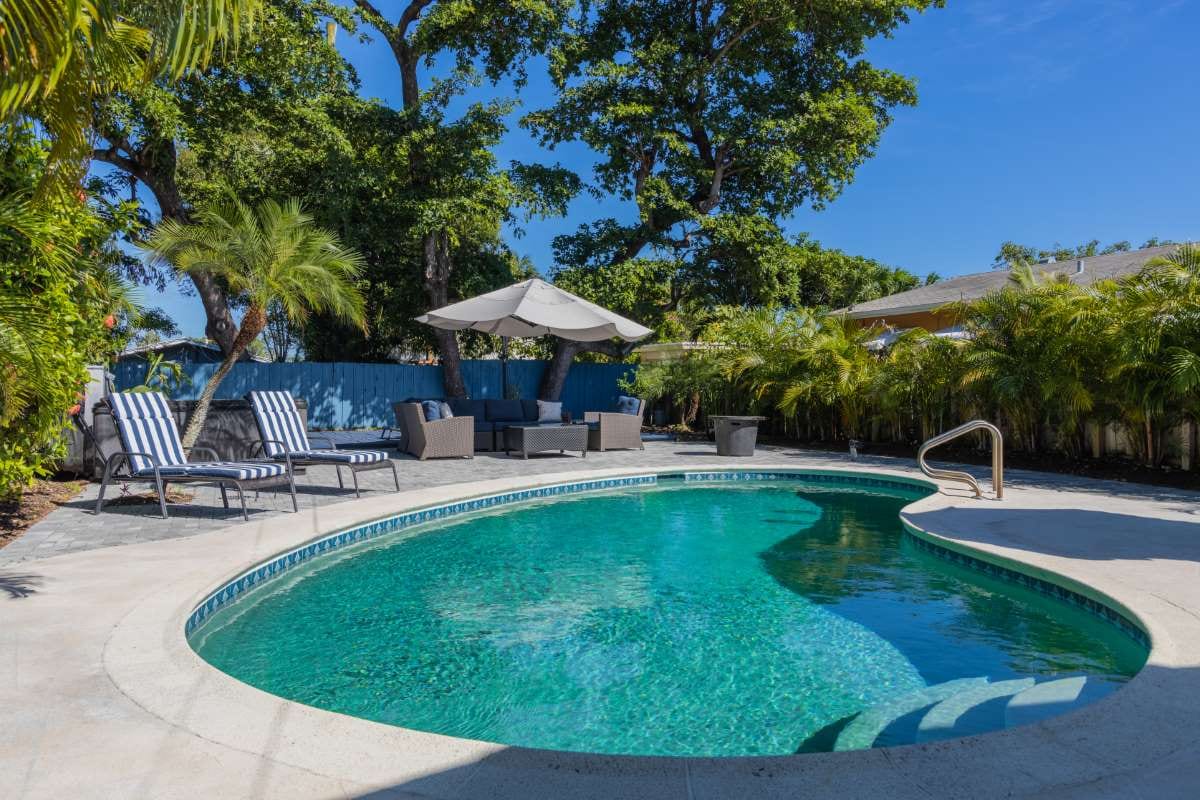
📌 Key Takeaway: Pool service businesses thrive in warm-weather markets because pools get used more, need more upkeep, and stay part of daily life for homeowners in places like Florida and Texas.
Warm-weather markets create steady demand for pool service because the climate turns pool care into a routine need, not an occasional task. Homeowners in hotter states use their pools more often, and that added use means more cleaning, chemical balancing, and equipment checks. For operators, that translates into predictable work and recurring revenue. If you are evaluating pool routes in Florida or Texas, the core advantage is simple: the weather keeps the service need visible all year.
Arizona fits the same pattern in a different way. The Census ACS 2024 profile puts Arizona’s median household income at $79,964, which supports a market where homeowners can keep up with ongoing pool care and regular maintenance. That matters because pool service is not just about climate; it is also about whether households can sustain recurring service without hesitation. See the Census profile here: Arizona median household income, dated December 31, 2024.
The business case is strongest where pools are common and outdoor living is part of how people use their homes. In those markets, a pool is not just a backyard feature. It is part of the property’s everyday function. That is why service demand stays durable. A homeowner may delay a patio project or a cosmetic upgrade, but they do not ignore cloudy water, algae, or a pump that is not running correctly. Pool care is tied to safety, appearance, and equipment life, so the work keeps coming back.
Why Warm Climates Support Pool Service Revenue
Warm climates help pool service companies because the need is continuous and easy for customers to understand. When temperatures stay high, pools are used more frequently and exposed to more debris, evaporation, and chemical imbalance. That creates recurring service needs that cannot be pushed off for long without visible problems.
Florida and Texas are strong examples because both states combine heat, dense housing, and heavy pool ownership. In those markets, a pool route can support steady work because the customer base is naturally larger than in cooler regions. The volume matters. More pools in one area means tighter routes, less windshield time, and better operational efficiency. That is one reason pool routes remain attractive in warm-weather markets: density improves both service quality and route economics.
Arizona shows how the same logic works in a dry climate. High sun, heat, and seasonal debris keep service needs in front of the homeowner, and the state’s household income levels help support recurring maintenance. That combination makes pool care feel like a normal household expense rather than an optional add-on.
This is also why new housing growth matters. When neighborhoods keep expanding, more homes enter the service cycle. A new pool owner usually wants help quickly, especially if they are new to balancing water chemistry or maintaining equipment. For operators, that creates a practical opening to add accounts and build a route with consistent demand.
Consumer Demand Comes From Daily Use
Consumer demand in warm-weather markets is driven by how often people actually use their pools. In cooler climates, a pool may be treated like a seasonal luxury. In Florida, Texas, and similar regions, it is often part of the weekly routine. Families swim more, entertain more, and notice problems faster. That changes how they view service.
Homeowners also care more about convenience in these markets. If the pool is used often, they do not want to spend time testing water, cleaning baskets, or troubleshooting equipment. They want the pool ready. That is where professional service becomes valuable. The more the pool gets used, the more obvious the benefit of regular maintenance becomes.
A practical example makes this easy to see. A homeowner in South Florida who hosts guests on weekends and uses the pool during the week will notice water clarity issues quickly after a storm or a stretch of heavy use. If a technician is already scheduled on a recurring route, the problem gets handled before it becomes a bigger repair. That is the real advantage of warm-weather service work: the customer sees the value of consistency because the pool is part of normal life, not an occasional project.
Arizona households make the same calculation for different reasons. The climate pushes pools into regular use, and the service buyer has to decide whether to handle maintenance personally or pay for dependable help. In a market where the pool is part of daily living, professional service usually wins because it saves time and prevents avoidable problems.
Route Density Improves the Economics
Route density is one of the biggest reasons pool service businesses do well in warm-weather markets. When accounts are clustered, operators spend less time driving and more time servicing pools. That improves productivity and keeps costs under control. It also makes it easier to deliver dependable service, which helps retention.
This matters when building or buying pool routes because the shape of the territory affects the business outcome. A dense neighborhood with many pool owners is easier to service than a scattered area with long drives between stops. In warm states, there are more neighborhoods where this density is possible. That gives operators room to build practical routes that support long-term growth.
Density also helps when fuel costs rise. Operators with tighter routes absorb that pressure better than scattered competition because they are not wasting time and gas crossing wide service areas. The work stays efficient, and the route stays easier to manage. That stability is one of the reasons pool routes hold up well in warm-weather markets.
Why a Customer Base Matters So Much
A strong customer base gives a pool route real value because it turns demand into recurring work. In this industry, the goal is not to chase one-off jobs. The goal is to service pools on a repeat schedule and keep the route moving. When customers already expect regular service, the business starts with momentum.
That is why buyers focus on route quality and retention. A route with reliable recurring accounts is easier to operate than a patchwork of one-time calls. The customer knows when service happens, what is covered, and who is responsible. That predictability benefits both sides. The homeowner gets consistency, and the operator gets revenue that is easier to forecast.
This is also where training matters. Even in warm-weather markets, pool care still requires skill. Water chemistry, equipment checks, and customer communication all affect retention. Superior Pool Routes includes training because a route only performs well when the operator knows how to run it. Good service protects the customer base, and a protected customer base supports long-term business value.
Florida and Texas Offer Different Strengths, Same Core Advantage
Florida and Texas both support strong pool service businesses, but they do it in slightly different ways. Florida has year-round pool use and a deep pool culture. Texas combines heat with large metro areas and expanding suburbs. In both states, the climate keeps the service need alive and visible, but the local market shape changes how operators build routes.
Florida often rewards operators who understand neighborhoods with heavy residential pool use, seasonal residents, and weather-related cleanup. Texas brings scale, especially in major metro areas where new development continues to add homes with pools. The common thread is simple: both states support recurring service because the climate makes pool care a regular necessity.
Arizona adds a third version of the same model. The market is shaped by heat, sunlight, and year-round use, but the income profile also matters. The Census ACS 2024 figure of $79,964 for median household income suggests a customer base that can support professional upkeep, which is exactly what makes pool routes viable in that state.
That is why pool routes in these states remain attractive to both first-time buyers and existing companies expanding into new territory. The demand is not built on a trend that fades quickly. It is built on weather, housing, and household habits. Those are durable market forces.
What Operators Need to Do Well
Success in warm-weather pool service markets still depends on execution. The climate may create demand, but the operator has to deliver clean work, reliable communication, and consistent scheduling. Customers stay when they trust the service and see the results week after week.
Training makes that easier. Superior Pool Routes provides support so new owners can learn the business without guessing through the hardest parts. That matters because pool service combines fieldwork and business management. The technician has to understand chemistry and equipment, but the owner also has to manage routes, pricing, and customer expectations. Good training shortens the learning curve and reduces avoidable mistakes.
It also helps to keep the operation simple and disciplined. Operators who show up on time, communicate clearly, and handle small issues before they grow into big ones tend to hold customers longer. That is especially true in warm-weather markets, where people use their pools often and notice service quality immediately.
Market Trends Point Toward More Opportunity
Warm-weather pool markets continue to support growth because the underlying demand drivers remain in place. Homeowners still want outdoor living spaces, and pools still require ongoing maintenance. As long as people use their pools often, service work will stay necessary.
Technology is changing how some of that work gets done. Smart monitoring, automation, and better equipment make certain tasks easier to manage, but they do not replace the need for service. A pool still needs inspection, cleaning, and maintenance. Technology helps operators work smarter, but it does not remove the recurring need that makes the business valuable.
Real estate growth also supports the outlook. New homes with pools create new accounts, and warm states continue to attract residents who want outdoor space and year-round pool use. That combination keeps the market healthy. For operators, the opportunity is not just in new account creation. It is also in serving the steady demand that already exists.
Warm-Weather Markets Reward Consistency
Pool service businesses thrive in warm-weather markets because the work is tied to daily use, climate, and housing patterns. Pools need attention in Florida, Texas, and similar states because people rely on them more often and expect them to be ready. That creates recurring demand, and recurring demand supports stable routes.
For buyers and operators, the smartest move is to focus on route density, service quality, and training. A well-run pool route in a warm state can produce dependable income because the customer need does not disappear when the season changes. The climate keeps the work active, and the service model keeps it recurring. That is why pool routes remain one of the most practical business models in warm-weather markets.
Related: Florida
Related: Texas