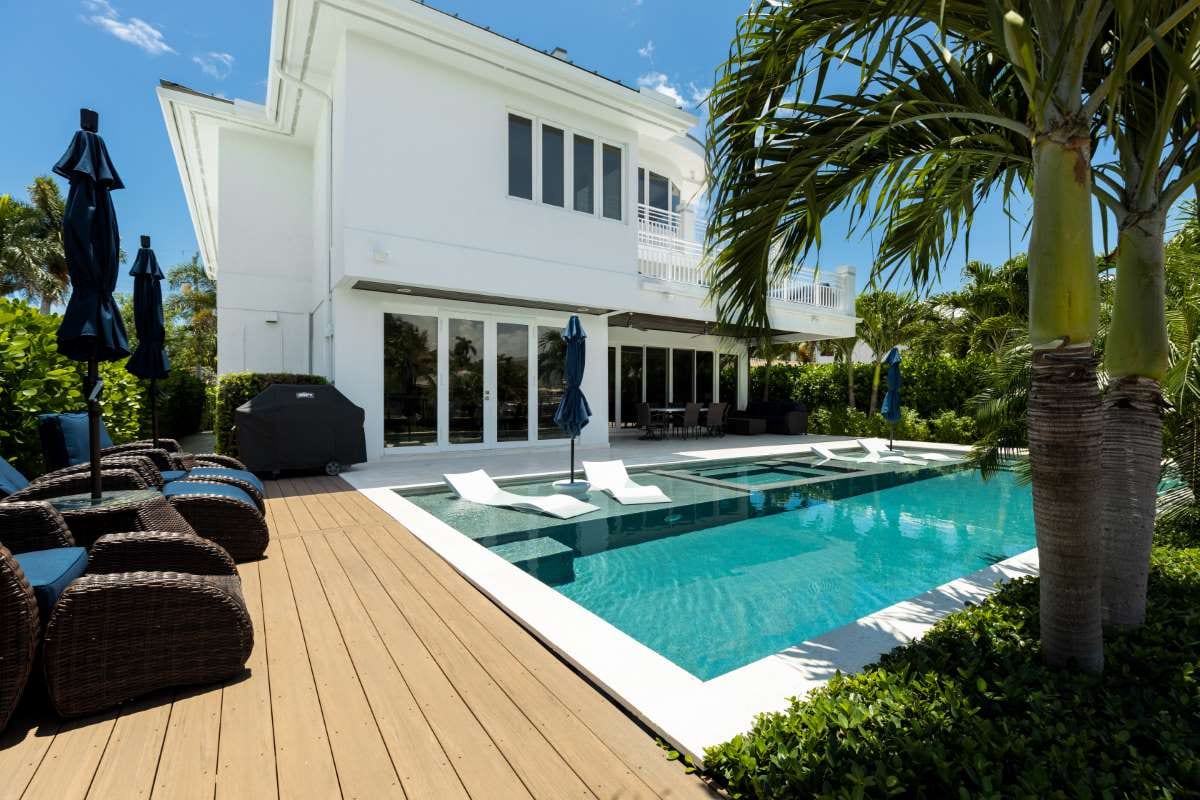
📌 Key Takeaway: Warm climates keep pool routes busy year-round, which makes them a steady, practical business for operators who want predictable work and recurring revenue.
Pool route businesses work well in warm climates because the service need does not disappear when the weather turns hot. Pools still need brushing, skimming, chemical balancing, equipment checks, and repairs. That creates a dependable rhythm for operators and a dependable result for customers.
Arizona is a good example of how climate and economics overlap. The state's median household income was $79,964 according to the Census ACS 2024 profile dated December 31, 2024, which reflects a large customer base with ongoing demand for home services. You can see the source directly on Data.Census.gov.
The strongest markets are in states like Florida, Texas, Arizona, Nevada, and California. In each of those places, pools are part of daily life, not a seasonal luxury. That matters because a pool route business is built on repetition. The more consistent the climate, the easier it is to plan routes, retain customers, and grow with less downtime.
Why Warm Climates Keep Pool Routes Moving
Warm weather turns pool care into a routine necessity. When families use their pools often, they notice water clarity, chemical balance, and equipment issues faster. That means more consistent service calls and less of the stop-start cycle that colder regions deal with.
Vacation markets add another layer of demand. Homes with private pools are attractive rentals, and rental properties cannot afford neglected water or broken equipment. Property managers need reliable service because a bad pool can quickly lead to complaints, refunds, or lost bookings. For a pool route operator, that means more account stability and more reasons for customers to stay on schedule.
Warm climates also support pool ownership as part of the local lifestyle. In these markets, a pool is not something that sits unused for half the year. It is an active part of the property, so maintenance becomes a recurring necessity rather than an occasional task. That creates the steady business base that route owners want.
Arizona shows how that works in practice. Sun exposure, dust, and monsoon debris keep service needs front and center, so even a well-kept neighborhood can generate constant attention. The market rewards operators who stay organized and respond fast.
The Business Model Works Because It Stays Simple
Pool route businesses are attractive because the operating model is straightforward. The work is recurring, the service area is defined, and the overhead stays manageable compared with many other service businesses. You do not need a storefront to clean pools, and you do not need a large facility to keep the work moving.
That simplicity matters. A route business can often be run from a truck, a van, or a home office. The business depends more on consistency and organization than on expensive infrastructure. That gives new owners a realistic way to enter the industry without taking on the kind of overhead that can bury a small operator before the business has time to grow.
The recurring service model is the real advantage. Pools need regular attention, so billing and scheduling can be planned around repeat visits instead of one-off jobs. That helps cash flow and makes the business easier to manage. In warm climates, where service does not slow down as dramatically, that repeat work becomes even more valuable.
In Arizona, that steadiness matters even more because the route is not fighting a short season. Heat keeps the work relevant, and the operator can plan around predictable demand instead of chasing it.
A Real-World Example: Why One Neighborhood Can Support Steady Work
Consider a suburban neighborhood in Florida where several homes have screened-in pools and a few rentals sit nearby. One pool owner misses a week of service and notices cloudy water after a storm. A property manager then calls because a guest stay is approaching and the pool needs to look right. A third customer wants a quick filter check because debris has built up after a windy afternoon.
That kind of day is common in warm climates. The work is not limited to a single emergency. It stacks naturally because pool ownership creates overlapping needs across the same service area. For the route owner, that means one neighborhood can generate repeat work, referrals, and predictable scheduling without long drive times between stops. Route density is what turns the climate advantage into real business efficiency.
This is also why warm-weather operators often gain an edge over scattered competition. When accounts sit close together, fuel costs and windshield time matter less. The route becomes more efficient, the day stays organized, and the business can absorb higher operating costs better than a spread-out service model.
That same logic helps in Arizona, where concentrated neighborhoods around the Phoenix metro give operators room to build efficient daily work. Stronger route density keeps the business practical even when temperatures stay high.
Local Connections Help the Business Grow
Warm climates often come with dense networks of pool owners, property managers, builders, and service professionals. Those relationships matter because pool service is still a local business. Referrals can come from a realtor, a contractor, or a property manager who wants a dependable name to recommend.
Targeted outreach also works better in these markets. Instead of trying to chase every possible customer, an operator can focus on neighborhoods with a strong concentration of pool ownership. That makes marketing more efficient and keeps the service area easier to manage. Local visibility builds trust faster when the customer base already understands that pool care is part of everyday life.
For newcomers, community knowledge can shorten the learning curve. Warm-climate operators usually understand the local mix of water issues, weather patterns, and customer expectations. In Arizona, for example, intense sun and monsoon debris create different service demands than what operators see in coastal Florida. In Texas, heat and freeze events both matter. In California, water use concerns and higher labor costs shape how routes are planned. The market rewards operators who know their area and service it well.
Arizona's income profile also supports that local model. The Census ACS 2024 figure dated December 31, 2024 shows a market where homeowners can support regular service when the operator delivers consistent value. That is the kind of environment where pool routes stay practical.
Superior Pool Routes Fits This Market
Superior Pool Routes gives entrepreneurs a direct way into this kind of business without having to build everything alone. The company offers pool routes for sale in Florida, Texas, Nevada, Arizona, and California, and the model is designed for people who want a clear path into pool service.
That matters because the hard part for many new operators is not understanding the value of the business. It is figuring out how to start with structure instead of guesswork. Superior Pool Routes builds routes on demand, provides training, and supports the buyer through the transition. That makes the first phase of ownership much easier to manage.
The company also offers Pool Routes Training, which helps owners handle both the technical side of service and the customer-facing side of the job. That combination matters in warm climates, where expectations are high and customers want consistent results. New owners who know how to balance water, spot equipment problems, and communicate clearly are far more likely to keep accounts happy.
The account replacement warranty adds another layer of confidence. If accounts are lost, the warranty helps protect the buyer’s position and keeps the business moving forward. For someone entering the industry, that kind of support reduces risk without changing the basic appeal of the model: a route business built around recurring service in a market that needs it every week.
Why Warm Climates Reward Consistency
The best pool route operators in warm climates do not rely on dramatic growth stories. They win by being consistent. They show up on time, keep water clean, watch equipment closely, and communicate when something changes. That kind of service keeps customers longer because pool owners value reliability more than flashy promises.
Warm climates reward that approach because the work keeps coming. There is less seasonal interruption, fewer months of inactivity, and more reason to keep a route tight and organized. A good operator can build on that stability by improving route density, tightening scheduling, and keeping service standards high.
That steady cadence is one reason pool routes remain a strong business choice. The climate supports the service, the service supports recurring revenue, and the route structure gives owners room to grow without taking on unnecessary complexity.
Arizona makes that point especially clearly. A market with year-round use, strong household income, and constant environmental pressure gives disciplined operators room to build a durable business. The advantage comes from consistency, not luck.
Warm Climates Keep Pool Routes Strong
Warm climates create the kind of environment pool route businesses need: regular demand, repeat service, and customers who treat pool care as part of everyday property upkeep. That is why states like Florida, Texas, Arizona, Nevada, and California remain strong markets for pool route operators.
For entrepreneurs, the appeal is simple. The business model is practical, the overhead stays manageable, and the work can be organized around repeat service rather than constant one-off sales. For existing pool companies, warm climates also offer room to expand into new areas with clear demand and reliable scheduling.
Superior Pool Routes continues to be a strong option for buyers who want to enter this market with training, support, and a proven structure. In a warm climate, that combination is hard to beat. Pool routes are steady, resilient, and built for the kind of recurring demand that makes a service business last.
Related: Superior Pool Routes
Related: Superior Pool Routes
Related Articles
- Why Pool Service Businesses Thrive in Warm-Weather Markets
- 10. Preventing Algae Growth in Humid vs. Dry Climates
- Discover how Superior Pool Routes ensures stability in account management and helps pool service businesses thrive with their tailored, cost-effective solutions.
- How Automation Helps Balance Water Chemistry in Hot Climates