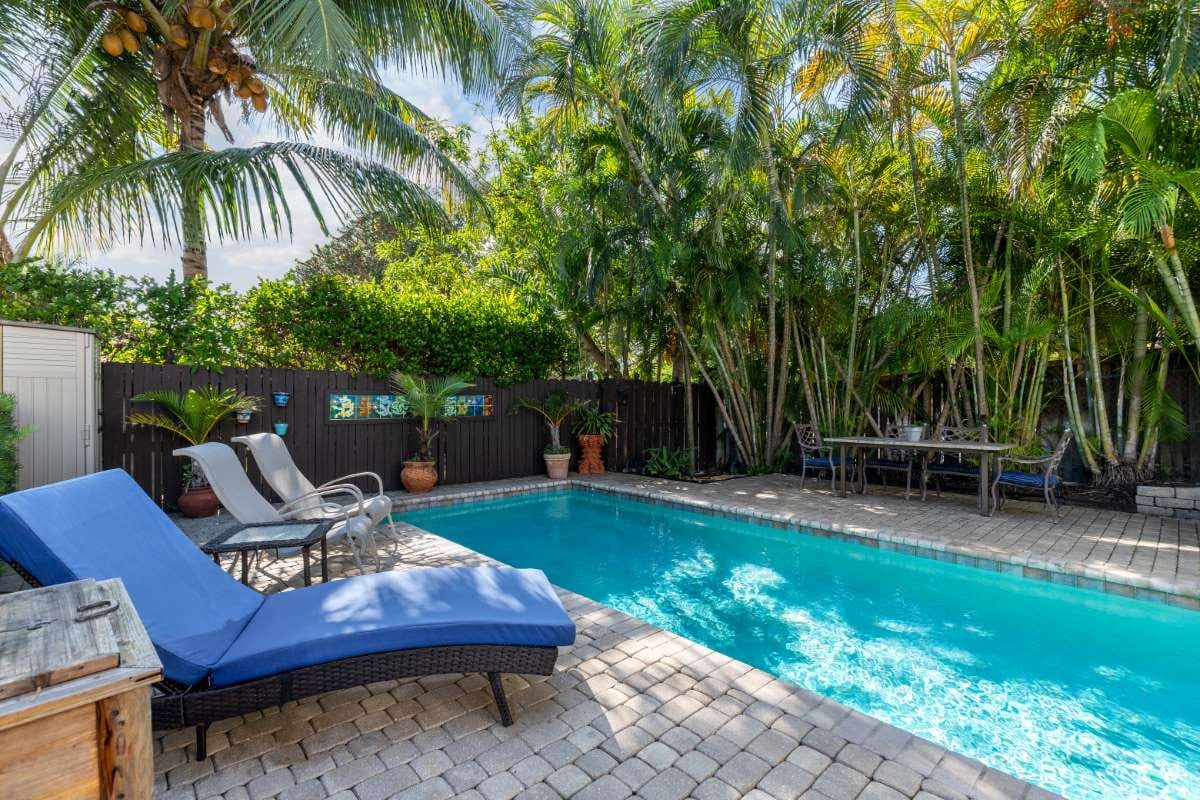
📌 Key Takeaway: A pool service route is a defined service area where a company cleans, balances, and maintains swimming pools on a recurring schedule.
Understanding Pool Service Routes
A pool service route is a defined area where a business provides ongoing maintenance and cleaning for swimming pools. In Florida and nearby markets such as Houston, Texas, Oviedo, Osprey, Pleasanton, and Sarasota, these routes make sense because warm weather keeps pools in regular use and creates steady demand for service. The business model is simple: serve a set group of accounts in a mapped territory, keep the work organized, and build a dependable monthly billing base.
That structure matters because pool service is local by nature. A route with clustered stops cuts drive time, keeps schedules predictable, and makes it easier to deliver consistent service quality. For an owner, that means less wasted time on the road and more time spent on the work that keeps accounts satisfied. For a buyer, it means a business model that is easier to manage than scattered one-off jobs.
A good way to picture it is this: a technician in Sarasota can spend a full morning in one neighborhood, clean several pools, test water, and handle minor equipment checks without bouncing across the county. That kind of route density improves efficiency immediately. It also shows why pool routes can hold up well even when fuel costs rise or labor gets tighter. Dense routes absorb those pressures better than spread-out work, and that makes the business easier to run day after day.
Texas adds another angle. The EIA monthly electricity data reported residential retail power at 16.39¢/kWh in March 2026, and then 16.99¢/kWh in April 2026, up 0.60¢ month over month. In a market like Houston, that kind of operating pressure makes route density even more valuable because shorter drives and tighter scheduling help protect margins.
Florida household income also helps explain why service demand stays durable. The Census ACS 2024 profile for Florida, dated December 31, 2024, shows a median household income of $74,568. That level of spending power supports recurring pool care because many owners would rather pay for reliable upkeep than let a pool slide into costly repairs. It also gives operators a clearer base for monthly service planning across markets like Sarasota and Oviedo.
That same logic applies when utility costs move up. Operators with compact routes can keep more of the day focused on service instead of travel, and that helps stabilize the business when operating expenses rise. It is a practical advantage, not a theoretical one.
The Demand for Pool Services in Florida
Florida supports strong pool service demand because pools are part of daily life, not a seasonal luxury. Homeowners use them often, and that creates a constant need for cleaning, chemical balancing, filter care, and routine equipment checks. In cities like Sarasota, pool ownership is common enough that service becomes part of regular home upkeep.
That steady need gives route owners a practical advantage. Instead of chasing occasional repair calls, they can focus on recurring maintenance that keeps accounts on schedule and revenue moving predictably. Pool service is also relationship-driven. Homeowners value reliability, clear communication, and clean water, so a well-run route can grow through trust as much as through marketing.
Florida's household income supports that pattern too. The Census ACS 2024 profile for Florida, dated December 31, 2024, reports a median household income of $74,568. That matters because recurring service works best when customers have the means to prioritize upkeep instead of delaying basic care. The full Census profile shows the same baseline and makes the point clear: Florida households have the spending power that keeps routine pool care viable.
Florida also rewards operators who understand the local rhythm of service. Weather, heavy use, and storm cleanup can all affect pools quickly. An owner who knows how to stay ahead of algae, debris, and equipment issues can protect both the customer experience and the route’s reputation. That is one reason pool routes remain a solid business choice in the state.
The same income data also points to a practical point for buyers: recurring service depends on households that can absorb monthly upkeep without turning every small issue into a deferred repair. When that spending power is in place, the route has a stronger base to build on.
Houston: A Growing Pool Service Market
Houston, FL, has a growing population that values outdoor living, and pools fit naturally into that lifestyle. A pool service route in this market gives an owner access to accounts that need regular attention and dependable scheduling. The opportunity is not about chasing a one-time sale. It is about building a route that serves a local need month after month.
Growth also helps route economics. As more homeowners invest in pools, the need for maintenance follows. That creates room for a route owner to add efficiency, improve coverage, and build repeat business in one area instead of stretching across a wide map. The better the route density, the more time an owner keeps for service rather than travel.
Houston’s appeal is practical as well as residential. Homeowners who value outdoor spaces often want a service provider who shows up on time, keeps records straight, and prevents small issues from becoming expensive ones. A pool route in Houston can deliver that kind of consistency while giving the owner a business with predictable work.
Texas market conditions make that discipline even more important. The April 2026 EIA reading for residential electricity at 16.99¢/kWh puts more emphasis on scheduling, routing, and fuel control. Operators with dense routes are better positioned to handle those costs without letting service quality slip.
Oviedo: A Family-Friendly Community
Oviedo stands out because many families there keep pools for recreation, weekends, and everyday use. That makes service demand more than occasional. Pools in family neighborhoods see steady activity, and steady activity creates steady maintenance needs. For a route owner, that means regular work tied to a clear local pattern.
The advantage of serving a community like Oviedo is that professionalism gets noticed quickly. Families remember who communicates clearly, arrives on schedule, and keeps the pool ready for use. A route owner who performs well can earn trust one visit at a time, which is exactly how a durable service business grows.
Oviedo also illustrates a larger point about pool routes: the work becomes easier when the route fits the community. In family-oriented neighborhoods, service expectations are usually straightforward. Customers want clean water, safe chemistry, and a technician who does the job without disruption. That makes the route more manageable for a buyer who wants practical, repeatable work instead of constant uncertainty.
Osprey: A Relaxed Coastal Lifestyle
Osprey’s coastal setting supports a steady pool service rhythm. Residents invest in pools for relaxation, entertaining, and outdoor living, which means those pools need regular attention to stay ready for use. Warm weather keeps the work moving, and a good route can hold up well across the year.
A route in Osprey benefits from the same principle seen in other strong service areas: consistency matters more than flash. Owners who keep their schedules tight and their communication clear can build a reputation for dependable service. That reputation matters in a place where homeowners often care about presentation, cleanliness, and convenience.
Osprey also shows why pool service is a durable trade. People do not stop wanting clean water because the market changes. They still need the pool brushed, the chemistry checked, the baskets emptied, and the equipment looked over. A route owner who serves that need well can build a business that stays useful in any market cycle.
Pleasanton: Small-Town Charm
Pleasanton may be smaller than some of the other cities in this article, but smaller markets often reward good service even more quickly. When a community is tight-knit, word travels fast. A route owner who performs well can become known for dependable work, fair communication, and clean results.
That is why Pleasanton is a strong example of how local service businesses grow. In a smaller market, the route owner is not just a technician. The owner becomes part of the weekly routine for customers who rely on predictable visits. That consistency builds trust, and trust keeps accounts stable.
Small-town routes also have a practical benefit: they are often easier to manage if the work is clustered well. Less driving means less wasted time, and less wasted time means more efficient service days. A buyer who understands that can see why pool routes remain attractive even outside major metro areas. The business works because it solves a local problem in a repeatable way.
Sarasota: A Hub for Pool Ownership
Sarasota has a strong pool culture, and that makes it one of the clearest examples of why pool routes are worth serious attention. Many homes include pools, outdoor living is part of the lifestyle, and homeowners expect service that keeps everything looking and working right. A route in Sarasota can support that demand with recurring maintenance and a clear service plan.
The market also rewards quality. In neighborhoods where homeowners care about presentation, pool service is not just a chore. It is part of the property’s overall appearance and function. That means an owner who shows up consistently and handles details well can create strong customer retention over time.
Sarasota also illustrates the value of route density. When stops are grouped efficiently, an owner can service more pools in less time and keep the day moving. That efficiency matters in any market, but it is especially valuable in a place where homeowners expect a high standard of service. A well-structured pool route gives the owner a business that is both practical and scalable.
Benefits of Purchasing a Pool Service Route
Buying a pool service route gives an owner a clear path into a recurring service business. The main advantage is structure. Instead of starting from zero and trying to piece together accounts one by one, the buyer begins with a defined service area and a business model built around recurring work.
That structure creates several benefits. It gives the owner a more predictable schedule, a clearer map for daily operations, and a direct way to grow through service quality. It also reduces the guesswork that comes with building a business from scratch. In pool service, predictable work is valuable because it keeps billing steady and lets the owner focus on execution.
Florida's income profile supports that kind of recurring model. The Census ACS 2024 data for Florida, dated December 31, 2024, reports a median household income of $74,568. A market with that level of household income can support routine service because customers are more likely to keep maintenance on schedule rather than postpone it.
There is also long-term value in the business model itself. Pool service is tied to ongoing maintenance, not a one-time transaction. Pools need care every week, and owners usually want the same provider to handle that care consistently. That makes pool routes attractive for buyers who want something practical, local, and repeatable. When the route is dense and the accounts are well organized, the business becomes easier to run and easier to expand.
How to Choose the Right Pool Service Route
Choosing the right pool service route starts with geography. A buyer should look for a territory that makes sense for daily driving and service time. A route with tight clustering is usually easier to manage than one that stretches too far between stops. That matters because travel time reduces productivity and makes the day less efficient.
Account count is the next factor. A buyer needs enough work to make the route worthwhile, but not so much that the schedule becomes unmanageable. The right size depends on the owner’s experience, available labor, and service goals. A smaller route can work well for a new operator. A larger route can fit a company that already has systems and technicians in place.
Support matters too. A buyer should look for training that covers both technical service work and the business side of route ownership. Water chemistry, equipment checks, and customer communication all matter. So does learning how to keep the route organized. A strong purchase decision is not just about the accounts themselves. It is about whether the buyer can operate them efficiently from day one.
The Purchasing Process
The process of purchasing a pool service route is straightforward. First, you choose the number of accounts you want to manage, typically ranging from 20 to 200. Next, you select the city or zip code that fits your operating plan. Once those pieces are in place, you complete a purchase order with the account details and monthly billing information. After that, training is provided if needed, and you can usually begin receiving accounts within a couple of weeks.
That process works because it keeps the transaction organized. Buyers know what territory they are entering, what kind of workload they are taking on, and how the route will be built. For a first-time owner, that clarity matters. For an existing company, it makes expansion easier because the company can add service territory without reinventing its system.
The key point is that route buying is not a mystery. It is a controlled business decision. The buyer chooses a size, chooses a market, and gets a service area built to match. That is one of the reasons pool routes remain attractive to operators who want a path into recurring revenue.
Training and Support
Superior Pool Routes includes training so buyers know how to manage their new pool service route effectively. That training can be in the field or virtual, and it covers the practical parts of the business: pool maintenance, chemistry, service routines, and customer communication. The goal is not to overwhelm the buyer with theory. The goal is to get the buyer ready to work.
Training matters because pool service combines technical skill with consistency. A route owner needs to know how to spot a problem early, keep water balanced, and handle common service tasks without slowing the day down. Good training shortens the learning curve and helps the buyer avoid mistakes that could hurt customer satisfaction.
Support also matters after the sale. A buyer should not feel stranded once the route begins. Clear guidance, responsive communication, and practical instruction make it easier to turn a new route into a stable business. Since 2004, Superior Pool Routes has built its reputation on helping buyers make that transition with confidence.
Testimonials from Satisfied Clients
Client feedback usually points to the same themes: the process is clear, the training is useful, and the business model makes sense. That matters because pool route buyers want more than a promise. They want evidence that other operators have taken the same path and used the support to get moving.
Testimonials also reinforce an important part of the business: confidence comes from execution. When buyers hear that others have been able to learn the process, manage the work, and build their own business, the route model becomes easier to trust. That is especially true for first-time buyers who want a practical business rather than a speculative one.
You can read more about those experiences on our Testimonials page. The stories there show how pool routes can give buyers a clearer path into business ownership while keeping the work grounded in real service.
Why Choose Superior Pool Routes
Superior Pool Routes has been in the pool route business since 2004, and that experience shows in how the company structures its offers. Buyers get clear territory options, straightforward route building, training, and support. The result is a business model that is easier to understand and easier to launch.
We also focus on helping buyers match the route to their goals. Some want a smaller service area they can manage personally. Others want a larger route they can grow with a team. The value is in having a route built for the buyer instead of forcing the buyer to fit some generic package.
That direct approach is part of why buyers continue to work with Superior Pool Routes. The company knows the market, knows the work, and knows how to help new owners get started without unnecessary confusion. If you want to compare options and understand the process in more detail, How It Works is the next place to look.
Frequently Asked Questions
Buyers usually ask the same core questions before they move forward. They want to know how to get started, what kind of monthly billing to expect, and how the route is built. Those are the right questions to ask because they get to the heart of the business: territory, workload, and recurring revenue.
Florida households are part of that answer. The Census ACS 2024 profile for Florida, dated December 31, 2024, reports a median household income of $74,568, which helps explain why recurring service can fit so naturally into the market. A homeowner who budgets for ongoing upkeep is more likely to keep a route moving on schedule, and that supports a stable operation.
Another common question is how account generation works. The answer is simple: Superior Pool Routes builds the customer base to match the route the buyer wants, then provides the support needed to begin servicing those accounts. That keeps the process focused and gives the buyer a clear operating plan.
If you want a deeper breakdown of common buyer questions, visit our Pool Routes FAQ page. It covers the practical issues that matter before a purchase and helps buyers make an informed decision.
A pool service route in Houston, Oviedo, Osprey, Pleasanton, or Sarasota gives an owner a real business built around recurring local demand. The work is practical, the territory is clear, and the service need does not disappear when the market changes. That is why pool routes remain a strong option for buyers who want a steady business they can run with confidence.
If you want to see the buying process in more detail, review our Pool Routes How It Works page. If you are ready to talk through route options, Contact Us and we will help you take the next step.
Related: Florida
Related: Houston, Texas
Related: Oviedo
Related: Sarasota
Related: How It Works
Related: How It Works
Related: How It Works
Related Articles
- Buy Pool Routes in Oviedo, Seminole County, FL; Osprey, Sarasota County, FL; Bonita Springs, FL; Port Orange, FL; Jensen Beach, FL
- Pool Routes For Sale Florida: Oviedo, Seminole County, FL; Osprey, Sarasota County, FL; Doral, FL; Melbourne, FL; St. Petersburg, FL
- Swimming pool routes near me: Oviedo, Seminole County, Florida; Palm Bay, Brevard; Lauderhill, Broward; Dunedin, Pinellas; Osprey, Sarasota County, Florida
- Buy Pool Routes in Osprey, Sarasota County, Cape Coral, Lee County, Winter Haven, Apopka, and Spring Hill, Florida