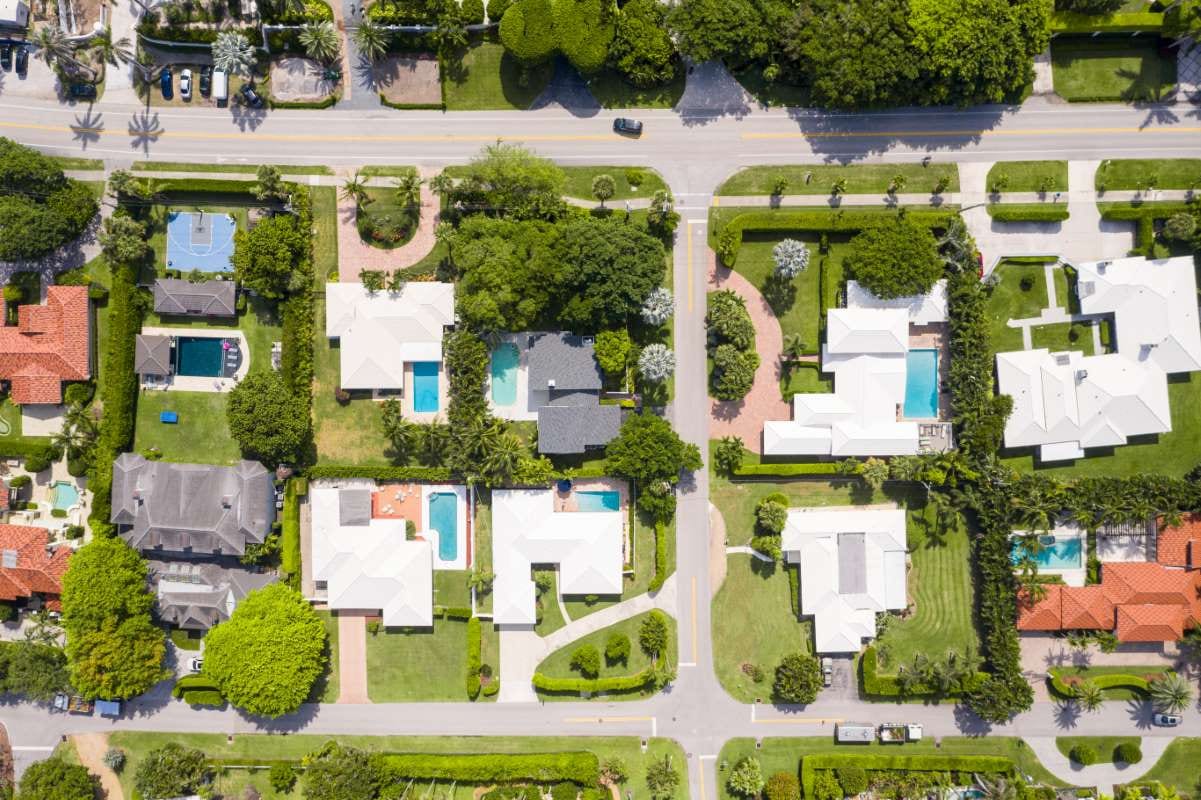
📌 Key Takeaway: Pool service operators in Randall County, Texas can eliminate wasted drive time and boost profit margins by auditing their routes for overlap and applying zone-based scheduling before adding new accounts.
Why Route Overlap Hurts Your Bottom Line
Every extra mile driven between pool stops costs money twice — once in fuel and once in labor. For pool service businesses operating in Randall County, Texas, those costs compound quickly across the sprawling mix of Canyon neighborhoods, rural properties outside Amarillo, and the fast-growing residential developments along US-87. When two or more technicians service pools on the same street on different days, or when a single route winds back and forth across a ZIP code rather than moving in a clean loop, you are paying for inefficiency that has nothing to do with the quality of your work.
Route overlap typically appears in three situations: organic growth where new accounts are added without checking geographic fit, inherited routes purchased from another operator, and staff turnover that forces managers to reassign stops without restructuring the underlying geography. Recognizing which pattern applies to your business is the first step toward fixing it.
Higher household income also matters because it supports steady demand for recurring pool care. Texas median household income was $78,476 in the Census ACS 2024 profile published December 31, 2024, which helps explain why service businesses in parts of the state can sustain regular maintenance work when routes stay tight. You can verify the state profile on data.census.gov.
Map Your Current Routes Before Making Changes
Before adjusting anything, print or export a visual map of every account you service, color-coded by technician or service day. Free tools like Google My Maps handle this well for smaller operations, while route optimization platforms such as Jobber, ServiceTitan, or OptimoRoute provide automated analysis for larger fleets.
On that map, look for three warning signs:
- Crossing lines — a technician's path crosses itself more than once per day, signaling backtracking
- Shared corridors — two technicians pass through the same neighborhood on different days
- Dead-end spurs — one or two accounts sit far from any cluster, tacking fifteen minutes of drive time onto a route for minimal revenue
In Randall County, pay particular attention to the Canyon city limits versus the unincorporated county areas. Pools in Canyon proper can often be grouped into tight morning loops, while rural accounts west of the city need to be batched together rather than scattered across multiple days to avoid long solo drives.
This is where income data can sharpen the map. Areas with stronger household income tend to support more consistent recurring service, so the goal is not just to find density but to place that density where service levels justify the drive pattern. A clean map turns that demand into a route you can actually manage.
Zone-Based Scheduling Reduces Overlap Immediately
The fastest fix for route overlap is assigning each day of the week to a defined geographic zone and refusing to mix zones within a single day's schedule. Divide Randall County into manageable zones based on natural boundaries — major roads, ZIP codes, or school district lines work well — and assign your technicians or service days accordingly.
For example, Monday handles Canyon's east side, Tuesday covers the neighborhood clusters near Buffalo Lakes Road, Wednesday focuses on the rural route stretching toward Amarillo's southern suburbs, and so on. When a new customer calls, their address determines which day they receive service, not whichever slot is open on the calendar. This discipline prevents the creeping fragmentation that creates overlap over time.
Zone-based scheduling also makes it easier to offer realistic service windows to customers. When a technician spends the entire day within two or three square miles, arrival estimates become far more accurate, which reduces customer complaints and no-shows.
The same logic applies when you review service density against local spending power. Texas households had the income base to support ongoing pool care in the Census ACS 2024 profile, and that makes clean zone scheduling even more valuable because it keeps profitable work concentrated instead of scattered. In a market like Randall County, the route structure should match the demand pattern.
Purchasing Routes Strategically to Eliminate Gaps
Operators looking to expand often find that buying an existing route is faster and less expensive than acquiring accounts one at a time. However, not all available routes complement your current geography. An acquired route that sits in a county adjacent to Randall without any connection to your existing zones simply adds a new overlap problem rather than solving one.
When evaluating pool routes for sale, prioritize routes that fill geographic gaps in your current coverage or that sit cleanly within one of your established zones. A block of forty accounts clustered in Canyon that you can fold into your Tuesday zone is worth significantly more to your business than sixty scattered accounts that require a new technician and a new route structure. Run the math on drive time per stop before negotiating price — a route with tight geographic density will always outperform a larger but more dispersed book of business.
This is also where broad market strength matters. Texas income levels support recurring maintenance demand, but only if the route is built to capture it efficiently. The right route addition should reduce overlap, not create another layer of wasted miles.
Using Technology to Maintain Route Discipline
Routing software pays for itself quickly in businesses with five or more technicians. The key features to prioritize are time-window constraints, which prevent the software from scheduling a Canyon account on a rural-route day just because there is an open slot, and re-optimization alerts that flag when a route's efficiency score drops below a set threshold.
Set a calendar reminder to run a full route audit every quarter. Account additions, cancellations, and address changes accumulate silently and gradually degrade the zone structure you built. A quarterly review catches drift before it becomes expensive.
GPS tracking data from completed service days is equally valuable. Pull the actual drive path for each technician at the end of a week and compare it against the planned route. Consistent deviations often reveal an account that belongs in a different zone or a neighborhood cluster that has grown large enough to anchor its own service day.
Technology matters most when the business is healthy enough to grow but busy enough to get sloppy. Texas households at the income level reported in the Census ACS 2024 profile support that kind of recurring service demand, which means the operators who stay disciplined with routing are the ones who keep the margin. The software does not replace judgment; it reinforces it.
Building Routes That Scale
The goal of eliminating overlap is not just to save fuel today — it is to build a route structure that can absorb growth without breaking. When each zone has defined boundaries and a clear service day, adding ten new accounts to an existing zone is straightforward. You know immediately whether the zone can absorb them or whether it is time to split the zone and add a day.
Pool service businesses in Randall County that invest in clean route geography now position themselves to offer better customer response times, lower per-account costs, and a more attractive asset when the time comes to sell. Buyers evaluating pool routes for sale pay attention to route density and geographic logic, so a well-organized route structure directly increases the value of your business.
Texas income support strengthens that long-term case. The Census ACS 2024 figure of $78,476 shows a state market with enough household capacity to sustain ongoing service work, and tight routing is what turns that demand into profit instead of wasted windshield time.
Tightening your routes before you need to is always easier than untangling overlap after growth has made it worse. Start with the map, apply zone discipline, and let technology maintain it — those three steps will make every service day in Randall County more productive.