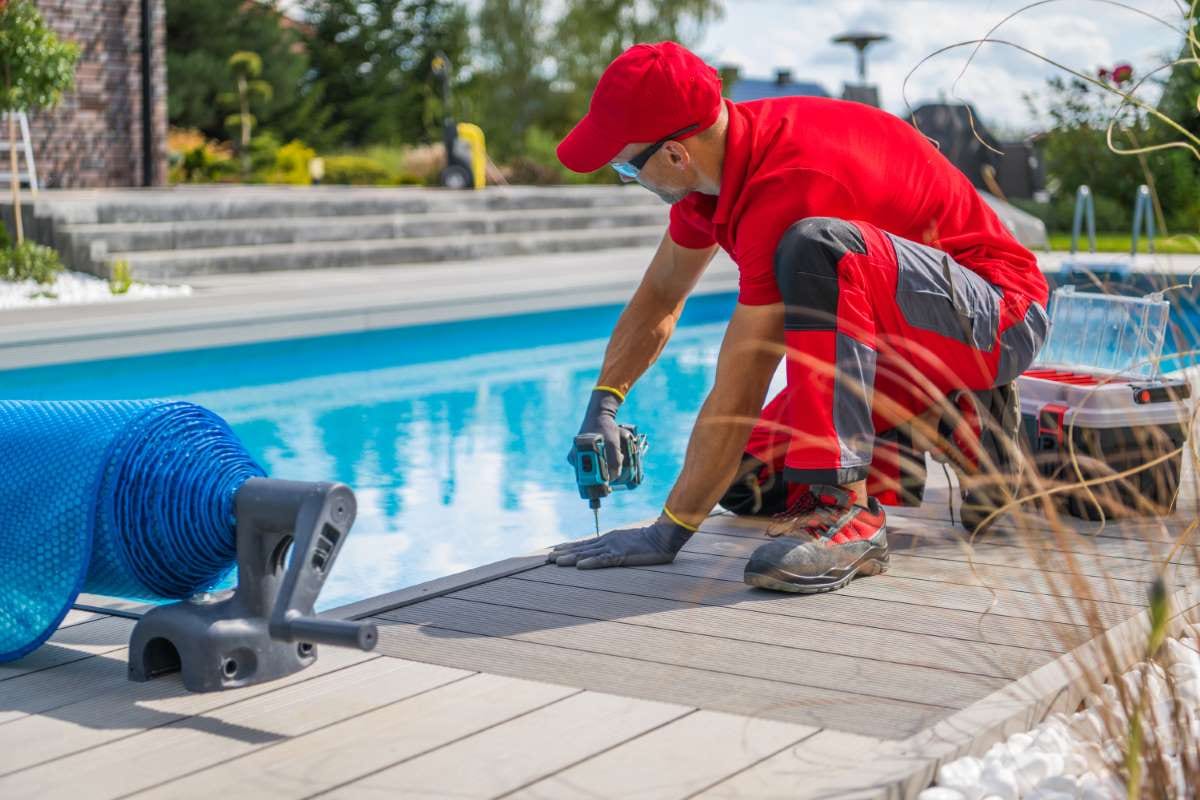
📌 Key Takeaway: When Las Vegas crosses the 105-degree threshold for five consecutive days, residential service requests can spike 25 to 40 percent within a week, and pool route operators who plan staffing, chemistry, and pricing in advance capture the bulk of that revenue.
What a Heatwave Actually Does to a Pool
Heat is not just a comfort issue for your customers; it is a chemistry problem you get paid to solve. Chlorine burns off roughly twice as fast at 95 degrees as it does at 80 degrees, and unstabilized chlorine can lose more than half its strength in a single afternoon of direct desert sun. Cyanuric acid levels that looked fine in April get out of balance by June, and evaporation in the Las Vegas Valley can hit a quarter inch per day, pulling calcium hardness and total dissolved solids upward fast.
The practical result is that the same weekly route you ran in May suddenly needs more chlorine tabs per stop, more acid to fight rising pH from auto-fill water, and more shock product to deal with bather load from owners using their pools every single night. If you have not adjusted your dosing protocols and your truck inventory before the first heat dome arrives, your first two weeks of the surge will be spent driving back to the supply house instead of completing stops.
That pressure is not happening in a vacuum. The Federal Reserve’s home price index reached 335.10 on May 1, 2026, up 2.12 points from the prior reading, which is another reminder that pool ownership keeps expanding in value-sensitive markets like Las Vegas. Higher home values do not change the chemistry, but they do keep more homeowners invested in protecting the asset in their backyard.
Reading the Demand Curve Before It Hits
Most Las Vegas operators see three distinct demand waves each summer. The first is the late-May reopen rush, when seasonal-only customers reactivate. The second is the heatwave spike itself, usually mid-June through late July, when call volume for green-pool recoveries, equipment failures, and one-time cleanups doubles or triples. The third is the August equipment-failure wave, when pumps and heaters that ran hard all summer start dying.
Smart operators track local forecasts ten days out and pre-schedule extra chemical-only stops for their highest-risk accounts before the heat arrives. A simple rule of thumb: any pool with cyanuric acid below 30 ppm or above 80 ppm should get a mid-week chemistry check during any forecast stretch of 108-plus degrees. Communicating that pre-emptive visit to the customer as a value-add, rather than an upcharge, builds the kind of loyalty that survives the next price increase.
The broader housing market matters here too. When home values are holding up, owners are less likely to let pool service slide and more likely to authorize the extra visit that keeps water clear through the hottest stretch. That is why route operators who watch both weather and market conditions stay ahead of the demand curve instead of reacting to it.
Pricing Adjustments That Customers Will Accept
Heatwave season is the right time to revisit your pricing, but the framing matters. Customers in Henderson, Summerlin, and the southwest valley already expect their utility bills to climb in July. They will accept a chemical surcharge or a seasonal rate adjustment if you explain it in terms they understand: more chlorine demand, more frequent filter cleans, and longer service times per stop.
A common structure that works in the Las Vegas market is a flat summer surcharge of 10 to 15 percent applied June through September, disclosed in the original service agreement so it never feels like a surprise. Operators who roll this into their annual contracts up front report significantly lower cancellation rates than those who try to impose mid-season increases. If you are buying into the market through one of the Las Vegas pool routes for sale, ask the seller how they have historically handled summer pricing and whether seasonal surcharges are baked into the customer base.
Rising home values reinforce that discipline. A homeowner who has watched property prices rise is usually more willing to pay for consistent service than to gamble on a cheaper provider that disappears when the workload climbs. Heatwave pricing works when it is tied to a real operational change, and the market will usually accept that if you present it clearly.
Staffing and Route Density During the Surge
The single biggest operational mistake new operators make is trying to absorb heatwave demand with the same crew size they ran in spring. A technician who comfortably handles 14 stops a day in April will struggle to finish 11 stops in July, because every pool needs more attention, more chemistry, and often a quick equipment check. Plan for a 20 to 25 percent productivity drop per technician during peak heat.
This is where route density pays off. Tight, geographically clustered routes survive heatwaves because drive time between stops stays low even as time-on-site climbs. Routes that span 30 miles of valley sprawl bleed margin every July. If you are evaluating expansion or acquiring additional accounts, prioritize density over raw stop count, and consider whether a second truck running a smaller, denser sub-route is more profitable than stretching one technician thin.
The same logic applies when surrounding home values are firming up. Dense routes in neighborhoods with strong property values are easier to protect, easier to price, and easier to scale because the customer base has more reason to stay put. That stability is exactly what makes pool routes such a durable business in Las Vegas.
Equipment Failures and Upsell Opportunities
Heatwaves are when filtration systems, pumps, and especially variable-speed motors fail. For a service operator, this is both a headache and a margin opportunity. Customers who would normally shop around for repair quotes will accept your recommendation on the spot if you have built trust through the regular service relationship.
Stock your truck for the failures you can predict: capacitors, pump seals, salt cell replacements, and a few spare timers. Photograph failing equipment during routine stops and send the image to the customer with a written estimate the same day. Operators who systematize this upsell flow often see repair revenue match or exceed their recurring service revenue during July and August.
When homeowners see property values remain firm, they are even more likely to approve repairs that protect the pool and the home together. That makes the heatwave repair cycle easier to monetize for the operator who already has the route density and customer trust in place.
Marketing That Captures New Customers Mid-Heatwave
Word of mouth accelerates during heatwaves because a green pool is a visible problem the entire neighborhood notices. A simple referral program offering one month of free service for every new customer referred can multiply your inbound calls without a dollar of paid advertising. Pair that with a Google Business Profile that responds to every review within 24 hours, and your phone will not stop ringing from mid-June onward.
For operators thinking about growth, the heatwave window is also when accounts trade hands at the highest valuations. Owners who have weathered a strong summer command better multiples, and buyers who want to step into that cash flow should be looking at pool routes for sale well before the season turns. Acquiring during the off-season and operating through your first summer gives you the full revenue cycle to evaluate the asset.
That growth case gets stronger when the housing market stays resilient. The May 1, 2026 reading on the Federal Reserve’s home price index shows values still moving up, which supports the long-term case for pool route ownership in Las Vegas neighborhoods where homeowners keep investing in service and upkeep.
Building a Heatwave-Ready Operation Year Round
The operators who profit most from Las Vegas heatwaves are the ones who treat preparation as a year-round discipline. Winter is for renegotiating chemical contracts and locking in pricing before the summer spike. Spring is for technician training, truck stocking, and customer communication about seasonal expectations. By the time the first 110-degree day arrives, the business is already positioned to absorb demand rather than chase it. That posture is what separates a route that grows every year from one that simply survives each summer.
Housing demand supports that discipline too. When the value of the underlying homes keeps rising, pool service is not a luxury add-on; it becomes part of protecting the property. That is why operators who build dense pool routes in Las Vegas tend to keep winning through hot seasons, even when the workload jumps fast.