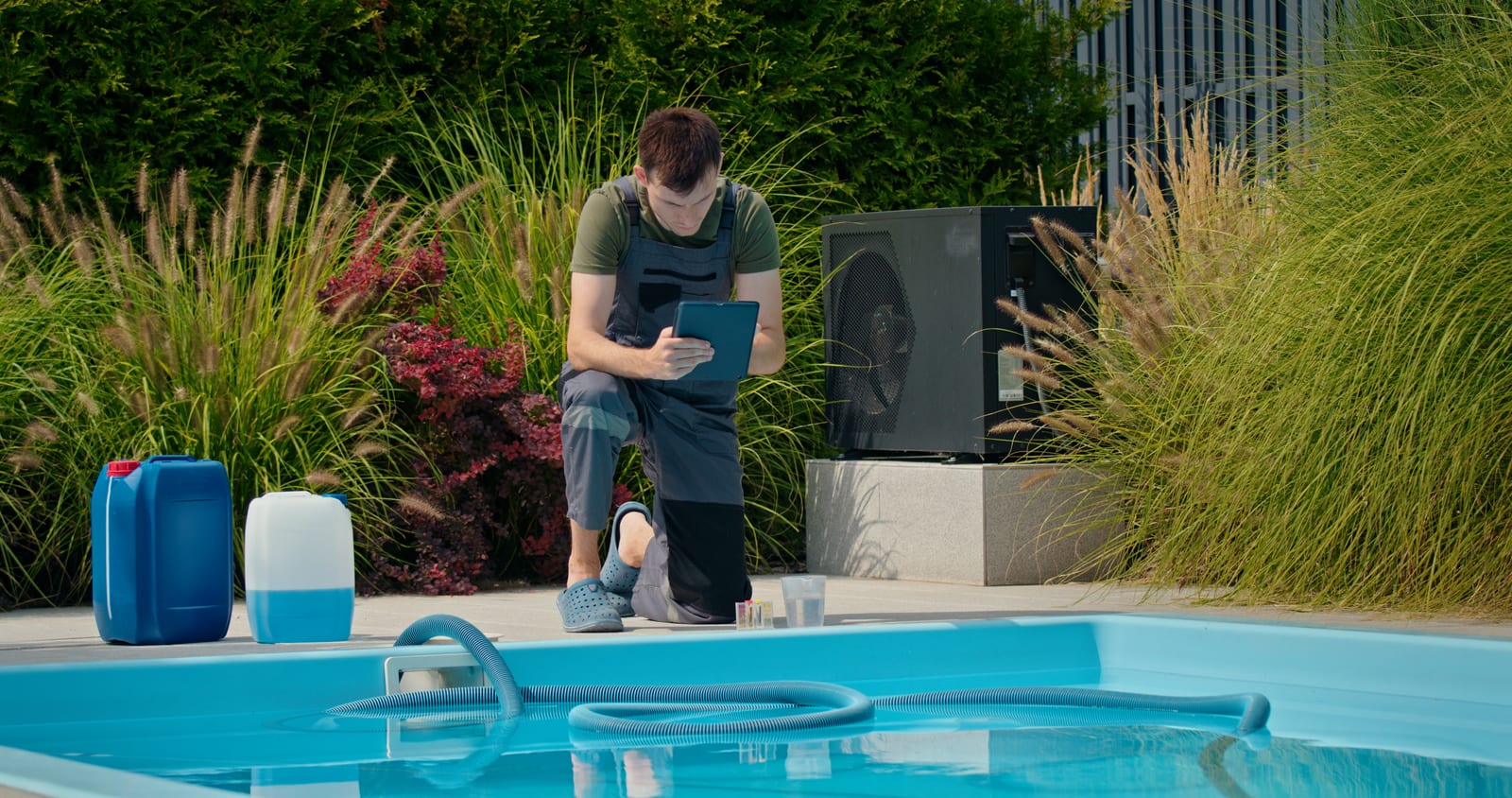
📌 Key Takeaway: Pool service can be an excellent recurring-revenue business for the right person, but success depends on physical fitness for outdoor work, the right training and equipment, a realistic plan for getting customers, and software that keeps billing and routes organized.
Introduction
Starting a pool service business can be an excellent opportunity for the right person. It offers recurring monthly income, the ability to work independently, and the chance to build a long-term customer base that can eventually become a valuable business asset. In many parts of the country, especially states such as Florida, Texas, Arizona, Nevada, and California, swimming pools are extremely common, creating ongoing demand for reliable pool service companies.
Before starting a pool service business, however, it is important to understand exactly what the work involves and whether it is the right fit for your personality, physical capabilities, and goals.
There are two primary categories of pool service: residential pools and commercial pools. Residential pools are the backyard pools found at private homes. Commercial pools are pools located at hotels, apartment complexes, gyms, community centers, and similar facilities. Commercial pools often involve stricter regulations, government inspections, more advanced equipment, and additional licensing requirements depending on the state and local municipality.
For that reason, this article will focus primarily on residential pool service, which is the most common entry point for new pool professionals.
Pool service work itself is fairly straightforward in concept. Customers hire you to maintain their swimming pool so the water stays clean, safe, balanced, and visually appealing. Weekly service often includes:
- Cleaning debris from the pool
- Emptying skimmer and pump baskets
- Brushing walls and tile
- Vacuuming or checking automatic cleaners
- Testing and balancing chemicals
- Inspecting pool equipment
- Reporting issues to customers
The work is usually performed outdoors and involves light physical labor. Many people enjoy the independence and fresh air that comes with pool service. You are not sitting in an office all day, and you often have flexibility in scheduling your workday.
However, you also need to be realistic about the downsides. You will work in the heat, humidity, rain, and sometimes cold weather depending on your location. Summer conditions in states like Florida or Arizona can be extremely hot. Some days are physically demanding, especially when dealing with heavy debris, green pools, or equipment problems.
The business model itself is fairly simple. Customers generally pay a fixed monthly amount, and in exchange you provide weekly service. Because pool service is recurring, many pool companies build stable monthly income over time. Once routes become established, the business can become predictable and scalable.
The remainder of this article will cover the major topics you should understand before starting a pool service business, including:
- Whether this type of work is right for you
- How to get trained
- Equipment and supplies you will need
- Different ways to obtain customers
- Billing and software considerations
- Scheduling and workload expectations
I. Is a Pool Service Business Right for You?
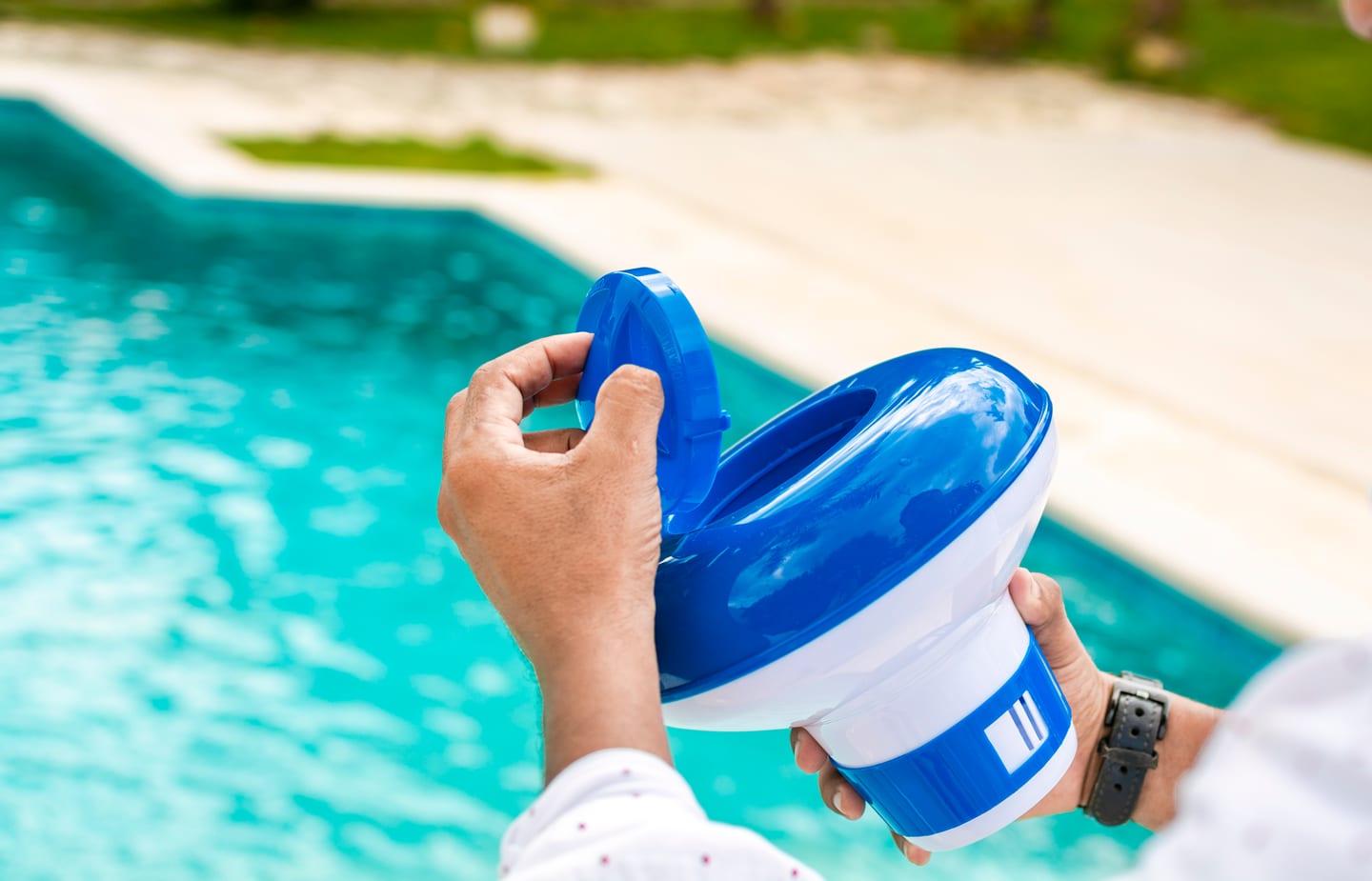
Not everyone is suited for pool service work. Some people love it and build very successful businesses from it, while others quickly realize the lifestyle and physical demands are not a good fit.
Before investing money or time into starting a company, it is important to honestly evaluate whether the work matches your abilities and personality.
A. Are You Physically Capable?
Pool service is not usually considered extremely heavy labor, but it is still a physically active job.
You should ask yourself several important questions:
- Can you comfortably carry weights of 20–30 pounds?
- Are your knees in good enough condition for bending and kneeling?
- Is your back healthy enough for repeated bending throughout the day?
- Can you safely load and unload equipment and chemicals?
- Can you work several hours outdoors without becoming exhausted?
A typical pool cleaner spends much of the day walking, lifting poles, handling chemical containers, bending over equipment pads, and moving quickly between accounts.
Although many pools are fairly easy to maintain, difficult pools can require additional physical effort. Heavy leaf debris, algae problems, neglected pools, or large properties can increase the workload significantly.
Pool service also requires a certain level of self-motivation and work pace that many people do not fully appreciate until they actually begin working routes. One of the biggest factors in success is not necessarily strength, but consistency and efficiency throughout the day.
For example, something as simple as how quickly you walk to the backyard of each account can dramatically affect how many pools you are able to complete by the end of the day. Pool service is a business where small amounts of lost time add up very quickly. Moving slowly between stops, casually strolling around the property, or losing focus between tasks can reduce productivity significantly over the course of a full workweek.
Over the years, we have seen many pool cleaners who technically knew how to clean pools properly but struggled because they could not consistently keep themselves moving with urgency throughout the day. Since pool service is usually performed independently without direct supervision, you have to be able to motivate yourself to maintain a steady pace. The technicians who naturally stay focused, organized, and move efficiently throughout the day are usually the ones who perform the best and are able to handle larger routes successfully.
This does not mean you need to run from house to house or physically exhaust yourself. However, it does require steady movement, discipline, and the ability to stay productive even when working alone in hot weather or during long days.
B. Is the Environment Right for You?
One of the biggest lifestyle differences in pool service is the environment itself.
If you enjoy being outdoors, pool service can be very enjoyable. Many pool professionals appreciate:
- Fresh air
- Sunshine
- Independence
- Driving between customers
- Being active instead of sitting indoors
For some people, this is a major improvement over traditional office jobs.
At the same time, you must be comfortable dealing with weather conditions. Depending on your location, you may encounter:
- Intense summer heat
- Humidity
- Rainstorms
- Wind
- Cold mornings during winter
- Direct sunlight for long periods
Pool service companies generally continue operating in most weather conditions unless storms become dangerous.
People who strongly dislike outdoor work may struggle in this industry over time.
C. Do You Mind Working Alone?
Pool service is often independent work. Most pool cleaners spend much of the day working alone.
For many people, this is actually a major advantage. You are generally not standing over coworkers all day or working under constant supervision.
However, "working alone" does not mean you never interact with people.
Pool professionals regularly speak with:
- Customers
- Vendors
- Supply houses
- Repair technicians
- Property managers
- Other pool professionals
In fact, many pool cleaners enjoy the variety of people they meet throughout the day. You may briefly interact with dozens of people each week while still maintaining independence in your work.
II. Getting Trained
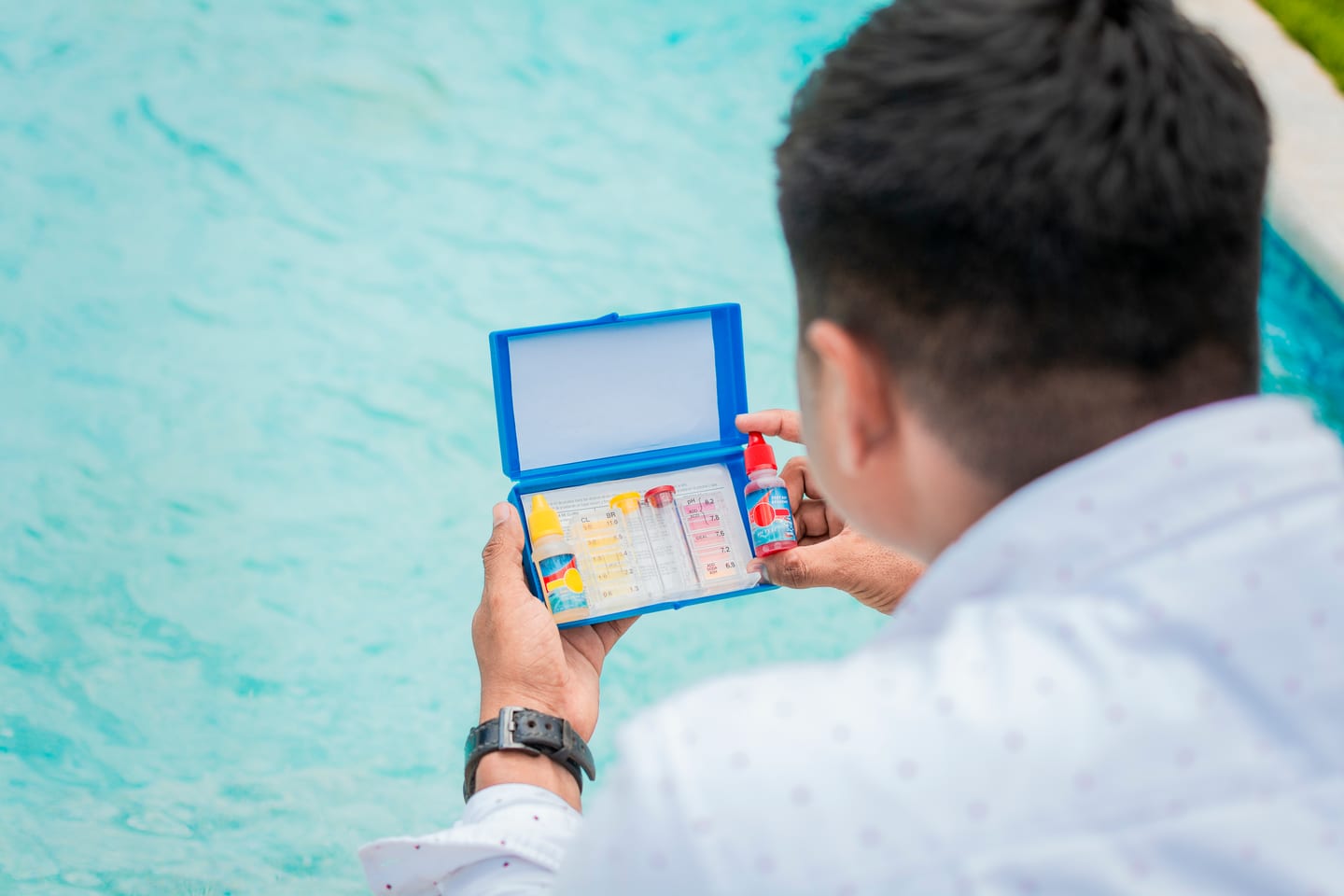
One of the most common questions new people ask is: "How do I learn pool service?"
The good news is there is more than one way to become qualified enough to start cleaning pools.
Different people enter the industry from different backgrounds, and you can choose a training path that fits your experience level and learning style.
A. Personal Experience
Many people already have some experience that gives them a head start.
Ask yourself:
- Have you cleaned your own pool before?
- Did you work somewhere that involved pool maintenance, such as being a lifeguard?
- Are you generally handy with tools and equipment?
If you answered yes to some of these questions, you may already understand basic pool cleaning concepts.
Many people with personal experience can learn the remaining skills online, especially topics such as:
- Water chemistry
- Pool equipment basics
- Circulation systems
- Filter systems
- Vacuum systems
- Chemical balancing
Modern online resources have made it easier than ever to learn the fundamentals of pool service.
B. Professional Experience
Some people already have direct industry experience before starting their own business.
1. Working for Another Pool Company
Another option is working for an existing pool service company before starting your own business.
This can provide exposure to:
- Real customer pools
- Route organization
- Chemical balancing
- Different pool systems
- Customer interaction
- Time management
Some people choose this path because it allows them to gain hands-on experience while getting familiar with the day-to-day realities of the industry before operating independently.
Even a relatively short period of experience working on a professional route can help increase confidence and familiarity with pool service operations.
2. Professional Pool Schools
Formal pool cleaning schools do exist, although they are relatively rare compared to other industries.
These programs may provide:
- Water chemistry education
- Equipment training
- Safety instruction
- Business guidance
- Certification preparation
If you already have some real-world exposure to pools, professional training may help accelerate your learning curve.
If you already possess professional pool experience, you are probably close to being ready to start your own route from an operational standpoint.
C. Official Online Courses
Online pool training programs have become increasingly popular.
Some companies offer structured training programs designed specifically for new pool professionals. Programs such as Superior Pool Routes online pool school can help teach the fundamentals of:
- Pool cleaning procedures
- Water chemistry
- Equipment identification
- Basic troubleshooting
- Route operations
For many people, combining online education with prior personal experience is enough to begin servicing residential pools competently.
D. In-Person Training
Another effective option is hands-on field training with an experienced pool professional.
In many cases, spending just 4–5 days in the field with someone experienced can dramatically improve your understanding of the business.
This type of training allows you to observe:
- Proper cleaning techniques
- Efficient workflow
- Chemical handling
- Customer interactions
- Equipment operation
- Real-world problem solving
Many new pool service owners find that combining short-term field training with an online course provides a very practical and affordable way to prepare for the industry.
III. Equipment and Supplies Needed
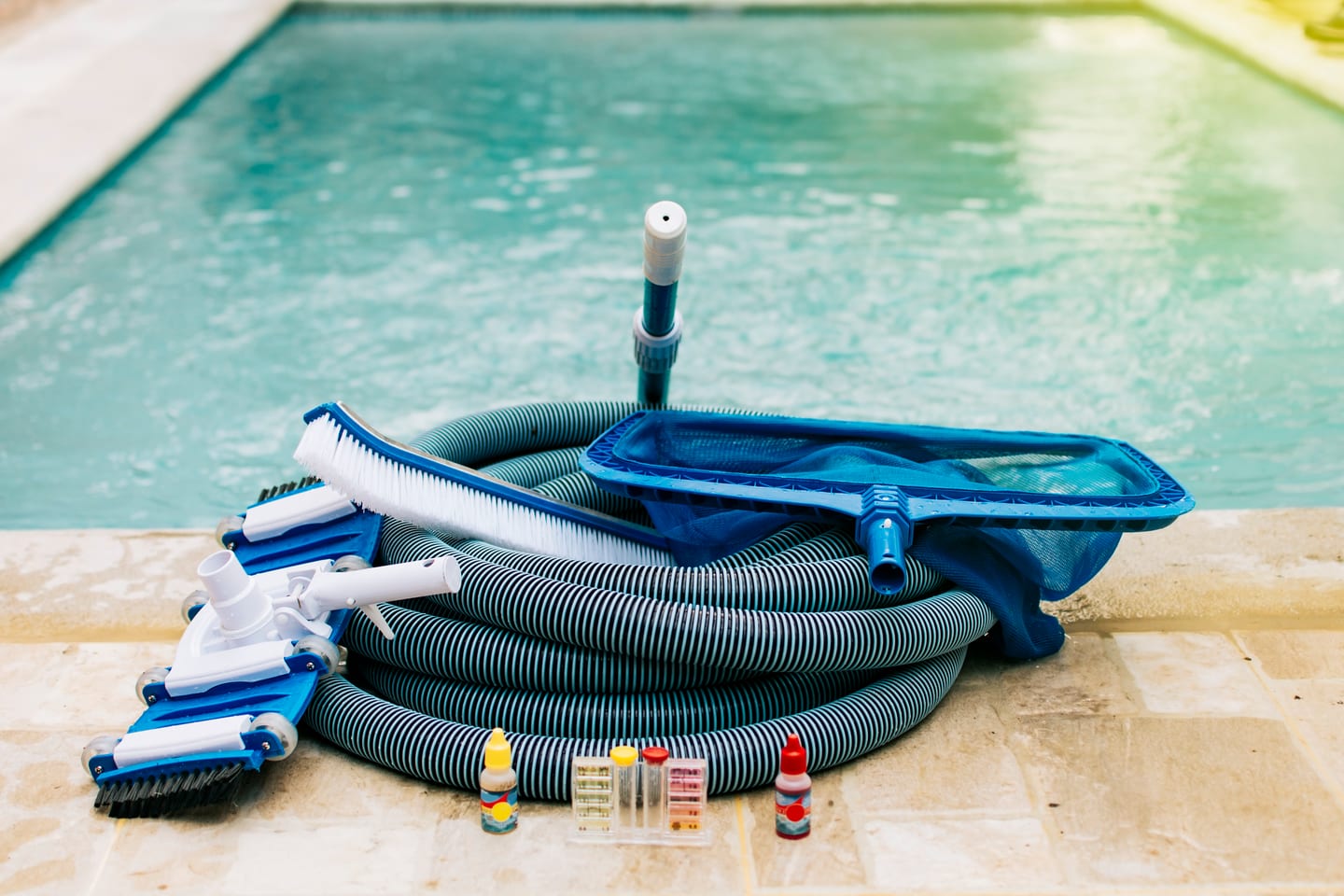
Starting a pool service business does not require an enormous amount of equipment compared to many industries, but there are still important tools and supplies you will need.
A. Pool Tools
Basic pool tools typically include:
- Telescopic poles
- Leaf nets
- Vacuum heads
- Vacuum hoses
- Brushes
- Water testing equipment
- Chemical containers
- Backwash hoses
Many pool professionals purchase equipment through pool wholesalers such as SCP and other supply distributors.
Opening a wholesale account is usually fairly simple. In many cases, you only need proof that you are operating a legitimate business, such as:
- Articles of incorporation
- Business license
- EIN documentation
Wholesale suppliers are important because they provide access to chemicals, replacement parts, tools, and equipment at professional pricing.
B. Vehicle Selection
Your vehicle is one of the most important parts of your operation.
Pickup Trucks
Pickup trucks are the most common and practical option for pool service work.
Advantages include:
- Easy chemical transport
- Better ventilation
- Easier loading and unloading
- Ability to carry equipment safely
Many pool professionals prefer trucks with utility beds or organized storage systems.
Over the years, we have seen pool cleaners successfully operate using both large and small pickup trucks. While almost any pickup can work, the reality is that smaller trucks are often more practical for day-to-day pool service operations.
Besides usually having lower fuel costs, smaller pickups are generally easier to work out of physically. Many larger trucks sit very high off the ground, which means you are constantly lifting poles, chemical containers, vacuums, and other equipment very high up over the side of the truck into the bed and then back down again throughout the day. In some cases, larger trucks are so high that you cannot even comfortably lift certain equipment over the side of the bed. Instead, you end up climbing into the truck bed through the tailgate while carrying equipment, which wastes time and becomes frustrating when repeated dozens of times per day.
Another practical issue many new pool cleaners do not think about is equipment movement inside the truck bed while driving. In real-world pool service operations, you generally end up filling much of the bed space with buckets, chemical containers, hoses, poles, extra supplies, and equipment simply to keep everything from sliding and flying around while driving between stops. Larger truck beds can actually make this more difficult because there is more open space for equipment to shift during transport.
For many pool professionals, a smaller or midsize pickup often ends up being the easiest combination of fuel efficiency, practicality, and day-to-day usability.
SUVs
SUVs can work, especially when starting small, but they present challenges.
Chemical spills can damage interiors, and ventilation is more difficult compared to open truck beds.
Cars
Using a regular car for pool service is generally impractical long-term.
There is limited space for:
- Chemicals
- Equipment
- Poles
- Vacuum hoses
Additionally, chemical odors and spills can quickly become a problem.
Utility Trailers
Utility trailers are also common and can work very well.
However, trailers can be slightly harder to maneuver, especially in heavy traffic or tight neighborhoods.
IV. Getting Accounts

One of the biggest challenges in starting a pool service business is obtaining customers.
There are several common approaches, each with advantages and disadvantages.
A. Advertising
Many new pool companies attempt to build routes through advertising.
Common methods include:
- Google Ads
- Mailers
- Door hangers
- Magazines
- Social media
- Local networking
Pros:
- You control the pace of growth
- You can target specific areas
- Lower upfront investment compared to buying a route
Cons:
- Advertising can become expensive
- Results are unpredictable
- Route growth is usually slow
- No built-in training or support
⚠️ Warning: One of the biggest realities new pool service owners often underestimate is how financially difficult slow route development can be. Even if advertising eventually works, building a profitable route one account at a time can take a very long time. For example, if it takes 12 months to build enough customers to create a strong full-time income, that may mean going an entire year with very limited earnings while still paying for fuel, chemicals, equipment, insurance, vehicle costs, and advertising itself.
We have seen situations where individuals were technically capable of growing a route through advertising, but the process simply took too long for their financial situation. The lost time itself becomes part of the cost. While organic growth can eventually create a very strong business, many new operators underestimate how difficult it can be to survive during the slow buildup period.
B. Route Companies Such as Superior Pool Routes
Some companies specialize in helping new pool professionals obtain accounts quickly.
For example, Superior Pool Routes offers programs designed to help pool professionals establish routes in targeted geographic areas, often within less than 90 days in many cases. Programs are available across major pool markets including Florida pool routes, Texas pool routes, Arizona pool routes, and California pool routes.
Advantages may include:
- Ability to target a specific area
- Lower pricing compared to traditional brokerage purchases
- Account replacement warranties
- Training support
- Financing options to spread the cost of building a route over time
Pricing structures vary, but some route development services charge approximately six times the monthly route gross.
For many new operators, this can provide a faster path to entering the industry while avoiding some of the uncertainty of advertising alone.
C. Buying a Pool Route From a Broker
Another common option is purchasing an existing pool route through a business broker.
Pros:
- Immediate customer base
- Existing monthly revenue
- Faster entry into the business
- Service history with customers
Cons:
- Often expensive
- Some parts of the route may be located in areas that are not ideal for you personally
- Limited flexibility
- Escrow disputes sometimes occur over lost accounts
- Training support may be limited
One practical issue many buyers do not think about is that routes are often organized around what worked well for the previous owner, not necessarily what works best for you. For example, the seller may have lived near a particular group of pools or simply did not mind driving farther distances between certain accounts. After taking over the route yourself, you may realize that some parts of the route are inconvenient, inefficient, or located farther away than you would prefer.
Another important reality is that "accounts" are not always as secure as they may initially appear. We have seen many situations over the years where a pool cleaner serviced a customer successfully for five or even ten years, but once the account was sold to a new owner, the customer eventually decided to leave after only a few weeks or months.
Part of the reason is that no two pool cleaners work exactly the same way. Even if the new owner is doing a perfectly good job, customers often become accustomed to the habits and routines of the previous cleaner. Since the customer did not personally choose to make the switch, they may be less tolerant of differences in communication style, cleaning style, timing, or overall service approach. This is very different from situations where a homeowner actively hires a new company on their own, because in those cases they already expect some changes in how service is performed.
Despite these risks, brokered routes remain a popular option because they can provide immediate recurring income and allow someone to enter the industry much faster than building accounts one customer at a time through advertising alone. Because of this perceived value and speed of entry, brokered routes are often priced on the higher side, with many traditional pool routes selling for approximately twelve times the gross monthly billing.
D. Buying a Route From an Individual
Some pool routes are sold directly by individual owners.
Pros:
- Pricing is often lower than brokered routes
- Potentially more flexible negotiations
- Existing customer base
Cons:
- Harder to locate opportunities
- Limited legal protection
- Less formal structure
- Limited warranties or training
Individual sales commonly fall in the range of six to eight times the monthly billing, although this varies significantly.
V. Billing, Collecting Money, and Running Your Business
Running the operational side of the business properly is extremely important.
Many pool companies fail not because they cannot clean pools, but because they struggle with organization, billing, scheduling, and customer management.
A. Billing Customers
Most pool companies bill customers monthly.
A common structure is:
- Bills sent on the first of the month
- Payment due by the 15th
However, every company is different. Some require payment by the 10th or use automatic billing systems.
Consistency is important. Customers should clearly understand:
- When they are billed
- When payment is due
- Accepted payment methods
- Late payment policies
B. Pool Service Software
Software has become a major part of modern pool service businesses.
Good software can dramatically improve organization and efficiency.
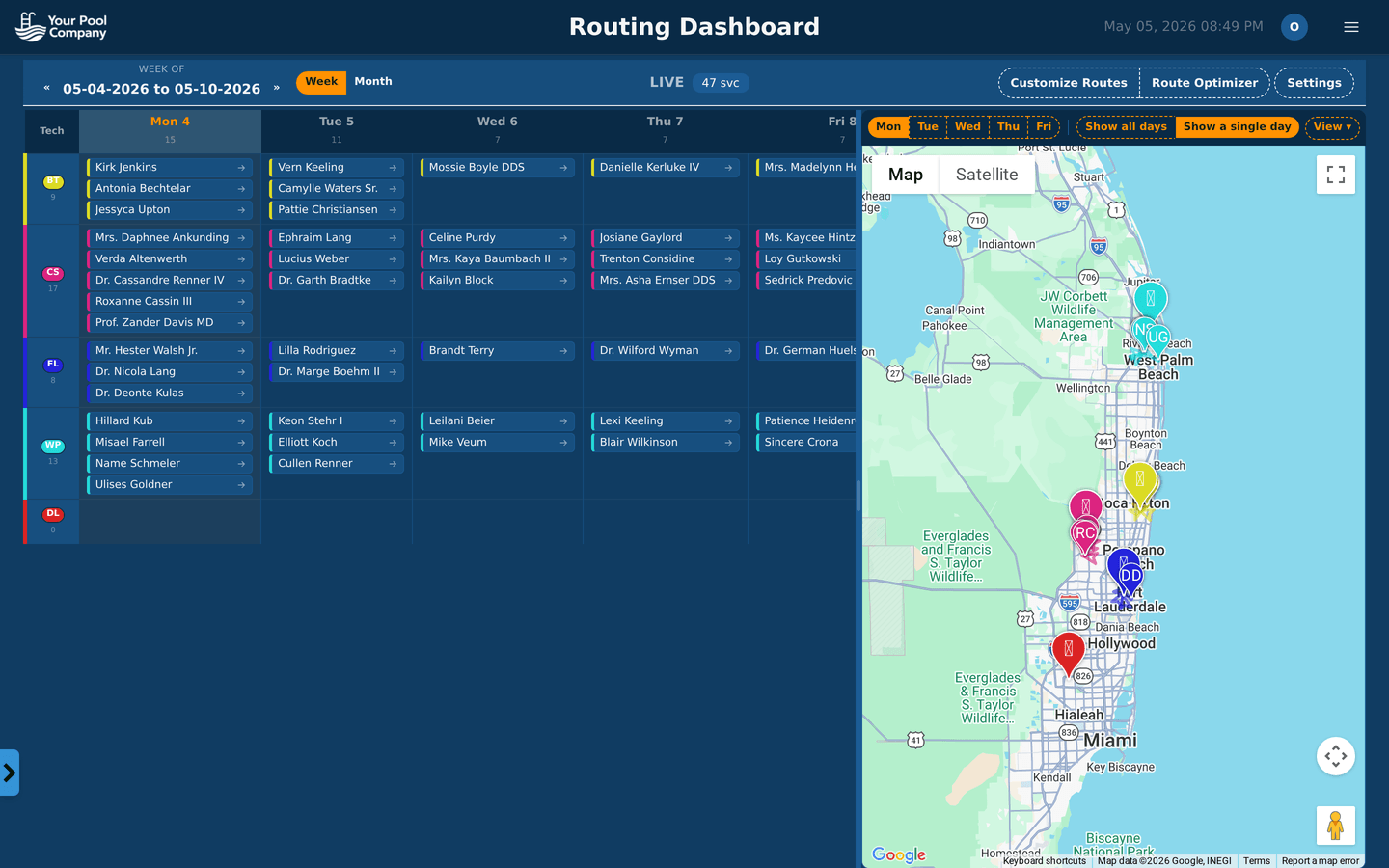
Billing Capabilities
Good pool software should allow you to:
- Send invoices and statements
- Accept online payments
- Setup recurring automatic payments
- Track unpaid balances
Route Scheduling
Scheduling tools are extremely important for efficiency.
Useful features include:
- Daily route optimization
- Entire route optimization
- GPS integration
- Technician scheduling
Efficient routes save both time and fuel.
Customer Reports
Many modern companies send service reports after each visit.
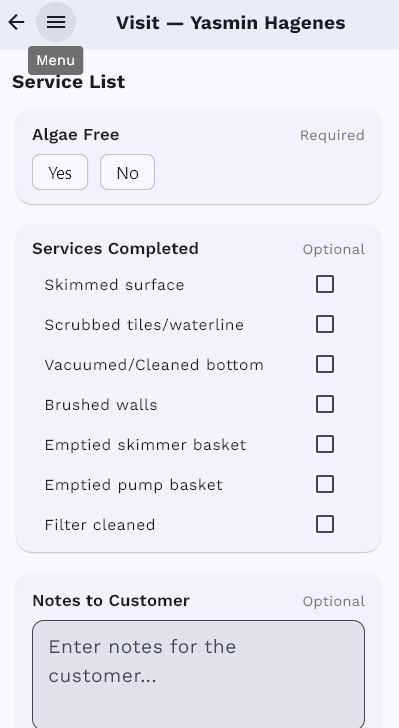
Per-visit service checklist on the mobile app — what every technician completes at every stop.
These reports may include:
- Photos
- Chemical readings
- Service notes
- Equipment alerts
This can improve customer communication and professionalism.
Payroll Features
As your business grows, payroll tools become increasingly important.
Software may help track:
- Technician hours
- Productivity
- Payroll calculations
Inventory Management
Inventory tracking can help monitor:
- Chemical usage
- Equipment supplies
- Repair parts
This helps reduce waste and improve profitability.
Software Security
Security is often overlooked but extremely important.
Customer information, payment data, and company financial information should be protected with secure systems and proper password management.
💡 Tip: Pool service software pricing varies dramatically between platforms, and the difference becomes significant over time as your route grows. Compare full feature sets — billing, route optimization, customer communication, service reports, automatic payments, payroll tools, inventory management — before committing.
One thing many newer pool service owners discover is that software pricing in the pool industry can vary dramatically. Some systems charge very high monthly fees, especially as your route grows larger and more accounts are added. Because software becomes a permanent ongoing expense, the monthly cost difference between platforms can become significant over time.
Over the years, additional pool service software platforms such as EZ Pool Biller have helped create more affordable options within the industry. Many of these systems now provide the same core capabilities — such as billing, route optimization, customer communication, service reports, automatic payments, payroll tools, and inventory management — while operating at substantially lower pricing than some traditional competitors. In some cases, companies are able to operate with software costs closer to 40% of what competing systems may charge while still maintaining the operational features most pool service companies need. For new operators especially, keeping software costs reasonable while still maintaining strong functionality can have a meaningful impact on overall profitability.
VI. Your Schedule and Workload
One of the appealing aspects of pool service is the flexibility of scheduling.
Most pool routes operate on five service days per week, but business owners often have the ability to structure schedules according to their preferences.
Customers generally prefer consistent service days. For example, if you normally clean a pool every Tuesday, they usually appreciate keeping that schedule predictable.
Once routes become organized efficiently, many pool professionals enjoy significant control over their workday.
Typical Pool Counts
Workload varies significantly depending on:
- Pool size
- Route density
- Travel time
- Pool condition
- Service style
- Experience level
In many areas such as Florida, Arizona, California, and Nevada, experienced pool professionals are often capable of servicing approximately 70–90 pools per week.
A common rule of thumb is that many experienced pool cleaners, once they become familiar with their accounts and routes, are capable of servicing approximately 2.5 pools per hour on average. For a deeper breakdown of realistic per-day numbers and what affects them, see our companion article on how many pools one technician can clean per day.
In Texas, pool routes are often somewhat larger or more spread out geographically, and many technicians average closer to:
- 50–60 pools per week
- Approximately 2 pools per hour
These numbers are not fixed rules. Some technicians move much faster, while others intentionally spend more time at each account.
The quality of the pools, efficiency of the route, and overall organization of the company make a major difference.
Conclusion
Starting a pool service business can be an excellent opportunity for individuals who enjoy independent work, outdoor environments, and recurring monthly income.
The industry offers relatively low startup costs compared to many businesses and can eventually grow into a highly valuable recurring revenue operation.
However, success requires more than simply knowing how to clean a pool. You must also consider:
- Whether the work fits your physical abilities
- How you will get trained
- What equipment you need
- How you will obtain customers
- How you will organize billing and scheduling
- How efficiently you manage your time
For the right person, pool service can provide flexibility, independence, and long-term business growth. Many successful companies started with just a small number of accounts and gradually expanded through experience, consistency, and customer service.
As with any business, the more prepared and educated you are before starting, the smoother your transition into the industry will likely be.
Written by Superior Pool Routes — a company that has helped pool professionals build, buy, sell, and grow pool routes since 2004.