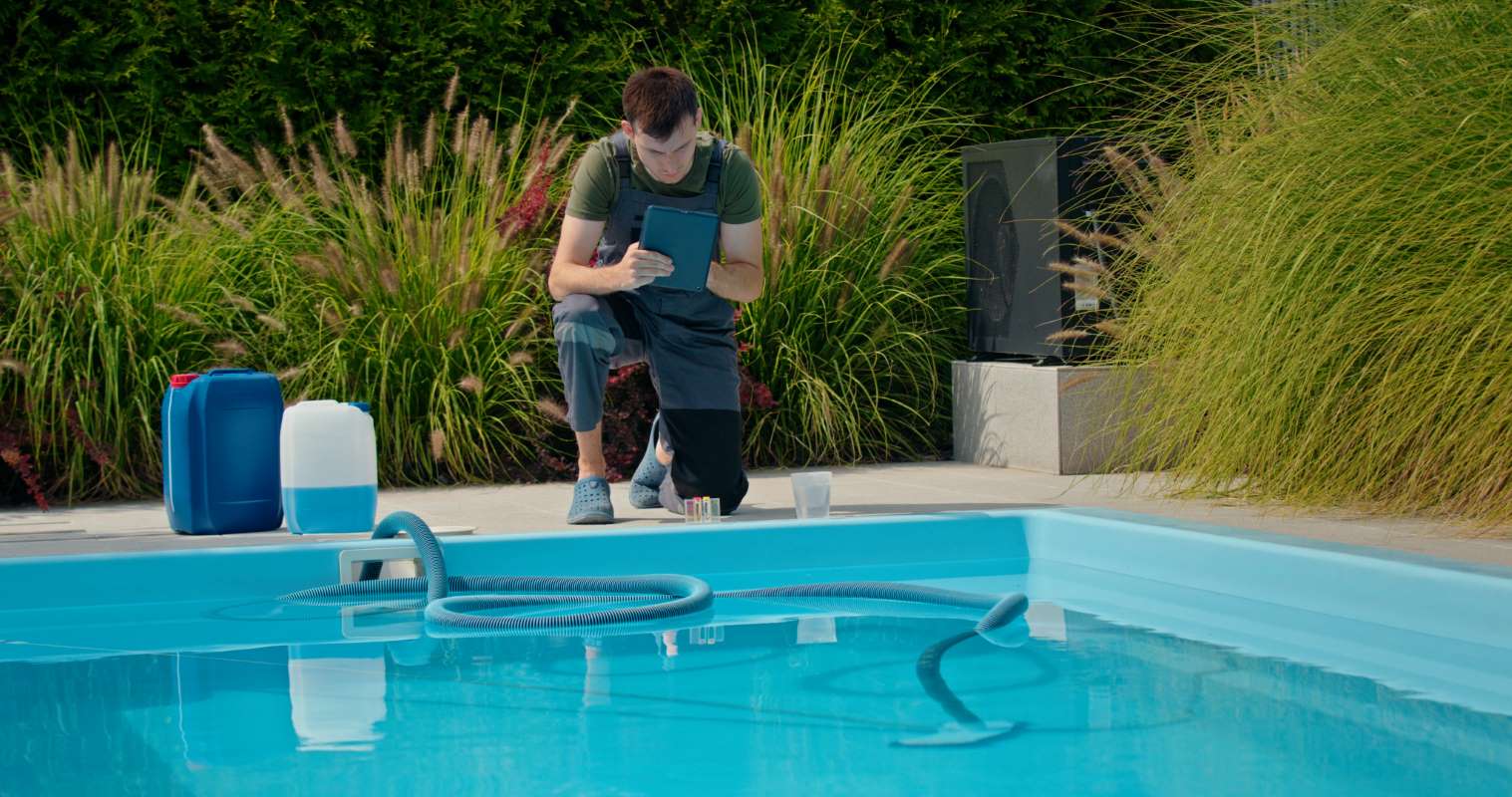
📌 Key Takeaway: A well-organized pool service truck saves time at every stop and keeps the workday predictable. This is the build-out experienced route owners actually use.
Pool Service Truck Setup: What You Actually Need
A clean truck setup turns route work into a repeatable process. If you have just bought a pool route, the difference between a chaotic truck and a dialed-in one is the time you lose searching, reloading, and rearranging between stops. That lost time adds up fast, especially when the route gets busy.
The right build-out gives every item a fixed place. Chemicals stay separated. Wet tools stay reachable. Paperwork and test gear stay close at hand. That simple structure makes the day smoother and reduces the chance of a chemical mistake, a broken tool, or a missed reading.
This post covers what to put in the bed, how to lay it out, how to store chemicals safely, and which tools earn their space. It also works as a companion to The Best Vehicles for Managing Pool Service Routes — once you have the truck, this is what goes in it.
A good setup also pays off in the field, not just in theory. An operator who keeps the test kit in the cab and the most-used tools on the same side of the truck can move from one stop to the next without circling the bed twice. That kind of small efficiency matters most on a day with a full schedule and messy pools. It is the difference between working from a system and working from memory.
Fuel costs sharpen that point. The EIA weekly retail diesel report showed U.S. average diesel at $5.52 per gallon for the week of May 25, 2026, down slightly week over week. When fuel is expensive, route density and an organized truck matter even more because every wasted mile and every extra minute at a stop costs real money.
Texas operators face a similar pressure on the utility side. The EIA’s retail electricity data for Texas residential customers showed 15.94¢/kWh for June 2026, down 0.50¢ month over month. For shops that keep batteries charging, equipment cooling, or storage areas ventilated, that kind of cost still rewards a lean setup.
In Florida, labor cost is part of the same equation. The BLS reported a mean annual wage of $48,750 for pool and facility maintenance workers in Florida on May 1, 2025, which is another reason good organization matters. Florida households also bring real purchasing power to the market. The Census ACS 2024 reported a median household income of $74,568 in Florida, according to the Census profile for Florida profile, dated December 31, 2024. That helps explain why route quality, reliability, and clean presentation matter in the state’s service business.
That Florida income figure also matters at the curb. Higher household income does not remove the need for efficient service, but it does support a market where professionalism shows up quickly in retention and referrals. A clean truck is part of that signal because it tells the customer the work will be handled with the same level of order.
The Four Zones of a Pool Service Truck
A useful bed layout starts with clear zones. Each zone has a purpose, and the truck works better when those purposes do not overlap. Once you stop mixing tools, chemicals, and paperwork in the same pile, the whole day gets easier.
Zone 1: Dry Chemical Storage, Sealed and Separated
Dry chemicals like cal hypo, sodium bicarb, calcium chloride, cyanuric acid, and DE need to stay dry, upright, and apart from one another. Moisture is the enemy here, and contact between incompatible products can create serious hazards. The goal is simple: contain the products, label them clearly, and keep them from shifting in transit.
Sealed plastic tote bins with latching lids work well for this zone. Route owners often use one tote per major chemical so the contents stay obvious at a glance. The front of the bed, against the cab wall, is the most stable spot. It also keeps the bins away from road spray and reduces movement when you brake hard.
Chemical separation matters just as much as containment. Cal hypo should never ride with other chemicals in a way that allows accidental contact. Reading the SDS for each product tells you what must stay apart and what needs extra care. That habit belongs in every truck setup.
Zone 2: Liquid Chemical Storage, Upright and Ventilated
Liquid chlorine, muriatic acid, and liquid stabilizer are common in route work, and all of them demand more caution than dry goods. They corrode cheap containers, leak over time, and create fumes if they are not handled correctly. If a truck carries liquids, the storage method has to assume some spillage will happen eventually.
Chemical transport cases with spill containment and ventilation are the cleanest way to handle this zone. Acids and chlorine must stay physically separated, never side by side in the same bin. That is not a preference. It is a safety rule. If the products mix, chlorine gas can form, and that creates an immediate emergency.
Keep liquid containers upright and strap the case to bed anchors so the load does not tip when you stop suddenly. A truck bed that looks neat in the driveway can still shift hard on the road. The restraint system is what keeps the setup practical instead of just tidy.
⚠️ Warning: Liquid chlorine + acid = chlorine gas. This is a fatal combination in an enclosed truck bed. Never transport them in the same container, same bin, or stacked on top of each other. If you smell pool-chemical fumes inside your cab, pull over immediately and ventilate.
Zone 3: Wet Tools, Easy to Reach
Wet tools do not need waterproofing as much as they need order. Nets, poles, brushes, and vacuum gear get dirty during the day, so the job is to keep them from taking over the bed. If they slide around, they wear out faster and slow you down at the next stop.
A horizontal telescopic pole rack mounted to the bed rails keeps poles off the floor and out of the muck. Wall hooks or a mesh bag work well for skimmer nets and leaf rakes. Letting them hang between stops helps them dry and keeps the bed from becoming a catchall for damp equipment.
If you use a manual vacuum, store the hose on a wall-mounted reel. Dragging it loose across the bed shortens its life and makes it harder to grab quickly. A small amount of structure here saves time all day.
Zone 4: Test Kit and Paperwork, Kept Within Cab Reach
The item you touch most often is the test kit, so it should live where you can reach it without climbing in and out of the bed. The cab is the best place for that. If you use a truck toolbox or a rapid-access compartment, that works too. The point is the same: keep the most-used item close.
The Taylor K-2006 remains the standard reference for route work. Some owners use a digital meter instead of, or alongside, a drop kit. Either way, the test gear needs to be protected, organized, and ready to use at the first stop of the day.
Service logs belong in the same zone. A clipboard, tablet, or mounted device lets you record chemistry readings, notes, and service details without making the truck a paper dump. Many owners run EZ Pool Biller on a rugged tablet in the cab so customer history stays in one place. Customer notes such as access codes, pet warnings, and invoicing preferences should live with that system, not in loose scraps of paper.
The Tools That Pay for Themselves First
Some gear earns its keep almost immediately because it saves time on every route. Those tools are worth buying early, while the truck is still being dialed in.
A quality telescopic pole should be one of the first purchases. Cheap poles flex, snag, and fail when you need them most. A pro-grade pole lasts longer and makes brushing and skimming easier across the whole route. The same logic applies to nets and vacuum gear. If the tool is used every day, it should not feel disposable.
A robotic pool cleaner can also pay off quickly on commercial accounts. It does part of the labor while you focus on chemistry, filter checks, and the other hands-on work that still needs your attention. That matters on busier properties where the visit is not just about skimming debris.
A digital chemistry meter cuts down test time when you are moving through a full schedule. On a crowded day, that time savings adds up stop by stop. A large-capacity leaf net helps with heavy-debris pools because it clears more material before you have to empty it. A portable battery-powered pool vac is another useful piece of gear because it handles quick cleanup jobs without dragging out a full vacuum session.
The same logic applies to the truck itself. If the vehicle is constantly making extra fuel stops or detours for forgotten supplies, the route gets slower no matter how good the chemistry work is. A clean layout keeps the service side moving and the driving side efficient.
Safety Essentials Are Not Optional
A truck setup is not complete if it ignores safety. Chemical work, sharp tools, heat, and repeated loading all create risk. The basic protection gear should be in place before the first service day.
A spill kit belongs in every truck. Absorbent pads, gloves, and eye protection give you a response plan when a container leaks or breaks. A fire extinguisher should be ABC-rated, mounted inside the cab, and easy to grab from the driver’s seat. A first aid kit with eye wash is equally important, because splashes happen and the response window is short.
Personal protective equipment should be standard, not optional. Chemical-resistant gloves, safety glasses, and closed-toe boots reduce the chance that one bad spill turns into a serious injury. One overlooked detail can ruin an otherwise good day, so the truck should always be stocked for the problems that can actually happen.
Hot weather makes that discipline even more important. In summer heat, chemicals, batteries, and even sealed bins work harder than they do in mild weather. A truck that is already organized is easier to inspect, ventilate, and keep under control when the temperature climbs.
Mobile Software Setup
The paperwork side of route ownership used to live in binders and spreadsheets. In 2026, the smarter setup is mobile and visible from the cab.
For route management and billing, EZ Pool Biller is our parent company's pool service software. It handles invoices, payment processing, and customer history on a phone or tablet. Superior Pool Routes customers get account setup and training as part of route onboarding, and the subscription follows standard pricing at ezpoolbiller.com. That combination keeps service records tied to the route instead of scattered across separate systems.
Route optimization tools can also save time if the sequence is not fully locked in yet. Google Maps routing or a dedicated optimization app can reduce drive time by tightening the path between stops. That matters most when you are still shaping the day around density and geography. Our post on pool route scheduling and density covers that approach in more detail.
Chemistry logging is the other piece worth setting up early. When the readings for each pool live inside the same app as the service record, trends are easier to spot. Rising chlorine demand, for example, signals a developing problem before the water turns visibly bad. That is the kind of pattern a good system should make obvious.
Set the software up before the first service day. An owner who waits until the route is already running usually ends up with handwritten notes, duplicate records, and avoidable mistakes. The truck should support the software, not fight it.
Build-Out Costs: What a Practical Setup Usually Takes
A truck does not need the most expensive gear on the market, but it does need enough structure to stay organized for the long haul. The budget depends on how far you want to take the setup, and whether you are building for one truck or planning for more.
| Category | Low | Mid | Pro |
|---|---|---|---|
| Chemical storage totes / cases | $80 | $200 | $400 |
| Pole rack, hose reel, wall hooks | $60 | $150 | $300 |
| Poles, nets, brushes | $150 | $350 | $700 |
| Test kit + digital meter | $90 | $280 | $500 |
| Spill kit, fire extinguisher, PPE | $100 | $180 | $300 |
| Tablet + mount (if using) | $0 (phone) | $200 | $600 |
| Total | $480 | $1,360 | $2,800 |
Most owners land in the mid tier because it balances durability with cost. That level is enough for a clean, functional truck without overspending on gear you may not need yet. Going pro makes sense when the truck is working a specialized niche or when multiple trucks need to follow the same standard.
Common Mistakes That Slow the Route Down
The most expensive mistakes are usually simple ones. They do not look dramatic, but they create friction every single day.
Buying everything at once is a common error. The first month on the route shows you what the truck actually needs and what only looked useful in the shop. Start with essentials, then add pieces as the route tells you where the gaps are.
Ignoring labels is another one. Unmarked bins invite confusion, and chemical confusion is not something to leave to memory. Label every tote, every container, and every spray bottle so the right product is always obvious.
Over-stocking chemicals is also a bad habit. Chlorine degrades, calcium hypochlorite absorbs moisture, and a truck bed is not a warehouse. Keep a working supply on hand and replenish it often instead of carrying more than you need.
The last mistake is skipping the walk-around. Before every drive, check tires, lights, tie-down straps, and the condition of the load. That quick habit catches problems before they turn into roadside delays or damaged equipment. A truck that leaves the yard clean should still arrive at the next stop ready to work.
Related Reading from Superior Pool Routes
If you are building out a truck, the next step is usually learning how the rest of the route operation fits together. These posts connect the setup work to the bigger picture.
- The Best Vehicles for Managing Pool Service Routes — truck, van, or SUV selection
- What to Expect in Your First 30 Days as a Pool Route Owner — early operational ramp-up
- The 3 Most Profitable Pool Service Add-Ons — equipment considerations for upsells
- EZ Pool Biller — pool service software from Superior's parent company (ezpoolbiller.com)
- Current pool routes for sale
Frequently Asked Questions
Do I need a full-size truck, or is a compact pickup enough?
For a moderate route, a mid-size pickup or cargo van works well. Full-size becomes more useful when the route grows or when commercial accounts require larger chemical deliveries. The right choice depends on the load, the layout, and how much room you need for safe storage.
How often should I reorganize the truck?
Quarterly is a solid baseline. Stock changes, tools wear down, and the route changes with the season. A short reset every few months keeps the truck from drifting into clutter.
Can I keep chemicals in an enclosed van?
Yes, but ventilation matters. Roof vents or a small exhaust fan help keep fumes from building up. Liquid chlorine and acid should never sit in a closed cargo van on a hot day without ventilation.
What's the minimum tool kit for a first day on the route?
Start with a telescopic pole, skimmer net, leaf net, wall brush, vacuum head and hose, test kit, and starter chemicals such as chlorine, acid, calcium hypochlorite, and stabilizer. Add more gear after the route shows you what it really needs.
Does Superior Pool Routes help with equipment sourcing?
We do not sell equipment directly, but our training covers the recommended gear and where to source it at wholesale pricing. See the Training page.
Ready to Put a Truck on a Real Route?
A dialed-in truck only matters if you have a route to work. If you are setting up your first vehicle, it is worth pairing the build-out with a plan for the accounts it will serve.
Call us at 800-249-6973 or visit our Contact page to talk through what pool routes are available in your area. With a $500 deposit, accounts start loading within 10 days.
Pricing may vary based on location, account count, and market conditions. Contact Superior Pool Routes for a personalized quote.