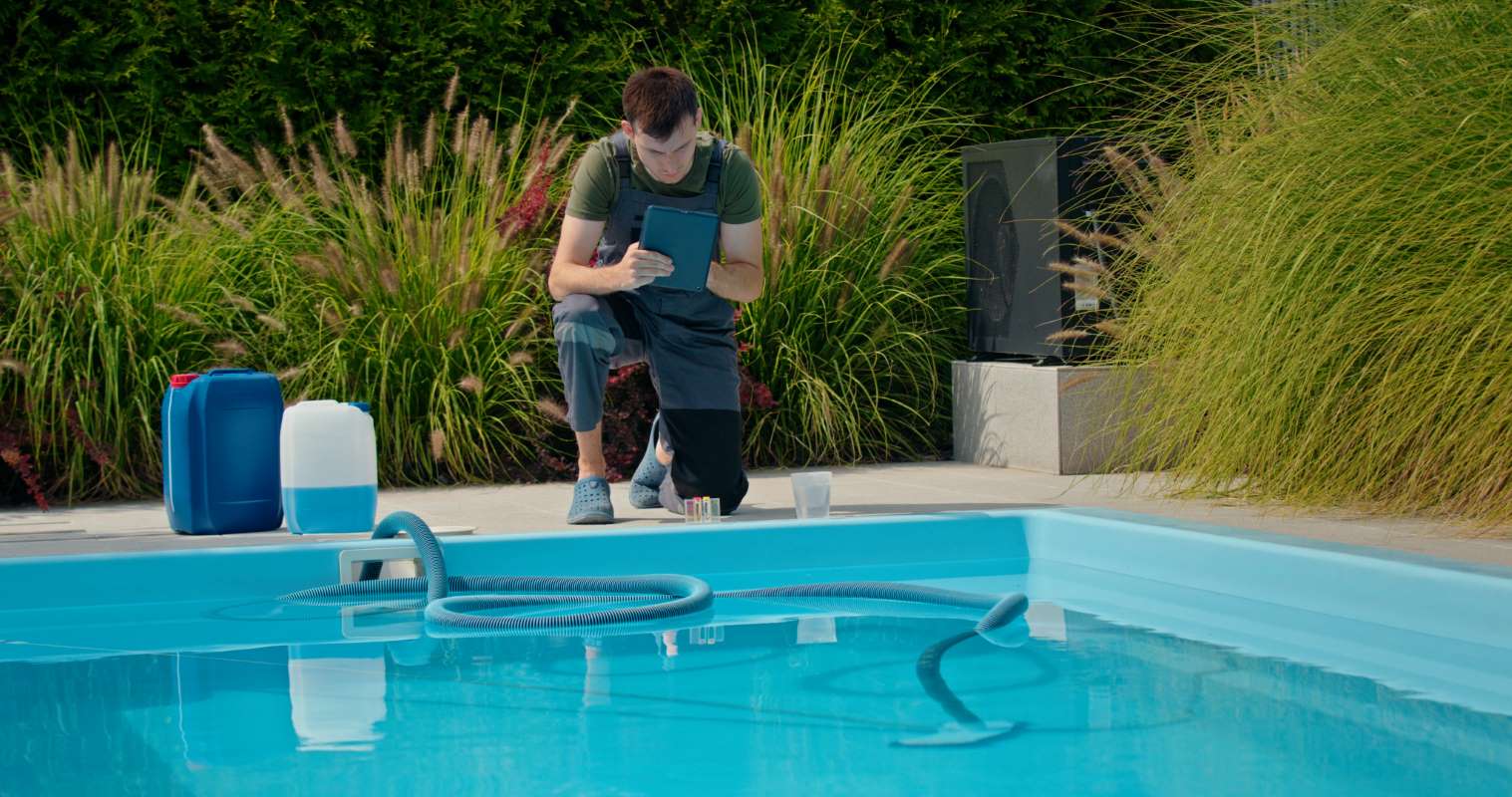
📌 Key Takeaway: Pool service techs quit over three things: unpredictable pay, feeling interchangeable, and no path forward. Fix those three and retention improves fast. Motivation is structure, not speeches.
How to Motivate Pool Service Employees
A pool route owner usually hires the first technician after the workload stops fitting into one truck and one schedule. That hire changes the business, but it also exposes every weak spot in how the company runs. If pay swings from week to week, the tech feels invisible, and there is no growth path, turnover shows up quickly.
The fix is not pep talks or branded shirts. It is a set of operating decisions that make the job stable, recognizable, and worth staying in. Owners who put those pieces in place keep good techs longer because the work becomes easier to understand and easier to trust. That matters in a trade built on consistency.
In Florida, the pay floor for this kind of work is not theoretical. The BLS reports that pool and facility maintenance workers had a mean annual wage of $48,750 in Florida on May 1, 2025. That gives owners a concrete reference point when they build compensation that feels steady enough to keep people. It also keeps the conversation grounded in a real market, not a guess.
That wage benchmark matters because it sets expectations before the first hire is made. If the route cannot support that level of stability, the problem is not motivation. It is the business model.
The same principle applies to safety and liability. CDC healthy swimming guidance has long pointed to Cryptosporidium as a leading cause of treated-water outbreaks, and operators who keep documented chlorine logs protect both customers and the business. That kind of recordkeeping is not just compliance theater. It tells employees the company runs on standards, not guesswork.
Why Pool Techs Actually Quit
Pool techs do not usually leave over one bad day. They leave after a pattern builds. The job starts to feel unreliable, unnoticed, and physically draining, then they begin looking for work that feels more predictable.
Pay is the first pressure point. When hours bounce around, overtime disappears, or expenses land on the worker, the job becomes hard to plan around. In Florida, that expectation has to line up with the market. The BLS put the mean annual wage for pool and facility maintenance workers at $48,750 on May 1, 2025, which gives owners a clear benchmark when they decide whether their compensation is steady enough. The Florida wage table makes that baseline hard to ignore.
Recognition matters next. A technician can clean pool after pool, catch a failing pump early, and still hear nothing unless a customer complains. That silence sends a message that the work is interchangeable.
Then comes the ceiling. If year one looks exactly like year three, ambitious people leave. They want to know what improvement looks like and what they get for staying.
The physical side matters too. Pool work means sun, chemicals, dehydration, lifting, and long days outdoors. If an owner treats that as normal instead of something to manage, the job burns people out faster. The strongest retention plans address all of it together.
Documentation also matters in a different way. When a tech keeps chlorine logs, notes equipment issues, and follows a clean handoff process, the route becomes easier to defend if a customer complains or an incident is questioned. That reduces stress for the worker and gives the owner a paper trail that supports the service model.
Structural Fix #1: Predictable Compensation
Stable pay is the foundation. If the technician has to guess what the paycheck will look like, every other retention effort starts on weak ground.
Predictable compensation means paying by the pay period instead of letting income swing with the weather. It means smoothing seasonal highs and lows so the technician does not carry the risk of a business that naturally rises and falls through the year. It also means avoiding piecework pay that rewards rushing. A fast technician who skips steps creates callbacks, complaints, and more work later.
A better structure is simple: base pay that does not wobble, a bonus tied to results that matter, and no hidden surprises. If the accounts they service stay healthy and customers remain on billing, the technician should see that reflected in the check. That gives them a reason to work carefully instead of quickly.
A useful way to think about it is this: a tech who earns less on paper but gets paid steadily often stays longer than someone whose total pay looks a little higher but changes all the time. Predictability lowers stress, and lower stress reduces the urge to quit.
In Florida, that baseline is easy to anchor because the market already gives owners a reference point. The BLS Florida wage table dated May 1, 2025, shows the mean annual wage at $48,750 for pool and facility maintenance workers. Owners do not have to guess where “steady enough” starts.
That number matters for hiring decisions too. It tells the owner what it takes to offer a paycheck that feels serious, not temporary. It also helps the business avoid underpricing labor and hoping morale will cover the gap.
Predictability also supports better service habits. When a technician is not racing to maximize one stop at the expense of the next, there is more room for proper chemical checks, cleaner notes, and fewer avoidable mistakes. That steadiness protects the route and makes the employee feel like quality actually matters.
Structural Fix #2: Named Recognition, Weekly
Recognition costs almost nothing, but it has to be specific. Generic praise does little. Being noticed by name changes how the job feels.
A short weekly check-in works better than a formal review for this. Ask what pools were difficult, what equipment looked off, and whether anything in the route needs attention. That gives the technician a voice and tells them their judgment matters. It also helps the owner catch problems before they become complaints.
Customer praise should be forwarded in writing. If a customer says the water has never looked better, send that message to the technician with a direct note saying the result came from their work. The point is not ceremony. The point is that someone higher up noticed.
Customer-facing communication should also name the technician. If a pool owner knows who is caring for the system, the service feels personal. The technician hears that name used in a positive context instead of only when there is a problem. That small shift reduces the feeling of being a replaceable face in a uniform.
Even introductions matter. “This is Jordan, who will be taking care of your pool” is better than “this is my technician.” One makes the worker part of the business. The other turns them into a role.
A simple example shows why this works. A route owner who forwards a customer compliment every week, names the technician in updates, and checks in briefly on Monday often sees that technician become more careful and more invested. The work is the same, but the environment tells them their effort is visible. That visibility keeps people from quietly checking out.
Structural Fix #3: A Visible Growth Path
Good techs leave when they cannot see what staying gets them. A growth path fixes that by showing what progress looks like before frustration sets in.
The structure does not need to be complicated. It needs to be real. A technician should know what skills, responsibility, and reliability move them forward. They should also know that the next level comes with better pay and a broader role.
A tiered model makes that clear. One tier can cover new hires who are still learning the route and the standards. The next can recognize technicians who can work independently and handle more difficult accounts. A lead role can cover training, complex service issues, and support for new hires. The names matter less than the fact that the ladder exists.
Even a small team benefits from this. The technician sees a future inside the business instead of imagining one somewhere else. Owners also benefit because the person who climbs that ladder becomes the one who can eventually help train others and stabilize the operation.
The warning is simple: do not promise levels you cannot fund. A fake promotion path breeds cynicism faster than no path at all. If the business is not ready to support the next step, wait until it is.
A written path also helps with accountability. When a tech knows that reliable chlorine logs, clean notes, and customer follow-through are part of moving up, the business stops rewarding only speed. It starts rewarding judgment.
Structural Fix #4: Safety and Health Matter
Pool service is hard on the body. If the business ignores that reality, it sends a clear message that the technician is expected to absorb the damage alone.
Basic protection goes a long way. Provide proper gloves, sunglasses, hats, and hydration supplies. Do not make the worker pay for the gear that keeps them safe and functional. Set the expectation that those items are part of the job, not a personal extra.
Schedule matters too. In hot months, route timing should respect the weather instead of pretending the weather does not exist. Earlier starts reduce fatigue and help keep people in the field longer. That is good for the technician and good for the business.
Paid sick time also matters more than many owners admit. It tells the technician that getting sick does not automatically turn into lost income or punishment. That matters in a job where exposure, heat, and strain are part of daily life.
Insurance and compliance cannot be improvised. Employees need to be classified correctly, and workers’ compensation has to be handled the right way. That is not optional. It protects the business as much as the worker.
A small health budget can also help. A basic annual exam or similar support costs less than losing a technician to a preventable problem that went unaddressed for too long. Retention improves when the company acts like human beings work there.
The safety message should extend to water chemistry, too. CDC guidance on healthy swimming, published December 31, 2019, is a reminder that visible routines matter. When techs know the owner expects documentation and follow-through, they take the work more seriously because the standards are clear.
Structural Fix #5: Build a Team Even If It Is Small
Isolation is a quiet reason people leave. A tech who works alone all day and hears from the owner only when something goes wrong starts to feel disconnected from the business.
That does not require a large staff to fix. It requires a few consistent habits that create a team feeling. A short Monday planning conversation helps set the tone for the week. It gives the technician a chance to raise issues before they grow. It also gives the owner a chance to reset priorities without making everything feel urgent.
Communication between technicians helps too, even if there are only a couple of them. A simple group text can be enough for sharing what went well, what failed, and what needs attention. That kind of peer exchange makes the work feel less isolated and gives the team a place to learn from each other.
Training should be visible and repeated. Bringing in a manufacturer rep or a water chemistry resource for a short session makes the business feel invested in skill, not just labor. The same is true of uniforms that look professional and fit well. Good gear signals that the company expects quality and treats the role seriously.
If there is only one technician, the owner has to create outside connection on purpose. Industry groups, peer contacts, and practical training events help replace the isolation that often drives turnover. The goal is simple: the technician should feel like part of something that is going somewhere.
When the team shares basic records and service standards, it also reduces liability. A logged chlorine reading or a clear note about a water issue is not just paperwork. It shows the tech that the company backs them with process, which makes the job feel less like a gamble.
What Compensation Actually Costs
Owners often underestimate the real cost of supporting a technician properly. Salary is only one line item. Once you add bonuses, payroll costs, safety gear, training, and vehicle support, the total is much higher than the paycheck alone.
That is not a reason to avoid hiring. It is a reason to understand the margin clearly before the hire happens. A technician who is supported well can service enough accounts to justify the cost, but the route has to be priced and organized to carry that load. If the business cannot absorb the full cost of the role, it is too early to scale.
The important point is that turnover is expensive too. Recruiting, training, lost time, and service gaps add up fast. Paying fairly and keeping a technician longer is usually cheaper than replacing one who leaves every season.
Common Mistakes Route Owners Make
The most common mistake is hiring too early because the owner wants relief before the route can support the job. That creates stress for everyone. If the route cannot carry the cost of a real employee, the business is not ready yet.
Another mistake is acting like a growth path is unnecessary because there is only one technician. A path is still useful because it tells the worker what competence leads to. It also shows that the owner thinks beyond the next payroll cycle.
Some owners try to solve compensation problems with morale talk. That never works for long. People do not stay because they were told to have a better attitude. They stay when the business feels fair and organized.
A related mistake is confusing friendliness with leadership. Being kind is good. Being clear is better. A technician respects an owner who gives straight answers about pay, expectations, and consequences.
When someone leaves, ask why before the memory fades. A candid exit conversation often shows the real problem, whether it was money, communication, scheduling, or a lack of respect. That information is useful only if the owner actually uses it.
Related Reading from Superior Pool Routes
- What to Expect in Your First 30 Days as a Pool Route Owner — operational foundation before you hire
- The 3 Most Profitable Pool Service Add-Ons — revenue to fund better comp
- Our training program — covers operations and team management basics
- How to Transition from a 9-to-5 Job to Pool Route Ownership — relevant for owners coming from corporate management backgrounds
- Current pool routes for sale
Frequently Asked Questions
What's a fair starting wage for a pool service technician in 2026?
Pay varies by market, but trained technicians generally need a wage that feels steady enough to build around. In Florida and Arizona year-round markets, the expectation is higher because the work runs through all seasons. Experienced technicians with certification and several years on the job command more.
How do I know when I can afford to hire?
Hire when the route can support the full cost of the technician and still leave room for the business to stay healthy. If the numbers only work on paper by assuming perfect conditions, the hire is too early.
Should I hire employees or 1099 contractors?
Employees. Pool service work usually looks like employee work because the owner sets the schedule, supplies the tools, and directs the job. Misclassification creates legal risk and can become expensive fast.
How do I find good pool technicians?
Referrals from customers and supplier contacts are strong sources. Local trade programs can also help, especially when graduates already have a hands-on mindset. Industry groups and state association job boards can add reach.
What's the single most important thing to get right when hiring?
Clarity before day one. The technician should know the job, the pay, the hours, and the growth path before they start. Most bad hires fail because expectations were never made explicit.
Ready to Build a Route That Can Support a Team?
A pool route can support real employees only when the route is sized and priced to carry the load. That is why route selection matters before hiring does.
Call us at 800-249-6973 or visit our Contact page to talk through route sizes that can grow into multi-tech operations. We've helped route owners scale from solo to teams since 2004.
Pricing may vary based on location, account count, and market conditions. Contact Superior Pool Routes for a personalized quote.