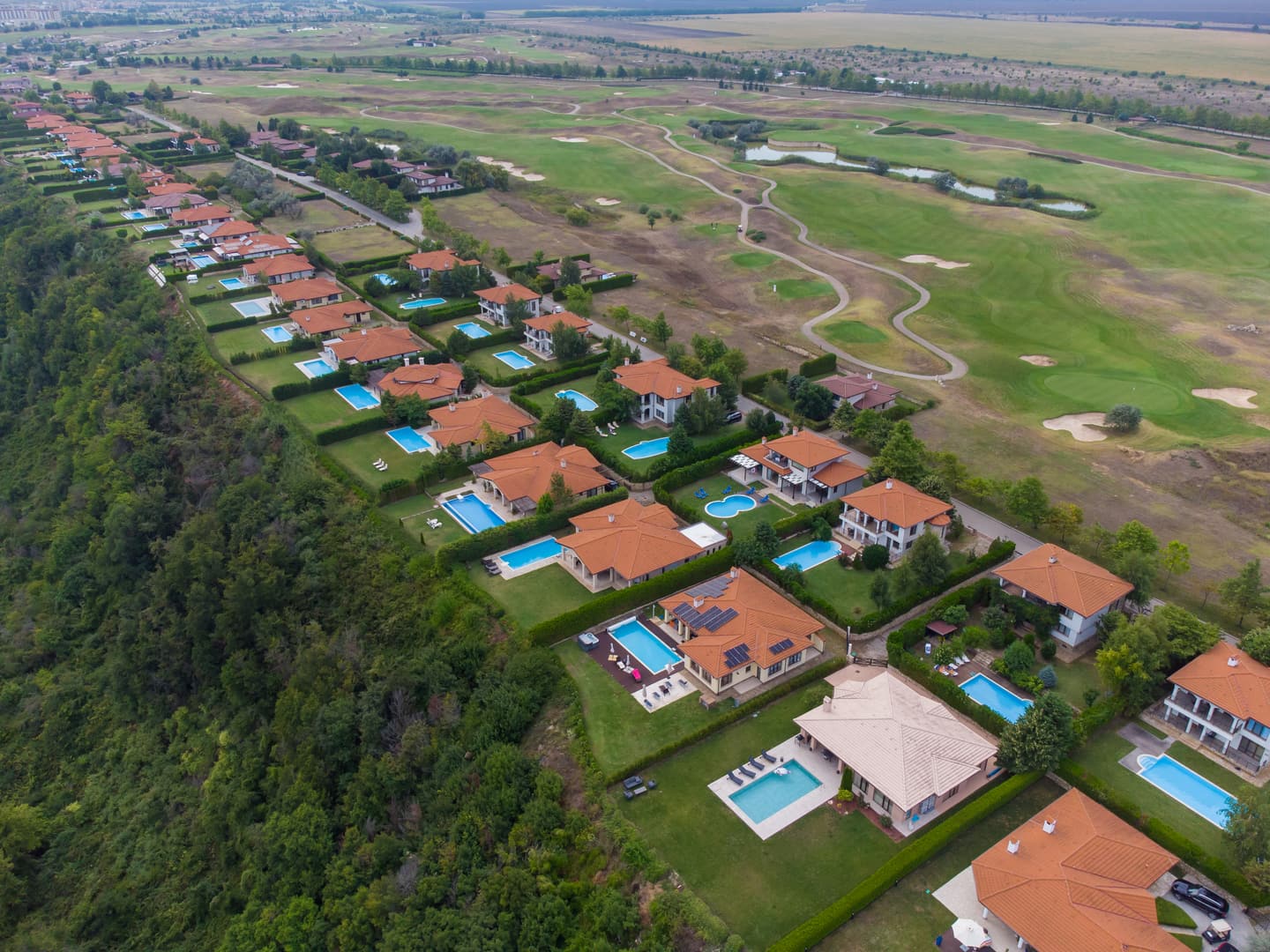
📌 Key Takeaway: California gives pool route owners year-round demand, dense service areas, and a large pool market that supports steady growth.
California is one of the strongest states for building a pool route business because the work never disappears for long. Warm weather, busy metro areas, and a large number of pools create recurring service needs across the state. If you want to grow a pool service company, California gives you the kind of market density that makes route building practical and scalable.
Electricity costs also matter in California because pool equipment runs on more than labor alone. The U.S. Energy Information Administration reported California residential electricity at 33.35¢/kWh in March 2026, which makes efficient equipment management and clean service work even more important for pool owners. You can review the data in the EIA electricity monthly report.
California’s income levels also support the business case. The Census ACS 2024 reported a median household income of $99,122, which helps explain why many neighborhoods can support recurring pool service without the pricing pressure seen in lower-income markets. You can review that figure on the Census profile for California.
Introduction
Location shapes every pool route business. In California, the mix of climate, population density, and pool-heavy neighborhoods creates a strong base for recurring service work. The state’s large cities and suburban communities give operators plenty of room to build efficient routes, while the climate keeps pools in use most of the year. That combination matters because route density drives both revenue and route efficiency.
California also rewards operators who think long term. A pool route business works best when stops are close together, service days are organized, and recurring billing stays predictable. California’s market supports that model. Whether you are starting from scratch or adding territory to an existing company, the state gives you the customer volume needed to build a durable business.
Higher power costs add another layer to that equation. When electricity is expensive, owners pay closer attention to pump settings, filtration issues, and equipment wear. That creates more need for consistent service, because small problems become costly faster when systems are running inefficiently. The March 2026 EIA figure makes that point plain: in California, every wasted hour of pump runtime has a real cost attached to it.
The income picture matters too. The Census ACS 2024 figure of $99,122 for California points to a market where many homeowners can support regular pool care as part of normal maintenance. That does not make every area the same, but it does help explain why recurring service remains a workable business model across much of the state. Higher-income areas can also support more consistent service expectations, which helps route owners build stable schedules and avoid constant price pressure.
A Thriving Market for Pool Maintenance Services
California’s climate creates constant demand for pool care. Warm temperatures in many parts of the state mean pools need regular cleaning, chemical balancing, and equipment checks throughout the year. In major markets such as Los Angeles, San Diego, and Sacramento, the pool service calendar does not stop when summer ends. It just shifts with the weather and usage patterns.
The size of the pool market matters just as much as the weather. California has a large number of residential pools, and that gives pool route owners a wide base of potential stops to build from. In practical terms, that means more opportunities to group accounts by neighborhood, reduce windshield time, and create a route that actually runs efficiently. A route with close-together accounts is easier to manage and more profitable than a scattered schedule.
Professional service is another reason the market stays strong. Pool owners rely on technicians for water chemistry, equipment upkeep, cleaning, and repairs because these systems are too important to ignore. A homeowner can delay mowing a lawn. A neglected pool becomes a problem fast. That creates recurring demand for operators who show up on time, keep water clear, and handle issues before they turn into larger repairs.
California’s income base helps support that demand. The Census ACS 2024 profile for California shows a median household income of $99,122, which points to a market where many homeowners can treat pool maintenance as a regular operating expense rather than a luxury. That matters for route owners because recurring service depends on customers who understand the value of keeping a pool in good condition.
The Census profile for California backs that up with a straightforward signal: homeowners in many parts of the state have the income base to support ongoing service, not just emergency fixes. That kind of spending power makes a route easier to price, bill, and grow over time.
The March 2026 electricity figure from the EIA fits that reality. When residential power runs at 33.35¢/kWh, wasted runtime and poor equipment maintenance become expensive fast. For a route owner, that means the customer already has a financial reason to value efficient service, not just clean water.
Benefits of Starting a Pool Route Business in California
California offers more than demand. It also gives route owners the scale and structure needed to build a practical business. A large population, broad housing stock, and heavy concentration of pools create room for both small starts and larger expansion plans.
The state’s population gives operators access to many different types of customers. Single-family neighborhoods, apartment communities, resorts, and commercial properties all need pool care in different ways. That variety helps a pool route business stay balanced. If one segment slows down, the overall market still supports steady work. In areas where neighborhoods are tight and routes can be built with better density, the business becomes easier to run and easier to grow.
Year-round demand is another advantage. California does not shut down pool service for half the year the way colder states do. Even in areas with seasonal shifts, pools still need regular maintenance, water balancing, and equipment attention. That steady cadence makes revenue more predictable. Predictable revenue matters because it gives owners room to plan hiring, fuel, supplies, and expansion with less guesswork.
California also supports operators who want control over their work. Pool route ownership lets you build a schedule around the territory you want to serve, the pace you want to work, and the number of accounts you want to manage. That flexibility is one of the main reasons people move into pool routes in the first place. They want a business that can grow without forcing them into a retail storefront or a large overhead structure.
A real-world example makes this easier to see. Suppose an operator starts with a compact group of accounts in a Southern California suburb. The route is built around nearby homes rather than spread across multiple cities. That operator can service more accounts per day because drive time stays low. The work becomes more efficient, the schedule is easier to manage, and the business can add accounts without turning every day into a long commute. That is the advantage California gives when the route is planned well: density turns a small start into a stable operation.
Higher utility costs sharpen that advantage. At 33.35¢/kWh in March 2026, residential customers in California have a stronger incentive to stay on top of circulation problems and energy waste. That makes a well-run pool route easier to defend because the service is tied to both water quality and operating cost control.
How Superior Pool Routes Can Help You Get Started
Getting into the pool business is simpler when the route-building process is handled by a company that knows the market. Superior Pool Routes helps buyers start pool routes in California with a clear process, training, and support that fits both new owners and experienced operators.
Pool Routes For Sale are structured so buyers can choose the number of accounts and the area they want to serve. That flexibility matters because different operators need different starting points. Some want a smaller route they can manage personally. Others want a larger base so they can build a team or scale faster. Superior Pool Routes builds pool routes to match those goals instead of forcing every buyer into the same setup.
Training also matters. A pool route is only as strong as the operator running it, and new owners need to understand more than just how to show up and clean a pool. They need a working grasp of water chemistry, equipment basics, customer communication, and service flow. Superior Pool Routes provides Pool Routes Training so buyers can step into the business with the knowledge needed to do the job right. That reduces avoidable mistakes and helps owners build confidence early.
Speed is another advantage. When you are ready to start, you do not want to spend months waiting to get moving. Superior Pool Routes can begin account acquisition quickly after you select your target city or zip code, which helps you get into the field without a long delay. That matters in California because route density and timing both affect how fast a business starts producing revenue.
Experience counts too. Superior Pool Routes has operated since 2004 and has worked with thousands of customers over the years. That history gives buyers a practical partner who understands account placement, route planning, and business setup. If you want to understand the company’s approach in more detail, the Superior Pool Routes Why Us page is a useful place to start.
Cost-Effective Entry into the Pool Service Industry
California is a strong market, but it is also a smart place to enter the industry because the route model keeps startup costs manageable. Instead of buying a storefront, stocking shelves, or hiring a large crew on day one, you can start with a pool route and focus on recurring service work. That lowers the barrier to entry and keeps the business model simple.
The income data helps explain why that model works here. Census ACS 2024 reported a median household income of $99,122 for California, and that level of spending power supports recurring service in many neighborhoods. For route owners, that means the market is not built only on one-off work. It supports ongoing service relationships with homeowners who can keep up with regular maintenance.
Superior Pool Routes uses an account-based pricing structure that makes the numbers easier to evaluate. Routes with 40+ accounts are priced at 6× monthly billing, routes with 30–39 accounts are priced at 6.5× monthly billing, and routes with 20–29 accounts are priced at 7× monthly billing. Industry standard is 12×. That difference matters because it gives buyers a lower entry point and a faster path to recouping their investment.
The value shows up in daily operations too. A pool route business has relatively low overhead once it is running. The main costs are fuel, chemicals, tools, and routine maintenance supplies. There is no need for a retail lease or a warehouse full of inventory. That keeps the model lean and helps owners focus on route performance instead of fixed overhead.
Lower overhead also makes the business easier to expand. When each account produces recurring billing, and route density keeps travel time under control, the owner has room to reinvest in growth. That is one reason pool routes remain attractive in California: the business can start small, produce regular income, and scale as the owner adds more accounts.
Flexibility and Control Over Your Business
Pool route ownership gives you more control over your day than most service businesses. You decide how to organize the route, how quickly to grow, and how much of the work you want to handle yourself. That control is valuable in California, where route density can support a wide range of business sizes.
Work-life balance is one of the practical benefits. A well-built route lets you plan the week instead of reacting to a chaotic schedule. You can organize service days by area, keep driving time manageable, and build a routine that fits your business goals. For solo operators, that can mean a more predictable workday. For larger companies, it creates room to assign work efficiently and keep technicians focused on the right territory.
Scalability is just as important. A pool route business does not have to stay small. Once the first route is running smoothly, you can add more accounts and expand into nearby areas as demand grows. California is well suited to that kind of expansion because there are many neighborhoods where route density can be improved over time. The more efficient the territory, the easier it is to build a business that supports hiring and long-term growth.
That control is part of what makes pool routes appealing to both first-time owners and experienced service companies. You are not starting from a blank slate with no structure. You are building a service business around recurring work, defined territory, and repeatable operations. That structure gives owners a clear path forward.
California’s Diverse Market Demographics
California’s customer mix is broad, and that creates more ways to build a pool route business. Residential neighborhoods make up a large part of the market, but commercial properties, hospitality locations, and managed communities also add depth. That diversity gives operators flexibility when they are building and refining territory.
Different areas of the state support different service styles. Some routes are built around high-density suburban neighborhoods. Others serve upscale communities with larger pools and more detailed expectations. Cities like Beverly Hills and Palm Springs show how varied the market can be. In higher-income areas, customers often expect consistent, professional service and are willing to pay for reliability. In other parts of the state, route efficiency and volume matter more.
That mix helps stabilize the business. If your route is built around several customer types, you are not relying on one segment alone. Residential work provides recurring volume. Higher-end neighborhoods can improve average billing. Managed properties can add consistency. The result is a stronger route that can absorb changes in one part of the market without losing momentum.
California also rewards operators who understand local expectations. Customers pay attention to communication, service quality, and consistency. A business that shows up on schedule, handles chemistry correctly, and communicates clearly can build a strong reputation quickly. That matters because pool service is recurring work. Every visit is a chance to keep the route steady and keep customers satisfied.
California and the Long-Term Case for Pool Routes
California remains a strong place to start a pool route business because the fundamentals hold up over time. Pools need ongoing maintenance, service density creates efficiency, and the state’s large market gives owners room to grow. Those are durable advantages, not short-term trends.
The business model also fits the state’s conditions. Warm weather supports recurring service. Dense neighborhoods support better routing. A large and varied population supports different types of accounts. Put those together, and you get a market where a well-run pool route can produce dependable income and support expansion.
That is why California continues to stand out for new and growing operators. If you want a business that rewards organization, consistency, and route planning, California gives you the market structure to make it work. With Superior Pool Routes, buyers can move into that market with training, support, and a clear path to building a pool route business that lasts.
California is a practical place to start because the demand is real and the route model is built for recurring work. For the right operator, that combination creates a business with stability, flexibility, and room to grow.
Related: pool routes for sale in California
Related: Pool Routes Training
Related: pool routes for sale in California
Related: Pool Routes Training
Related: pool routes for sale in California
Related: Pool Routes Training
Related: pool routes for sale in California
Related Articles
- High-Income Neighborhoods in Santa Clara, California Perfect for Pool Pros
- What Makes Santa Rosa, California Perfect for Multi-Truck Pool Ops
- 70 Creative Ways to Attract Homeowners Associations in Southern California
- Adapting to Rising Water Costs in California's Central Valley
Related: Superior Pool Routes Why Us