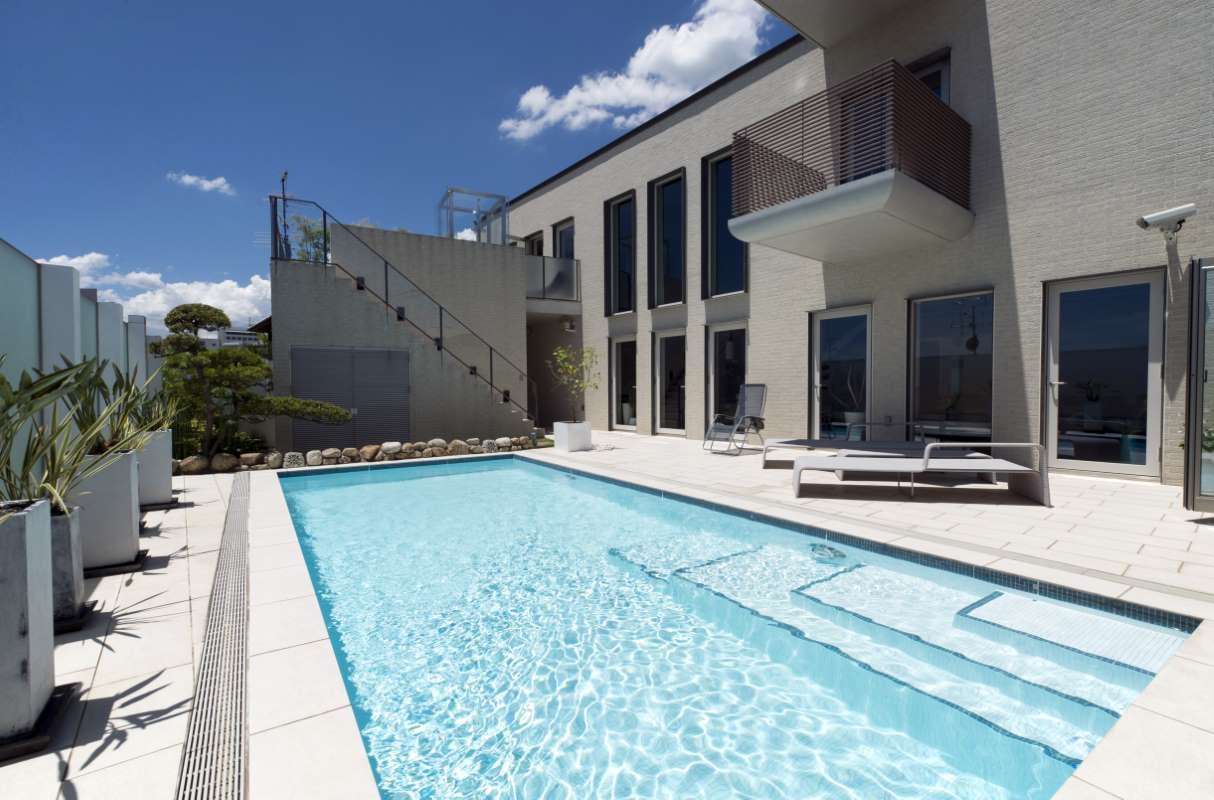
📌 Key Takeaway: In evaporation-heavy regions, calcium hardness rises because water leaves the pool but dissolved minerals stay behind, so steady testing and water replacement matter.
Pool owners see the same pattern in hot, dry climates again and again: water levels fall, the remaining water becomes more concentrated, and calcium hardness climbs. That change is not mysterious. It is the direct result of evaporation, make-up water, and the mineral content already present in the supply. Once you understand that chain, it becomes much easier to keep water balanced, protect surfaces, and avoid avoidable repair work.
California operators know this pattern well, and the labor side of the work is real too. The BLS wage data for California pool and facility maintenance workers, dated May 1, 2025, shows how much routine water care, inspection, and correction matter as a service line, not just a chemistry detail. In Florida, the same kind of work is equally tied to day-to-day operations. The BLS wage data for Florida pool and facility maintenance workers, dated May 1, 2025, lists a mean annual wage of $48,750, which underscores how much recurring pool care supports real local businesses. BLS wage data for Florida pool and facility maintenance workers, dated May 1, 2025, reflects the value of the repeated testing, balancing, and correction that keep calcium-related problems from building up. That labor shows up because evaporation does not happen once. It keeps returning to the service calendar.
California and Florida also show why this work is more than chemistry theory. The BLS wage data for Florida pool and facility maintenance workers, dated May 1, 2025, gives a concrete benchmark for the steady labor behind pool care. In practical terms, that means water balance is part of the service business itself, not a side note. For Florida operators, that same BLS source shows a mean annual wage of $48,750, which puts a real number behind the recurring testing and correction that calcium issues demand. The point is simple: when evaporation keeps changing the water, maintenance keeps becoming part of the business model.
That Florida wage figure is worth reading alongside the chemistry. The BLS wage data for Florida pool and facility maintenance workers, dated May 1, 2025, puts a measurable value on the recurring inspection and correction work that keeps a pool usable. It is a reminder that calcium management is not just a water test; it is labor, scheduling, and follow-through.
Calcium hardness is one part of overall water balance, but it affects the whole pool. When the level drifts too high, scaling, cloudy water, and rough surfaces become more likely. When the level stays in a reasonable range, the pool is easier to manage and the equipment lasts longer. The goal is not to chase a perfect number once and forget it. The goal is to understand why the number changes and respond before the water starts leaving deposits on tile, plaster, heaters, and plumbing.
The source water matters too. A pool filled with harder municipal water starts with a different baseline than one filled with softer water. Every refill after evaporation pushes the pool toward the chemistry of the source water, not away from it. That is why evaporation-heavy regions require more than occasional guesswork. They require routine testing, careful observation, and a maintenance plan that accounts for local conditions.
Understanding Evaporation and Calcium Hardness
Evaporation is the starting point. Water turns to vapor, but the dissolved minerals in that water do not disappear with it. They remain in the pool, so the same amount of calcium is now suspended in a smaller volume of water. That is why calcium hardness rises even when no calcium has been added.
Heat speeds the process, and dry air makes it worse. Wind pulls moisture off the surface faster, and direct sun raises water temperature, which encourages even more evaporation. That is why places like Florida and Texas deal with recurring changes in pool chemistry, even when the pool itself looks clean. In a climate like that, water loss is not a one-time event. It is part of the operating reality.
The labor behind that reality shows up in the numbers. BLS wage data for Florida pool and facility maintenance workers, dated May 1, 2025, reports a mean annual wage of $48,750. That is a clear sign that evaporation-driven maintenance is not a side task. It is a steady service line built around testing, topping off, and correcting water that keeps drifting out of balance.
A practical example makes the pattern easy to see. Imagine a pool service tech in Phoenix, Arizona, Arizona, who services the same backyard pool every week. The weather in Phoenix on September 19, 2026, showed daytime highs averaging 100°F this week, peaking near 103°F, and heat like that drives consistent pool and lawn service demand. The water line has dropped, the owner has topped it off several times, and the test kit now shows higher calcium hardness than the previous month. Nothing “added” calcium in the dramatic sense. The pool simply lost water to evaporation, then received replacement water that carried its own mineral content. The concentration climbed because the pool kept cycling through loss and refill. That is exactly how evaporation-heavy regions push calcium hardness upward over time.
Florida shows the same service reality from a different angle. The BLS wage data for Florida pool and facility maintenance workers, dated May 1, 2025, reflects the steady labor behind repeated testing, balancing, and correction. That work exists because evaporation is not occasional in warm climates. It keeps showing up in the weekly maintenance cycle, and the BLS wage data for Florida pool and facility maintenance workers, dated May 1, 2025, gives a concrete benchmark for that recurring work. On a broader level, that pay data also shows why Florida pool service remains a real, ongoing business line rather than a one-off repair trade. The work repeats because the chemistry repeats.
The important part is that this process is cumulative. One hot week may not create a major issue, but repeated evaporation and refill cycles do. The pool does not reset itself between service visits. Every gallon that leaves changes the chemistry left behind, and every gallon that comes back carries a new set of minerals. That is why calcium hardness trends upward unless an operator actively manages dilution, source-water quality, and overall balance.
The pool’s surroundings also shape the problem. A pool that sits in full sun, takes constant wind, and has little shade will usually lose water faster than a protected pool in the same city. Rooflines, fencing, landscaping, and even the direction the wind hits the yard all influence how fast evaporation happens. In practice, that means two pools in the same neighborhood can behave differently. One may need minor corrections, while the other needs regular attention to keep calcium from building too high.
The Role of Water Chemistry
Calcium hardness never acts alone. It interacts with pH, alkalinity, and temperature, and those relationships determine whether calcium stays dissolved or starts forming scale. When the balance drifts, the same water that looked fine at one service visit can begin leaving deposits by the next.
Most pool operators keep calcium hardness within a manageable range and use pH and alkalinity to support that balance. When calcium hardness gets too high, the water becomes more likely to deposit minerals on surfaces and equipment. That is why a pool with a “good-looking” water sample can still have a hidden problem. Clear water does not always mean balanced water. A pool can look inviting and still be slowly coating heaters, tile, and plumbing with scale.
Source water adds another layer. Municipal supplies vary from one area to another, and even a single source can change over time. A pool filled in one season may begin with a different calcium profile than the same pool filled later. Once that water is in the pool, evaporation changes the concentration again. The result is a moving target, not a fixed number. That is why water testing has to be consistent, not occasional.
The relationship between calcium and pH is especially important. As pH rises, the water becomes more likely to drop calcium out of solution. In simple terms, a pool with high calcium hardness and high pH is much more likely to scale than a pool with the same calcium hardness and a controlled pH. Operators who understand that relationship can fix the real problem instead of chasing surface symptoms. If the tile line is building scale, the issue may not be “too much calcium” alone. It may be the combination of calcium, pH, alkalinity, and heat.
Temperature also matters because warmer water changes the way minerals behave. Hot water can push the balance toward scale faster than cooler water. That is one reason pools in hot climates require tighter attention. A water sample that looks acceptable on paper may still be trending in the wrong direction if the pool is warm, heavily evaporating, and frequently topped off with hard source water.
Regular testing is the only reliable way to keep up. Testing calcium hardness, pH, and alkalinity together gives a more complete picture than checking one number by itself. That broader view helps pool owners spot patterns early. If calcium hardness climbs a little every time the water gets topped off, the operator can respond before the pool reaches the point where scaling becomes obvious. In Florida, where recurring service is part of the business, the BLS wage data for Florida pool and facility maintenance workers, dated May 1, 2025, reinforces how much value sits in that routine inspection work. The same wage data, reported by the Bureau of Labor Statistics, makes it clear that the labor behind consistent testing is real and recurring.
Managing Calcium Hardness Effectively
Managing calcium hardness starts with routine water testing, but testing alone does not solve the problem. The point of testing is to know when the pool is drifting so you can choose the right response. In evaporation-heavy regions, that response usually begins with better control of water loss and better use of replacement water.
Dilution is one of the most direct tools. If calcium hardness gets too high, adding fresh water can bring the concentration back down. That works because the pool is no longer holding the same concentration of minerals in the same volume of water. Still, dilution should be done carefully. You need to understand the calcium content of the incoming water so you are not solving one problem while creating another. If the refill water is also hard, the improvement may be smaller than expected.
Chemical treatment can help, but it is not a substitute for good water management. Some products are designed to limit scale or help manage calcium-related issues, but they work best as part of a broader strategy. The operator still has to monitor pH, alkalinity, and temperature. If those factors remain out of range, a chemical treatment may only slow the problem rather than solve it.
Water level management is another practical lever. When the water drops too low, evaporation has already started concentrating the minerals left behind. Keeping the pool at the proper level helps reduce that concentration effect. It also helps skimmers, pumps, and circulation systems work the way they should. A pool that repeatedly runs low often becomes a chemistry problem and a mechanical problem at the same time.
Pool covers make a real difference in high-evaporation areas. They reduce water loss, which reduces the concentration of minerals. They also reduce the frequency of refills, which limits the amount of hard source water being added back into the pool. That one change can help stabilize calcium hardness over time. For pool owners in hot, dry climates, a cover is not just a convenience item. It is a chemistry tool.
Consistent service schedules also matter. When a pool is checked on a predictable basis, trends are easier to catch. A technician can see whether calcium hardness is moving up because of the season, because of refill patterns, or because the pool has started to lose more water than usual. That kind of observation is hard to get from a one-time test. It comes from repeated visits and a habit of comparing one sample to the next.
The same logic applies to equipment protection. A heater, filter, or salt system can be affected long before the owner notices a visible problem in the water. By the time scale is obvious, some of the damage may already be done. That is why management has to be preventive. The best results come from addressing calcium hardness while the pool still looks normal.
The Economic Impact of Calcium Hardness
High calcium hardness affects more than appearance. It affects operating cost, repair frequency, and the time spent solving problems that should have been prevented. That is why pool owners and pool service professionals both need to take it seriously.
Scale is expensive because it spreads across multiple parts of the system. It can build on tile, in heaters, inside plumbing, and on surfaces that need to stay smooth. Once deposits form, they are time-consuming to remove. In some cases, aggressive cleaning or equipment replacement becomes necessary. That creates a cost that could have been reduced with earlier water balance management.
The hidden cost is the extra labor involved in keeping the pool usable. A pool with recurring calcium issues often needs more chemical adjustment, more testing, and more follow-up visits. It may also need more frequent brushing or cleaning to keep the surfaces from looking dull or rough. Those are not dramatic emergencies, but they still eat into margins and increase frustration for the owner. Florida’s wage picture helps explain why that labor matters. The BLS pool and facility maintenance data for Florida, dated May 1, 2025, puts a real payroll value on the work that keeps calcium-related problems from spiraling. The same source, BLS wage data for Florida pool and facility maintenance workers, dated May 1, 2025, shows why recurring service is worth paying for. That figure, $48,750, is a useful benchmark for understanding the labor behind reliable pool care.
Commercial pools feel those costs fast because small problems multiply across more water, more use, and more service exposure. A facility that sees frequent evaporation and heavy turnover cannot afford to ignore calcium trends. Even modest scale can create a maintenance burden when it affects multiple pools or high-use systems. That is why service providers who can explain calcium hardness clearly become more valuable to their clients. They are not just treating water. They are preventing avoidable operating cost.
For pool maintenance entrepreneurs, this topic is a practical selling point. Clients appreciate clear explanations when a problem is tied to real conditions instead of vague advice. If you can show why evaporation is pushing calcium hardness upward, and how a cover, refill strategy, and consistent testing reduce that pressure, you build trust. That trust leads to retention, referrals, and steadier work.
This is also where route density matters. Operators with more nearby accounts can inspect, compare, and correct water issues efficiently. They see patterns across multiple pools in the same area and learn quickly how local conditions affect calcium balance. A scattered schedule makes that harder. A denser pool route makes it easier to catch trends early and serve more accounts with less wasted time. That is one reason pool routes remain a steady business choice, even when weather and water conditions make the chemistry more demanding.
Practical Tips for Pool Owners
The most effective way to manage calcium hardness is to build habits that reduce surprises. Start with regular testing. A test kit or professional service can show whether calcium hardness is creeping up, especially during hotter months when evaporation is stronger. The more consistent the testing, the easier it is to recognize a pattern before it becomes a repair issue.
Keep the water level where it should be. Low water makes evaporation’s effect more obvious because less water means less dilution. If the pool frequently falls below the correct level, the chemistry will drift faster and circulation can suffer. Even a well-balanced pool can become unstable if water loss is allowed to continue unchecked.
Use a pool cover when practical. Covers reduce evaporation and limit the number of times hard source water has to be added back into the pool. That means less mineral concentration over time. For owners in hot, dry climates, this is one of the simplest ways to slow calcium buildup without changing the entire maintenance routine.
Pay attention to refill water. If the water used to top off the pool is hard, that calcium is entering the pool and becoming part of the long-term chemistry profile. Operators should not assume fresh water is automatically “better” for balance. It may lower one concentration through dilution while still contributing minerals that affect future readings.
Watch for early warning signs. Cloudy water, rough tile, and small white deposits are often the first clues that calcium is getting out of range. Those signs are easier to address early. Once scale becomes heavy, cleanup takes more time and may require more invasive service.
Work with a pool professional when the numbers stop making sense. Calcium hardness does not exist in isolation, and it is easy to miss the real cause if you only look at one reading. A service tech can compare the current sample with prior visits, review the effects of evaporation, and recommend a response based on the pool’s actual conditions rather than a generic rule.
For operators serving Florida, Texas, and Arizona, this is standard work. Hot weather, dry air, and frequent refill cycles keep calcium management on the service checklist. The pools do not manage themselves, but they do become predictable when the chemistry is monitored with discipline.
Calcium hardness rises in evaporation-heavy regions for a simple reason: water leaves, minerals remain, and refill water adds another layer of chemistry to the pool. Once you see that cycle clearly, the solution becomes straightforward. Test regularly, control evaporation where you can, manage source water carefully, and correct imbalances before they turn into scale or equipment damage. That approach protects the pool, keeps service predictable, and supports a stronger pool business over time.
If you are building a pool service company or expanding into new territory, these maintenance realities matter because they shape the kind of service clients need every week. A well-run pool route depends on understanding local conditions, responding quickly, and keeping water balanced across the season. That is the kind of steady work Superior Pool Routes helps operators build, and it is one reason pool routes remain a solid business in climates where evaporation never stops.
Related: pool routes for sale