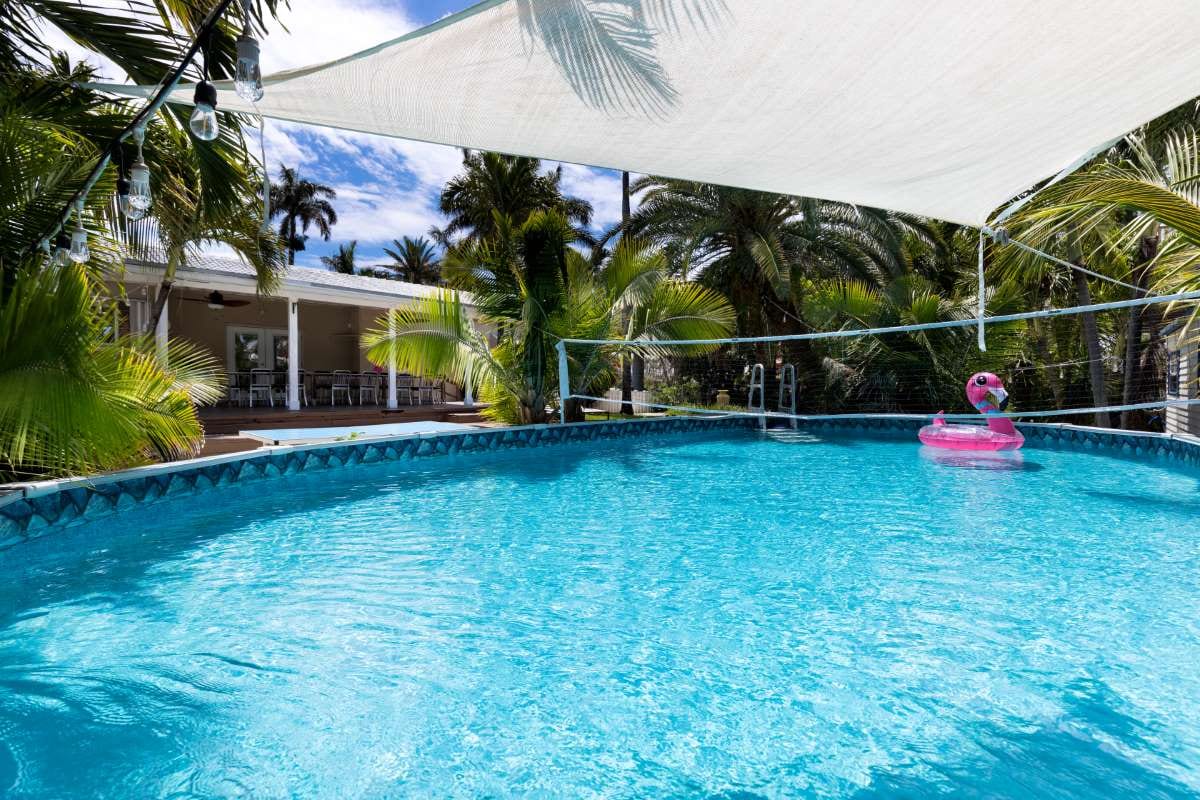
📌 Key Takeaway: A pool service route is a group of pool maintenance accounts serviced on a regular schedule, giving an operator recurring work, predictable billing, and room to grow.
Understanding Pool Service Routes
A pool service route is a collection of swimming pool maintenance accounts that a pool technician services on a regular schedule. That simple structure is what makes pool routes durable. Instead of chasing one-off jobs, the operator returns to the same accounts week after week, handles cleaning and chemical balancing, and builds a business around recurring service.
That recurring rhythm matters. It creates predictable work, makes planning easier, and gives the operator a clearer path to scaling. In places like Florida and Texas, where pool ownership is common and service demand stays active through long warm seasons, pool routes can support a serious business. The route model rewards consistency. If the work is done well, customers tend to stay, and that steadiness is what turns a set of service stops into a real company.
Florida’s customer base also supports that kind of work. The Census ACS 2024 put Florida median household income at $74,568, as reported on the Census profile dated December 31, 2024. That helps explain why recurring pool care remains practical in so many Florida neighborhoods. For operators, that matters because recurring service is only as strong as the households willing to keep paying for it. Higher household income does not guarantee easy sales, but it does support the kind of regular maintenance that keeps a route stable.
A practical example makes the point clear. A technician serving a handful of nearby pools in one neighborhood spends less time driving and more time working. That route density lowers fuel waste, cuts down on windshield time, and makes the day more efficient. In Texas, that efficiency matters even more when operating costs move up. The EIA reported residential electricity at 16.39¢/kWh in March 2026, which is another reminder that overhead can shift quickly and route density helps absorb pressure better than scattered coverage.
Texas power costs moved again in April 2026, when the EIA put residential electricity at 16.99¢/kWh, up 0.60¢ from the prior month. That kind of move reinforces the same lesson: a tighter route protects margin better than a spread-out one.
Florida’s income profile also helps explain why recurring pool care fits so many neighborhoods there. A median household income of $74,568, reported by the Census ACS 2024 on December 31, 2024, gives operators a clearer picture of the spending power behind regular service. Census data from December 31, 2024 backs up that market backdrop. In practical terms, that income level supports the kind of recurring household spending pool service depends on. It also shows why Florida remains a strong place for pool route operators who want steady demand instead of short-term work. Households with room in the budget for regular maintenance help keep the schedule full and the business predictable.
Florida’s income profile is worth watching because it helps explain the kind of service commitment the market can support. When households have room in the budget for regular maintenance, the operator gets more stability and fewer gaps in the schedule. That is one reason recurring service holds up well across Florida neighborhoods.
The same technician can often complete the day on schedule because the accounts are grouped logically. That is the advantage of a well-built pool route: the business is not just about the number of pools, but about how those pools fit together. When the route is compact and the work is repeatable, the operator has a business that can hold up over time.
The Importance of Pool Service Routes in Specific Regions
Location shapes a pool service business as much as the work itself. Climate, housing density, and local pool culture all affect how routes perform. Clearwater, Houston, Conroe, Harlingen, and Atascocita each present different operating conditions, but the business logic stays the same. Where pools are part of everyday home ownership, regular service has lasting value.
Florida’s income backdrop helps explain why the model works in places like Clearwater. The Census ACS 2024 reported a median household income of $74,568, which supports the kind of regular household spending pool service depends on. That is not a guarantee of easy sales, but it does show why recurring maintenance can fit into the budget of many homeowners. The Census data from December 31, 2024 backs up that market backdrop. In a market like Clearwater, that spending power and steady pool use work together.
Texas routes also need a practical view of overhead. The EIA retail electricity report for March 2026 shows residential electricity at 16.39¢/kWh, and that kind of operating backdrop reinforces why efficient routing matters. When travel is tight and service days are organized, the business has a better chance to stay stable even when costs rise around it. The point is not just that expenses exist. It is that route density gives the operator a better way to handle them.
April’s EIA update made that even clearer. Residential electricity in Texas reached 16.99¢/kWh in April 2026, and service businesses that already keep accounts close together are better positioned to absorb that kind of pressure. A route built around compact geography has a real advantage when overhead keeps moving.
Florida’s income profile also helps explain why that service model works. The Census ACS 2024 reported a median household income of $74,568, which supports the kind of regular household spending pool service depends on. Census data from December 31, 2024 gives a clear view of that market backdrop. It is a useful reminder that the numbers behind the market matter just as much as the weather. In Florida, that spending power helps keep recurring service practical in neighborhoods where pool care is part of normal home upkeep.
That spending power matters because pool service depends on repeat decisions, not one-time purchases. A market with households that can support ongoing maintenance gives the route operator a better foundation. Florida fits that pattern in a way that makes recurring work practical.
Clearwater, FL
Clearwater is a strong example of a market where pool service fits naturally into daily life. Warm weather and coastal living keep pools in regular use, which means owners pay close attention to water clarity, equipment condition, and routine care. A pool route in Clearwater works best when the operator treats reliability as the product. Customers do not just want someone to show up; they want their pool to stay ready.
That expectation creates opportunity for a disciplined operator. In a place like Clearwater, service quality shows immediately. A clean pool, balanced chemicals, and working equipment are visible proof that the route is being handled well. That is why local reputation matters. When a route is organized and the technician communicates clearly, the business gains stability and becomes easier to expand. The income level in Florida also supports that pattern: the Census ACS 2024 figure of $74,568, dated December 31, 2024, points to a market where regular maintenance can fit into household budgets when the service is dependable. Census data from December 31, 2024 backs up that market backdrop.
Florida’s pool market also rewards consistency because homeowners often think in terms of routine, not rescue work. A technician who shows up on time and keeps the water right creates a smoother customer relationship and a more dependable route. That is the kind of operating environment where pool routes hold up well.
Houston, FL
Houston, FL, combines suburban neighborhoods with steady pool ownership, and that makes consistency the key. Pools are part of the lifestyle in many homes, especially when residents want a practical way to manage the heat and keep outdoor spaces usable. For a pool service operator, that means the route must be built around dependable scheduling and efficient coverage.
In Houston, FL, a route can become especially strong when service stops are grouped tightly. The closer the accounts are to one another, the less time the operator spends in transit and the more time remains for actual service. That efficiency helps the route stay profitable even when days get busy. It also gives the operator more control over quality, because fewer long drives mean less chance of rushing through a visit.
Texas operators also feel utility costs in the background, which makes route density worth more than a slogan. When the EIA placed residential electricity at 16.39¢/kWh in March 2026, the message for service businesses was simple: tighter routes protect margins better than scattered ones. The report on EIA retail electricity shows why operating discipline matters in a market where overhead can move without warning. A move of 0.98¢ in a single month is enough to remind owners that route design is part of profit, not a side issue.
April’s figure pushed that point further. The EIA reported 16.99¢/kWh for Texas residential electricity in April 2026, which is the kind of change that makes efficient routing more than a convenience. It becomes part of the business model.
Conroe, Montgomery County, TX
Conroe is growing, and growth changes the shape of service demand. New homes often bring new pools, and new pools need routine attention from the start. That creates a favorable environment for pool route operators who want to build in a market with expanding residential neighborhoods. In Montgomery County, a route can be designed around developing areas where homeowners expect regular maintenance rather than occasional repair.
This is also where planning matters. A route in Conroe should not be treated as a random collection of stops. It should be organized by geography and service rhythm so the operator can manage the territory efficiently. Pool Routes Is It Right For Me? helps readers think through whether this kind of business fits their goals, resources, and working style. The right route in the right part of Conroe can provide a solid base for a long-term business.
The cost side still matters here. March 2026 electricity pricing from the EIA is another reason to build routes that reduce wasted drive time and keep the service day tight. Efficient routing keeps the business from giving away margin before the first pool is even serviced. When fuel and utilities both push overhead higher, compact routes hold up better.
Harlingen, Cameron County, TX
Harlingen sits in a climate where pool care is not optional. Warm conditions and a long swimming season mean homeowners rely on regular maintenance to keep water safe and equipment operating properly. That makes the area attractive for pool route operators who want recurring service work instead of unpredictable one-time jobs.
A route in Harlingen works best when the operator understands that customers value continuity. If a pool is serviced on time and the technician handles problems before they grow, the customer has less reason to look elsewhere. That is the value of routine service in Cameron County. It supports dependable billing, reduces emergency calls, and keeps the business focused on predictable maintenance rather than constant crisis management. Pool Routes Training covers the skills that help an operator deliver that kind of service with confidence.
Atascocita, Harris County, TX
Atascocita is another Texas market where residential growth and private pools create real service demand. As neighborhoods expand, the need for regular pool maintenance expands with them. That gives operators room to build routes that make geographic sense and serve homeowners who want professional care they can count on.
The opportunity in Atascocita is not just volume. It is organization. A smart route places accounts in a way that reduces wasted driving and keeps service days manageable. That matters when the business is still growing because it helps the operator maintain quality while adding more stops. The March 2026 EIA electricity data reinforces the same point from a different angle: when overhead rises, efficient routes stay stronger. A route built with discipline can absorb more pressure than one spread too thin.
April 2026 brought another reminder from the EIA: Texas residential electricity reached 16.99¢/kWh, up 0.60¢ from the previous month. Operators in Atascocita who keep their routes tight are better positioned to handle those changes without losing control of the day.
How Superior Pool Routes Can Help You Succeed
Superior Pool Routes gives buyers a practical way to enter the pool service business with a route built around their goals. Since 2004, we have focused on helping operators build pool routes to the size and territory they need. That means the customer base is created for the buyer’s plan, not pulled from a generic package. The result is a more direct fit between the business and the operator’s capacity.
The main advantage is control. You choose the territory, the number of accounts, and the business scale you want to handle. That matters because a pool route is strongest when it matches the operator’s time, skills, and growth plan. We also provide training and support so the buyer knows how to handle service work, customer communication, and the day-to-day structure of the route. The business is steadier when the operator understands how each part fits together.
Affordable Entry into the Pool Service Industry
The pricing model is built around monthly billing and account count, which keeps the entry point tied to the size of the route:
- 40+ accounts: 6 times the monthly billing
- 30-39 accounts: 6.5 times the monthly billing
- 20-29 accounts: 7 times the monthly billing
That structure gives buyers a clear way to compare options. A smaller route can be a practical starting point for a first-time owner, while a larger route can suit an operator who already has staff or wants more immediate scale. Explore our Pool Routes For Sale to see how the numbers line up with the territory and workload you want.
The value of this model is simple: you are not buying guesswork. You are choosing a route size that matches the kind of business you want to run. For some buyers, that means starting with a lean schedule and building slowly. For others, it means entering with enough volume to make the overhead worthwhile from day one. Either way, the structure keeps the decision grounded in actual operating capacity.
Comprehensive Training and Support
Training is part of the purchase because a route performs better when the operator knows how to service pools correctly and communicate with customers. Pool work is technical enough that shortcuts create problems. Chemical balance, equipment checks, and customer service all affect retention. A buyer who understands the service process can protect the route and build trust faster.
We offer both in-field and virtual training. In-field training is available in Fort Lauderdale, FL, and Dallas, TX. Virtual training includes standard and advanced packages for buyers who need flexibility. The goal is the same in every format: teach the operator how to handle the route with confidence and consistency.
That support matters beyond the first week. A route grows when the operator learns how to troubleshoot equipment issues, manage expectations, and keep service visits on schedule. Visit Pool Routes How It Works to understand our process and how the transition from purchase to daily operation works in practice.
Building Your Pool Service Business
A pool route is not just a purchase. It is the foundation of a service business that has to be organized from day one. The operator needs a territory, a route size, and a service approach that fits the work. Those choices affect efficiency, customer satisfaction, and long-term profitability.
The first step is choosing the right location. That does not mean only picking a city name at random. It means selecting a service area where the route can be run efficiently and where the operator can cover the accounts without wasting time in traffic or stretching the day too thin. Clearwater, Atascocita, Conroe, Harlingen, and Houston all represent different operating conditions, and the best route is the one that fits the buyer’s plan.
Selecting the Right Location
Location affects more than marketing. It affects drive time, service density, and how quickly a route can become manageable. A route in Clearwater may appeal to someone who wants coastal Florida demand. A route in Atascocita may suit an operator who wants to work in a fast-growing suburban area. A route in Harlingen may make sense for someone who prefers steady warm-weather service. The point is to match the route with the business model, not just the map.
When the territory is chosen well, the business becomes simpler to run. Nearby accounts make scheduling easier. Efficient coverage lowers fuel waste. And when the service area is coherent, the operator can respond faster to issues before they become larger problems. That is why location is one of the most important decisions in route ownership.
Customizing Your Route Size
Route size should match capacity. Some buyers want a smaller start so they can learn the work and build gradually. Others want more accounts because they already have experience or team support. Superior Pool Routes can build routes from 20 to 200 accounts, which gives buyers room to choose a size that fits their goals.
That flexibility is useful for a simple reason: too small can limit growth, but too large can overwhelm a new operator. The right size creates stability. It gives the business enough work to be worthwhile without creating service failures from overload. Superior Pool Routes Why Us explains why that tailored approach matters when buyers are trying to build a business that can last.
Ensuring Customer Satisfaction
Customer satisfaction in pool service comes down to consistency. If the technician arrives on time, completes the work properly, and communicates clearly, the customer has little reason to leave. That is why warranties, training, and ongoing support matter. They reduce the friction that can otherwise damage a route.
We stand behind what we build because the operator’s success depends on reliable service. When customers trust the service, they stay on the route. That stability helps the buyer protect revenue and focus on growth rather than constant replacement. Check our Pool Routes FAQ for common questions about ownership, service, and support.
Testimonials from Successful Entrepreneurs
Real success stories matter because they show how the business works after the purchase. Buyers want to know that the route model can support a real operation, not just a theory. The experiences shared by other entrepreneurs show what happens when training, support, and good route structure come together.
What stands out in those stories is not luck. It is execution. The owners who do well pay attention to scheduling, service quality, and customer communication. They treat the route like a business that needs systems, not just labor. Read their experiences on our Pool Routes Testimonials page.
Taking the Next Step
A pool service route gives an owner recurring work, a clear service rhythm, and a business that can be built methodically. That is why the model fits so well in Clearwater, Houston, Conroe, Harlingen, and Atascocita. These markets support regular pool care, and regular care supports recurring revenue. When the route is organized well, the operator gets something more valuable than a set of stops: a business that can be managed, improved, and expanded.
Superior Pool Routes has spent years helping buyers build pool routes that match their goals. We provide the training, structure, and support needed to run the business with confidence. For operators who want steady service work and a practical path into pool ownership, the route model remains one of the most durable ways to enter the industry.
Related: Pool Routes Training
Related: Pool Routes Warranty
Related: Pool Routes For Sale
Related: Pool Routes How It Works
Related: Pool Routes Training
Related: Pool Routes For Sale
Related: Pool Routes How It Works
Related: Pool Routes Training
Related: Pool Routes For Sale
Related: Pool Routes How It Works
Related Articles
- Buy Pool Routes in Katy, Fort Bend County, Harris County, Houston, San Antonio, Conroe, Corpus Christi, TX
- Pool Routes For Sale Texas: Houston, Harris County, Katy, Fort Bend County, Tyler, Atascocita, Port Arthur
- Buy Pool Routes in Dallas, Houston, Atascocita, Allen, Longview, TX
- [How Profitable is the Pool Business: Houston, Harris County, Katy, Fort Bend County, Brownsville, Temple,