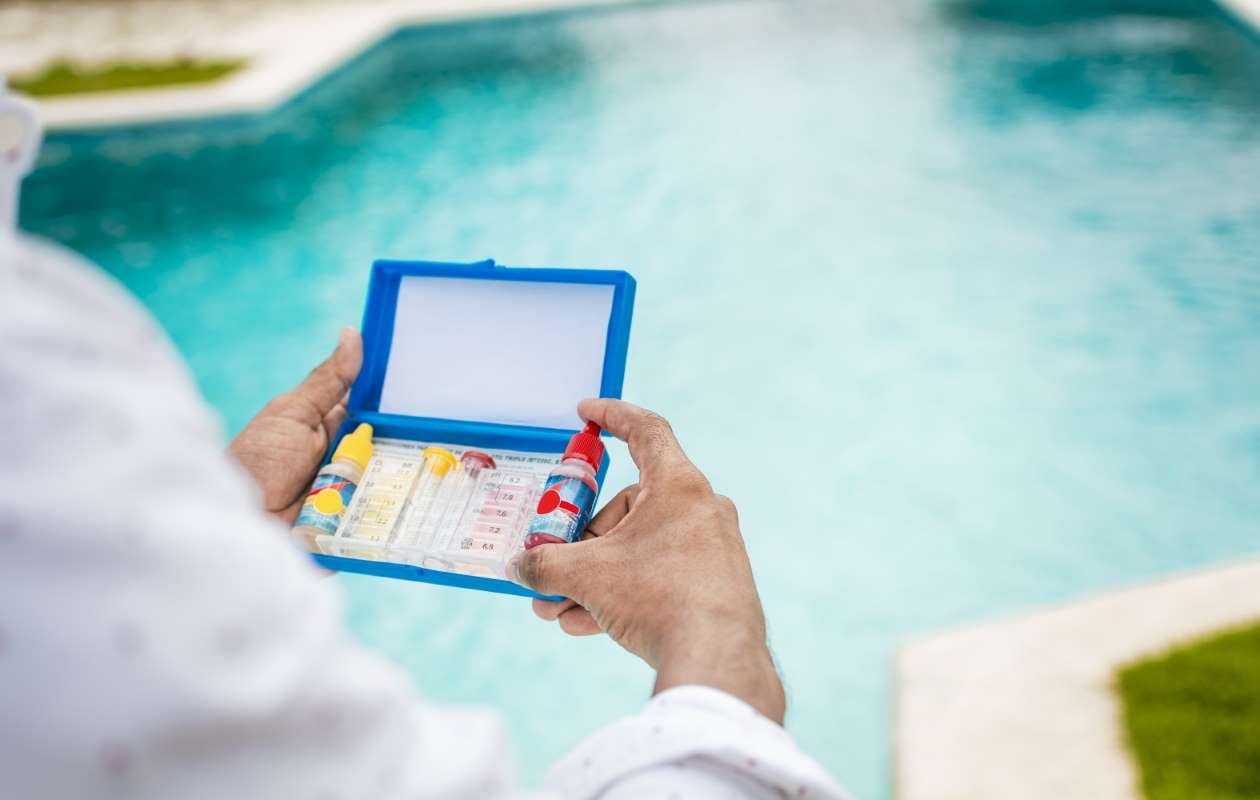
📌 Key Takeaway: Water chemistry keeps a pool safe, clear, and easier to maintain, and it is one of the core skills that separates a good service company from a great one.
Water chemistry sits at the center of pool maintenance because every adjustment affects the rest of the system. pH influences sanitizer performance. Alkalinity controls how stable that pH stays. Calcium hardness protects surfaces and equipment. Chlorine keeps the water sanitary. When those pieces work together, the pool looks better, runs better, and costs less to maintain.
For pool service companies, this is more than a technical topic. It is part of daily operations. A technician who understands chemistry can diagnose problems faster, prevent repeat calls, and protect equipment from avoidable wear. That matters whether you maintain one backyard pool or manage a growing group of accounts.
Introduction
A pool does not stay clean by accident. It stays clean because the water is balanced, the sanitizer is working, and small problems are corrected before they turn into expensive ones. Cloudy water, scaling, corrosion, and algae almost always point back to water chemistry.
The most important part of the job is consistency. A pool that is checked regularly is easier to keep in range than one that is adjusted only after it turns green or starts irritating swimmers. That is why water chemistry belongs at the center of every maintenance routine.
A real-world example makes the point clear. A pool may look fine at a glance, but if the pH has drifted high and the chlorine is underperforming, the water can start losing clarity before anyone notices. In a typical service week, that means a technician can walk a property, test the water, make a small correction, and prevent a bigger cleanup later. That kind of routine saves time, protects the equipment, and keeps the client from seeing the pool as a recurring problem.
Arizona makes this especially clear. NOAA’s statewide cooling-degree-days reading for May 1, 2025 was 307, a sign of how much heat drives pool demand and chemical use across the state. In that kind of weather, chemistry drift happens faster, so regular testing matters even more. High heat pushes evaporation, and evaporation concentrates everything left behind in the water.
That same pressure shows up in daily service work. Higher heat means faster evaporation, faster sanitizer demand, and more opportunities for pH to wander. For Arizona operators, the chemistry conversation is never abstract. It is tied to the season, the climate, and the pace of the route.
Arizona operators also know that weather can create work in a different way. FEMA declared a severe storm event in Arizona on May 29, 2026, and cleanup after storms often sends technicians back to properties that need balancing, skimming, and quick recovery work. After heavy debris and runoff, chemistry can change fast, so the first pass matters. The FEMA disaster declarations page is a reminder that weather events can quickly shift service demand toward recovery work. In Texas, FEMA declared a flood event on September 1, 2026, and that kind of cleanup creates the same need for quick, disciplined service. Flood recovery brings debris, changed water conditions, and a faster return to balance for operators who know how to respond.
For pool service providers, this knowledge also supports growth. If you are considering buying a pool route for sale in Florida, Texas, or California, water chemistry is one of the first skills you need to handle with confidence. A route only works well when the service behind it is dependable.
pH Level: The Foundation of Pool Water Chemistry
pH is the starting point because it affects how the rest of the water behaves. It measures whether the water is acidic or alkaline, and pool water needs to stay in a narrow range to remain comfortable and effective. For pools, the ideal pH range is between 7.4 and 7.6.
That range matters because sanitizer works best there. When pH moves too far in either direction, the water becomes harder to manage. High pH reduces sanitizer efficiency and can leave water cloudy. Low pH makes the water aggressive and uncomfortable. Either direction creates problems that are easy to avoid if the reading is checked on schedule.
High pH often shows up as scale, cloudy water, or buildup on tile and equipment. Low pH usually shows up as eye irritation, skin discomfort, or early corrosion. Those are not separate issues. They are signs that the pool chemistry is drifting away from balance.
Testing pH is straightforward. Test strips can give a quick reading, while a liquid test kit provides a more precise result. In service work, the best habit is to test regularly rather than waiting for visible problems. Weekly testing is a solid baseline during the pool season, and more frequent checks make sense when weather, heavy use, or recent chemical changes affect the water.
If the pH is too low, a technician raises it with soda ash. If it is too high, muriatic acid lowers it. The important part is not just adding chemicals, but adding the right chemical for the direction the water needs to move. That is the difference between simple maintenance and guesswork.
Arizona heat raises the stakes here. On May 1, 2025, NOAA’s statewide cooling-degree-days reading of 307 showed the kind of conditions that push evaporation and chemical drift faster than normal. When the weather works against you, pH has to be checked before the pool starts showing visible problems.
For pool service professionals, pH management is part of the everyday rhythm of the job. If you are looking at pool routes for sale in Texas, this is one of the first chemistry tasks you will handle across multiple stops. The accounts may be different, but the standard stays the same: test, correct, and keep the water in range.
Alkalinity: Buffering the pH Level
Alkalinity gives the water stability. Total alkalinity, or TA, measures the water’s ability to resist sudden pH swings. That buffering effect matters because a pool with unstable alkalinity becomes harder to manage from week to week. The ideal alkalinity level in pool water should be between 80 and 120 ppm.
Think of alkalinity as the base layer that helps pH stay where it belongs. When TA is too low, pH can bounce around after rain, heavy use, or chemical additions. When TA is too high, pH tends to drift upward and becomes harder to correct. In both cases, the technician spends more time chasing the water instead of keeping it stable.
That is why alkalinity is not an optional reading. A pool with good alkalinity is easier to service, easier to keep clear, and less likely to surprise the customer with recurring water issues. A pool with poor alkalinity often looks like it needs repeated pH corrections when the real issue is the buffer beneath it.
Testing alkalinity uses the same kind of kit used for pH. If TA is too low, sodium bicarbonate raises it. If it is too high, muriatic acid or sodium bisulfate can lower it. The goal is not to treat alkalinity as a one-time fix. It is to bring the water to a stable baseline that supports the rest of the chemistry.
In practice, alkalinity saves time. A technician who keeps TA in range does fewer corrective visits and spends less time dealing with chemical drift. That matters on any route, and especially when the work load grows. Stable chemistry helps a pool service business run cleaner operations and gives customers a better experience.
Calcium Hardness: Preventing Staining and Scaling
Calcium hardness is another control point that protects the pool and the equipment around it. It measures how much calcium is dissolved in the water, and the ideal range for calcium hardness is between 200 and 400 ppm. When calcium is too low, water can become corrosive. When it is too high, scale and cloudy water become more likely.
Low calcium hardness does real damage over time. Water that is too aggressive can wear on plaster, tile, heaters, and other surfaces. That damage often develops slowly, which is why it is easy for a customer to miss until the repair bill shows up. High calcium hardness creates the opposite problem. It can leave scale on the walls, inside filters, and on heated surfaces, especially where evaporation is constant.
That makes calcium hardness a protection issue as much as a water-quality issue. A balanced pool does not just look better. It also puts less stress on the system. The chemistry helps preserve the finish, the circulation equipment, and the heating components that keep the pool usable.
Testing calcium hardness requires a proper hardness test kit. If the reading is too low, calcium chloride raises it. If it is too high, the practical fix may be partial drain and refill with fresh water. The right response depends on the reading and the condition of the pool, which is why technicians need to evaluate the full water picture instead of treating one number in isolation.
For service companies, this is a strong example of why chemistry knowledge supports the business. If you are reviewing pool routes for sale in Arizona, you will deal with hard water conditions often enough that calcium management becomes part of normal route work. In a dry climate, that skill helps protect equipment and keeps water from turning into a recurring maintenance issue.
Arizona’s heat makes that work even more important. On May 1, 2025, NOAA’s statewide cooling-degree-days reading of 307 showed how hard the climate pushes evaporation and chemical demand. That same heat also drives faster mineral concentration, which means technicians need to watch the trend in the water, not just the latest number.
Chlorine Levels: The Key to Sanitization
Chlorine is the sanitizer that keeps pool water safe for swimmers. It kills bacteria, controls algae, and helps prevent the water from becoming unhealthy. The ideal chlorine level in a pool is between 1 and 3 ppm.
That narrow range matters because chlorine has to be strong enough to do the job without making the pool unpleasant. Too little chlorine leaves the water vulnerable to contamination. Too much can irritate skin and eyes and create a harsh swimming environment. Proper management is not about maximizing chlorine. It is about keeping it effective and balanced.
Testing chlorine should be part of every routine inspection. Test strips work for quick checks, and liquid kits give a more reliable reading. Once the level is known, the correction is simple. Chlorine tablets, liquid chlorine, or calcium hypochlorite can raise the level. If the pool has too much chlorine, fresh water dilution or a chlorine neutralizer can bring it back down.
This is one of the reasons service work is valued by homeowners. Most clients want a pool that looks clean and feels comfortable, but they also want peace of mind that the water is sanitary. A technician who keeps chlorine in range delivers both. That builds trust and reduces complaints, which makes the route easier to manage.
Pool service businesses that manage pool routes for sale in Nevada will find that chlorine management stays at the center of day-to-day service. In hot, dry conditions, sanitizer demand can rise quickly, so consistent checks matter. NOAA’s May 1, 2025 Arizona reading is a useful reminder of how heat drives chemical demand across the Southwest, and the same service discipline applies wherever evaporation is high. Clean water is not an accident; it is the result of regular testing and disciplined correction.
How Water Chemistry Supports Pool Route Operations
Water chemistry is not just a maintenance topic. It is a business skill. A service company that understands how pH, alkalinity, calcium hardness, and chlorine interact can work more efficiently and present a stronger service standard to customers. That matters when a company is adding more accounts and needs each stop to run smoothly.
The strongest route operators do not treat chemistry as a separate chore. They build it into the service routine. That means every visit has a purpose: test the water, identify drift, correct what needs correcting, and leave the pool in better condition than it was found. Over time, that approach reduces callbacks and keeps the route more predictable.
Arizona shows why the routine matters. On May 1, 2025, NOAA’s statewide cooling-degree-days reading of 307 reflected the kind of heat that speeds up evaporation and chemical loss. When the climate pushes water harder, the route only stays efficient if the technician stays ahead of the drift.
This also helps explain why training matters. If you are exploring pool routes for sale in California, you are not just buying work. You are buying the responsibility to keep pools safe and balanced in a market where service quality matters. A company that understands chemistry can scale with less friction because technicians know what to look for and how to fix it.
California recovery work can put that discipline to the test. FEMA declared a fire event on August 4, 2026, and property recovery and repair work can lift demand for local service operators who know how to get pools back into shape after disruption. Debris, ash, and disturbed water conditions create the kind of cleanup where chemistry knowledge pays off fast. The technician who knows how to reset a pool after damage moves faster and leaves fewer problems behind.
The billing side matters too, because better service supports better retention. Customers who see clear water and consistent results are more likely to stay with the company. That stability is one reason pool routes remain attractive to operators who want steady, practical work rather than constant reinvention.
Texas flood recovery can create the same point from another angle. When FEMA declared a flood event on September 1, 2026, the service need shifted toward cleanup and quick recovery. Operators who already understand chemistry can move faster when water conditions change overnight, because they know how to restore balance instead of guessing their way through it.
Arizona storms can make the same point from a different angle. When FEMA declares a severe storm event, like the one in Arizona on May 29, 2026, service demand shifts toward cleanup, recovery, and getting water back into range. Operators with disciplined chemistry habits move faster because they know how to reset a pool after the weather disrupts it. California fire recovery can create the same need for quick, reliable service, and the operators who understand chemistry are the ones best positioned to handle it.
Training, Support, and Daily Execution
Good water chemistry knowledge is only useful if it shows up in daily execution. That means technicians need a repeatable process, not just a list of chemicals. They need to test the water the same way each time, record results accurately, and understand how one adjustment changes the others.
That is where Pool Routes Training fits in. Training turns chemistry from theory into fieldwork. It teaches service professionals how to work through common problems, how to spot signs of imbalance, and how to keep pools in range without wasting product or time.
A strong support system matters for the same reason. Superior Pool Routes provides the resources and guidance that help buyers move from planning to execution. Since 2004, the company has focused on helping operators build pool routes to the size and territory they need, with training included in every route purchase and a 60-day account replacement warranty. That combination gives new owners a clearer path into service work and gives experienced operators a practical way to grow.
The best operators use that support to create a repeatable standard. They do not improvise chemistry from job to job. They follow a process, stay disciplined, and keep the pool in balance before small problems become service calls.
Why Chemistry Knowledge Pays Off for Pool Service Companies
Water chemistry improves more than water quality. It improves route performance. When technicians understand what each reading means, they work faster, make better decisions, and protect the pools they service. That lowers risk and strengthens customer trust.
It also makes expansion more manageable. A company that knows how to balance water correctly can take on more pools without turning every new stop into a learning curve. The service remains consistent, which is what customers remember. Good chemistry creates good outcomes, and good outcomes support retention.
That is why pool route ownership and chemistry go together. The route gives the business structure. The chemistry gives the service quality. Together, they create a model that is straightforward to operate and durable over time.
For buyers who are evaluating pool routes for sale, the takeaway is simple: know the chemistry, trust the process, and run the route with discipline. A pool service business built on clean water, stable readings, and consistent care is a business that can grow without losing control.
Understanding water chemistry is one of the most practical skills in the industry. It protects the pool, protects the equipment, and protects the relationship between the service company and the customer. That is why it belongs at the center of every maintenance plan and every route growth plan.
Related: pool routes for sale in Texas
Related: Pool Routes Training
Related: pool routes for sale in Texas
Related: Pool Routes Training