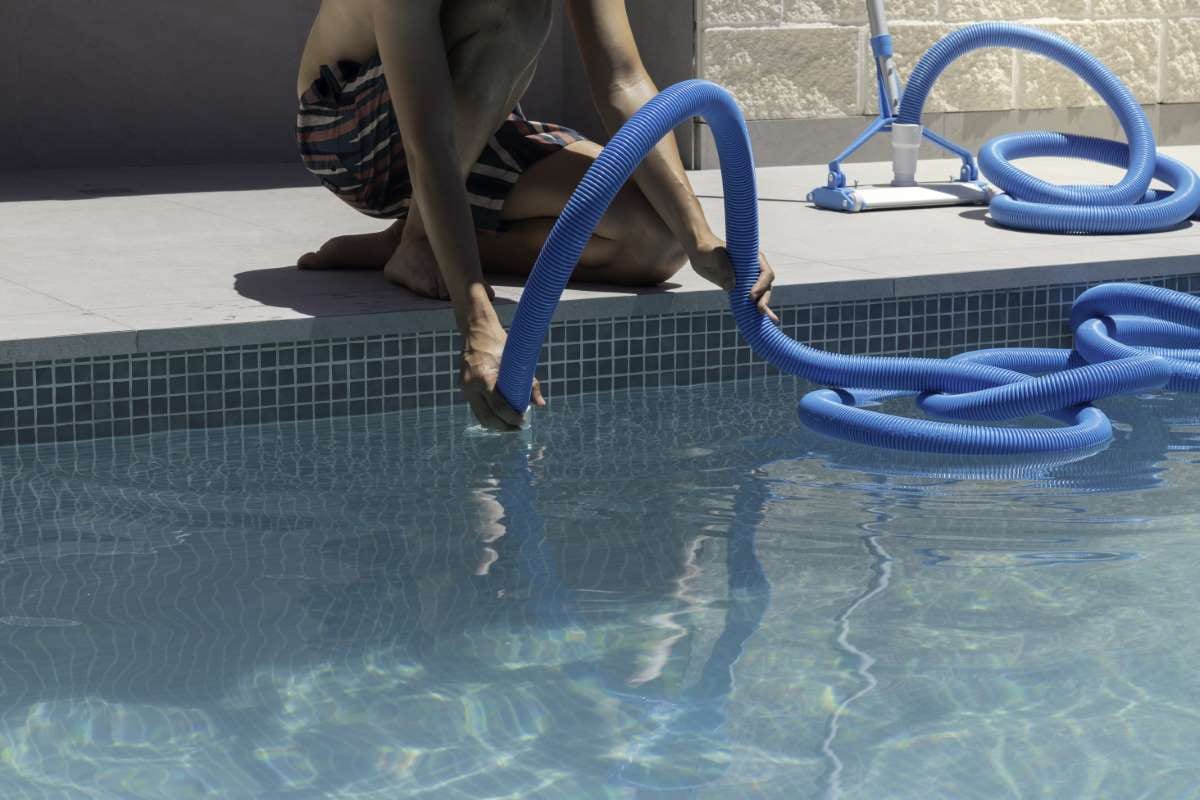
📌 Key Takeaway: Hands-on training gives pool service operators the practical skill, confidence, and speed they need to service accounts well and keep customers satisfied.
Pool service rewards operators who can solve problems in the field, not just describe them on paper. Clean water matters, but so do judgment, timing, and the ability to work through equipment issues without turning a small problem into a costly one. That is why hands-on training matters so much. It turns chemistry, equipment knowledge, and service routines into skills you can use on a real route.
Theory helps with the basics. Hands-on work teaches you what to do when a pump sounds wrong, a filter needs attention, or the water looks off in a way the textbook example did not cover. That practical layer is what helps new owners and technicians move from uncertainty to consistency. It also matters for operators building pool routes in Florida, Texas, Nevada, Arizona, and California, where conditions and customer expectations can vary by market.
For buyers financing growth, hands-on training also fits the way small-business acquisitions get done. The SBA 7(a) loan program continues to support small-business purchases across service industries, and the program page dated July 1, 2026 shows why practical preparation matters before taking on a route. Lenders want to see that the operator understands the work, not just the paperwork.
Why Hands-On Training Matters
Practical training does more than teach tasks. It builds judgment. A technician who has handled real equipment, watched a chemical adjustment take effect, and seen how different pools respond to service develops a deeper understanding than someone who only studied the process.
That matters because pool service is rarely routine for long. A clogged filter, a weak pump, a chemistry imbalance, or a customer concern can change the day fast. Hands-on training teaches technicians to work through those situations calmly and correctly. It also helps them understand how one decision affects the rest of the system, which is what separates dependable service from guesswork.
Confidence follows from repetition. Once a technician has practiced the work under supervision, they can move faster without becoming careless. Customers notice that right away. They want someone who can explain what happened, fix the issue, and leave the pool in better shape than they found it. When the technician is trained in the field, that level of service becomes much easier to deliver.
That same confidence helps on the financing side too. When an owner can explain the service process, the equipment, and the route plan, conversations with lenders become more grounded. Practical knowledge supports the business case for expansion.
The business side benefits too. Owners who understand the work can onboard new technicians faster, set clearer expectations, and spend less time correcting avoidable mistakes. That means less friction inside the company and more consistency on the route.
What Practical Training Teaches That Theory Misses
Classroom knowledge covers the language of pool service. Hands-on training teaches the rhythm of the job. That difference matters when the work starts early, the weather changes, or an equipment issue shows up at the wrong time.
The most valuable lessons are usually simple ones learned through direct experience. How a filter behaves after cleaning. How a chemical adjustment changes the water over time. How to tell when a pump issue is urgent and when it needs monitoring. These are not abstract ideas. They are decisions technicians make every day.
A real-world example makes the point clearly. A technician may know from theory that cloudy water can point to circulation or filtration problems. On the job, though, the technician has to inspect the equipment, check the filter condition, review recent chemical adjustments, and decide what to address first. That process is hard to learn from a manual alone. Once a technician has gone through it in the field a few times, the work becomes more efficient and the answers become clearer.
The SBA 7(a) page dated July 1, 2026 reinforces that service buyers are still using outside capital to enter or grow. That makes training more than a skill-building exercise. It becomes part of the due diligence that helps a buyer move from interest to action with less hesitation.
That kind of practice also reduces avoidable errors. A technician who has already handled real equipment is less likely to overreact to a symptom or miss the cause behind it. In pool service, that kind of steady judgment protects both the customer relationship and the route.
Superior Pool Routes Training Supports Real-World Learning
Superior Pool Routes offers Pool Routes Training designed around the realities of the job. The goal is not just to explain the work. It is to help people do it.
In-field training gives participants direct exposure to pool system functions, cleaning techniques, and water chemistry. Trainees can see how the parts fit together, ask questions while the work is happening, and build familiarity with the tools they will use on their own routes. That kind of instruction shortens the gap between learning and doing.
Virtual training is also available through video calls for situations where in-person sessions are not the best fit. It gives operators another way to learn the material and ask questions with support from experienced professionals. Even when the format changes, the focus stays the same: teach practical skills that help people perform in the field.
The training is also built to meet people where they are. A beginner needs the fundamentals: safety, equipment familiarity, and the basics of routine service. Someone with more experience may need deeper troubleshooting, better chemical handling, or help refining the way they communicate with customers. Strong training adapts to both. That flexibility is important because not every operator starts from the same place.
Hands-On Training Improves Customer Satisfaction
Customers usually judge service by what they see, not by what happened behind the scenes. They notice whether the pool looks good, whether the technician arrives prepared, and whether problems get handled without repeated visits. Hands-on training helps deliver that standard.
Consistency is one of the biggest gains. A trained technician can repeat the same service process with fewer mistakes. That matters because customers want reliable results, not a different experience every visit. When the work is consistent, trust grows naturally.
Speed matters too, but only when it is paired with accuracy. A technician with field experience can identify issues faster and decide what needs attention first. That reduces downtime and keeps minor problems from turning into major ones. It also lowers the chance of callbacks, which protects both margins and reputation.
Customers also value clear, practical advice. A technician who understands the system can explain what is happening in plain terms and suggest the right next step. That kind of communication makes the customer feel informed instead of ignored. It turns a service call into a relationship, and that is where long-term business comes from.
Superior Pool Routes supports that approach with Pool Routes Warranty, which offers an account replacement warranty if accounts are lost within 60 days. That kind of support gives buyers added confidence as they build their pool route business.
Practical Training Helps New Owners Grow Faster
For someone entering the pool service business, speed matters. The sooner you understand the work, the sooner you can start serving customers with confidence. That is where hands-on training becomes a business tool, not just an educational one.
Superior Pool Routes offers pool routes for sale in Florida and other regions, and the process is designed to help owners get moving without unnecessary delays. Accounts are provided within 10 days and routes are completed within 60 days. Training fits into that process by helping owners understand what they are taking on and how to service it correctly from the start.
The benefit is straightforward. When an owner knows how the work really gets done, they can manage the route with fewer mistakes and less hesitation. They can set expectations, prioritize service calls, and make better decisions about how to handle growth. That is especially important when expanding into places like Texas or Nevada, where service conditions and customer expectations can differ from market to market.
A buyer who is using SBA financing also needs that same clarity. Lenders look for operators who understand the day-to-day work behind the numbers, and training helps show that the business is being approached with discipline rather than guesswork.
Hands-on training also helps owners think like operators. Once they understand the practical side of service, they can better judge how to expand, how to organize work, and how to maintain quality as the business grows. That makes the route more stable and easier to scale.
Training Strengthens the Whole Business
Training does not just help one technician or one owner. It strengthens the entire service operation. Better-trained people make fewer mistakes, handle customers more confidently, and adapt faster when conditions change.
That matters in a business where weather, equipment age, and customer expectations can all affect the day’s workload. A company with trained people can respond more quickly and keep service quality steady. That steadiness is what customers remember. It is also what keeps a pool route productive over time.
It is one reason pool routes for sale in Texas and other state markets remain attractive to buyers who want a practical path into the industry. The work is manageable when the operator understands it. Training is what makes that understanding possible.
For operators who want broader support, how it works explains the process of getting started and building the business with a clear path forward. The combination of training, support, and route structure is what helps new owners avoid confusion and focus on service.
Why Superior Pool Routes Is Built for New and Growing Operators
Superior Pool Routes stands out because it treats training as part of the business model, not an afterthought. That matters for first-time owners and for existing companies that want to expand into new territory.
The support system includes in-field instruction, virtual training, and resources that help answer practical questions along the way. The comprehensive Pool Routes FAQ gives buyers a place to get clear answers before and during the process. That kind of access reduces uncertainty and helps people move faster.
The point is simple. A pool route works best when the operator knows how to service it well. Training gives them that foundation. Support helps them apply it. Together, those pieces make the business easier to run and more durable over time.
Hands-on training is not optional in pool service if the goal is strong, consistent performance. It teaches the work the way the work actually happens, which is the only way to prepare for real routes and real customers. For operators who want to build with confidence, that practical foundation is a major advantage.
If you are ready to take the next step, contact us and start the conversation.
Related: Florida
Related: Texas
Related: Nevada
Related: Arizona
Related: California