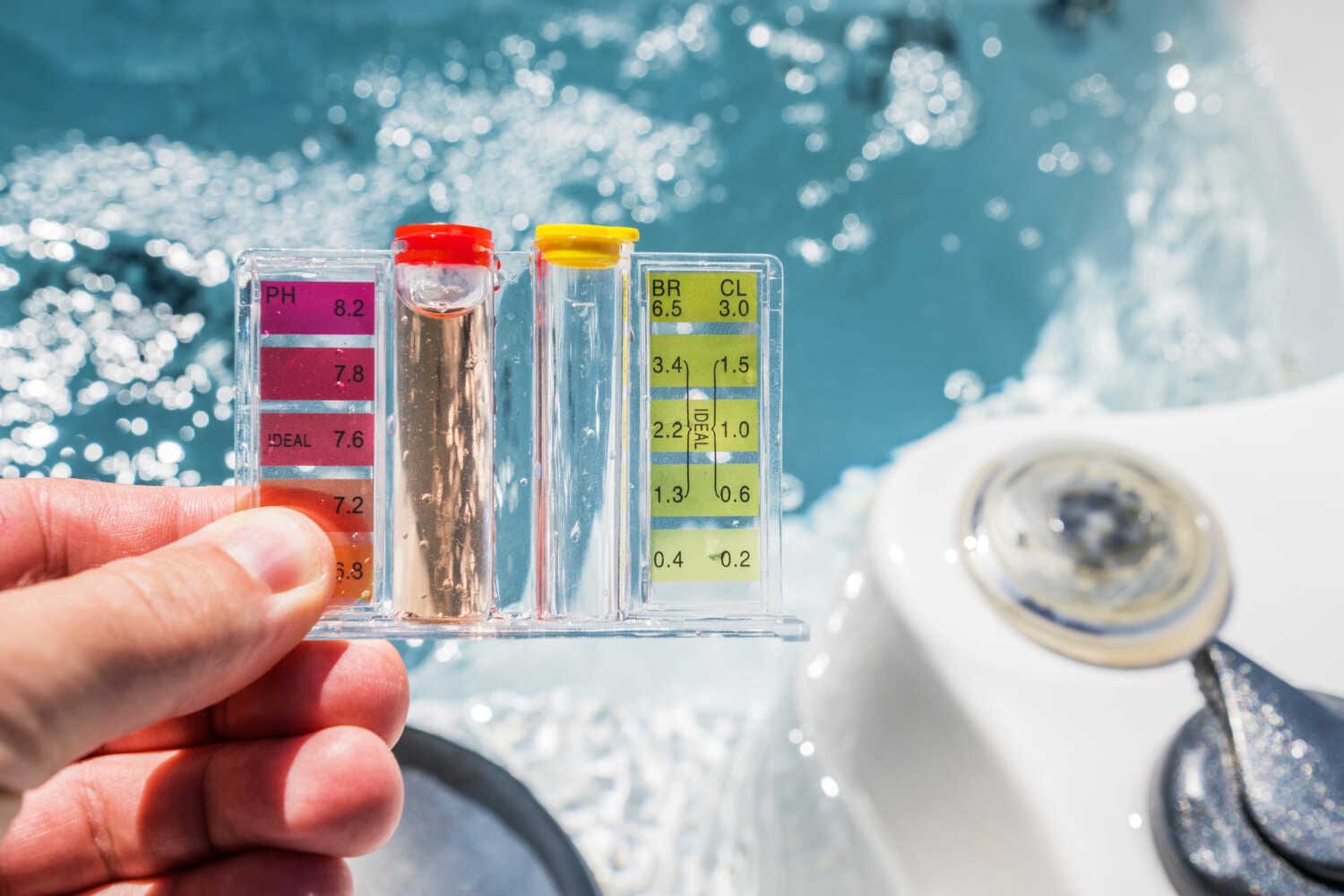
📌 Key Takeaway: Total alkalinity is the buffer that keeps pH from swinging wildly. When both are in range, pool water stays easier to balance, safer for swimmers, and gentler on equipment.
Total alkalinity and pH work together every time you service a pool. Alkalinity gives the water resistance to sudden change. pH tells you whether the water is too acidic or too basic. If you manage one without the other, water quality drifts, sanitizers work less predictably, and the pool becomes harder to maintain.
Understanding Total Alkalinity
Total alkalinity is the measure of bicarbonates, carbonates, and hydroxides in pool water. Those compounds act as a buffer. They absorb some of the pressure from acids and base-forming chemicals, which helps keep pH from jumping around after rain, swimmer load, or chemical treatment. In most pools, the usual target is between 80 to 120 parts per million (ppm).
Low alkalinity leaves the water unstable. pH can fall quickly, and acidic water can irritate eyes and skin while also stressing plaster, metal parts, and seals. High alkalinity creates the opposite problem. The water becomes harder to adjust, pH tends to drift upward, and the pool can feel cloudy or scale-prone. The work is not complicated, but it does require regular testing and a steady hand.
A simple real-world example makes the point clear. A service tech tests a pool after a week of heavy rain and finds the alkalinity has dropped. The water still looks fine, so the owner assumes nothing changed. A few days later, the pH starts swinging from one visit to the next, chlorine demand rises, and the pool turns harder to manage. Raising alkalinity with sodium bicarbonate early would have prevented the cascade. That is why alkalinity is a first-line control, not a background detail.
The Role of pH in Pool Water Chemistry
pH measures how acidic or basic the water is on a scale from 0 to 14. Seven is neutral. Pool water works best when pH stays in the 7.4 to 7.6 range. That window supports sanitizer performance and keeps swimmers comfortable.
When pH drops too low, the water turns acidic. Acidic water can corrode equipment, shorten the life of metal fixtures, and make the pool unpleasant to use. When pH climbs too high, sanitizers lose strength and the water can turn hazy. In practice, that means more work for the operator and less reliable sanitation for the customer.
Cloudy water and a strong chlorine smell often point to a pH problem, not just a chlorine problem. Operators sometimes chase sanitizer levels when the real issue is that the pH has moved out of range. Testing the water and correcting pH with the right increaser or decreaser keeps the system stable and prevents wasted chemical use.
How Total Alkalinity and pH Affect Each Other
Total alkalinity and pH are linked. Alkalinity gives pH a cushion, so outside conditions do not push it around so easily. Without enough alkalinity, small changes in weather, rainfall, or swimmer activity can move the pH fast. With too much alkalinity, pH can become stubborn and resist correction.
That is why chemical adjustments have to follow the right order. If alkalinity is too high, adding acid to chase pH alone can become frustrating because the water keeps pushing back. If alkalinity is too low, pH may look corrected for a moment and then slide again. Service professionals handle the buffer first, then fine-tune pH. That sequence saves time and produces cleaner results.
Pool type matters too. Vinyl-lined pools and concrete pools do not always respond the same way to chemistry changes. Surface material, water loss, circulation, and local conditions all shape how fast the water moves. A technician who understands the pool itself can make better decisions than someone who only looks at a test strip and reacts to one number.
Practical Ways to Keep Both in Range
Good water balance comes from routine, not rescue work. The most reliable operators test consistently, adjust gradually, and keep circulation moving. Those habits prevent small changes from becoming service calls.
Regular testing is the starting point. Check total alkalinity and pH on a consistent schedule so you catch drift before it becomes visible. A stable schedule gives you better readings than occasional guesswork, and it helps you spot patterns after storms, heat waves, or heavy use.
Gradual correction matters just as much. Big chemical swings make the water chase itself. Small adjustments give the system time to respond, which keeps the next test meaningful. That applies whether you are raising alkalinity, lowering pH, or making both changes over time.
Circulation also does real work. A clean filter and moving water distribute chemicals evenly, which helps the pool settle into balance faster. Still water can hide pockets of high or low chemical concentration, and that makes the water seem more stable than it really is.
The chemicals themselves should match the pool and the problem. Quality matters because the wrong product or poor dosing can create more correction work later. If a pool keeps fighting balance no matter how carefully you test, the issue may be circulation, bather load, or a deeper maintenance problem rather than the water test alone.
Common Mistakes That Make Water Harder to Balance
Most balance problems come from a few repeat mistakes. The first is treating pH as the only number that matters. pH gets more attention because it changes fast, but alkalinity often sits underneath the problem. If alkalinity is off, pH correction becomes temporary instead of lasting.
Another mistake is using weak testing methods. Old strips and sloppy readings can lead to the wrong correction and wasted chemicals. Better testing gives you a clearer picture of what the water needs. When the numbers are accurate, the treatment is usually simpler than people expect.
Seasonal changes create another source of error. Heavy rain can lower alkalinity and dilute chemicals. Heat and evaporation can concentrate minerals and make balancing more difficult. Operators who adjust for the season stay ahead of the water instead of reacting after the customer notices a problem.
The cleanest pool work is preventive. Catch the drift early, correct the right number first, and avoid the habit of throwing chemicals at a problem you have not fully identified.
Why Professional Support Helps
Pool chemistry is manageable, but it rewards experience. A professional can read the water, identify the real cause of the imbalance, and correct it without creating another problem. That matters because some water issues look alike on the surface but need different fixes underneath.
For operators building a business, that same discipline carries over into route management. A strong pool route depends on repeatable service, not guesswork. Superior Pool Routes trains buyers to work with that kind of consistency, which is why professional support matters whether you are balancing one pool or serving many.
That approach also fits the larger business model. Pool routes are steady work. Customers need service week after week, and water chemistry does not stop because the weather changes. Operators who understand alkalinity and pH build cleaner pools, better service habits, and more reliable schedules.
The relationship between total alkalinity and pH stability is simple once you treat them as a pair. Alkalinity protects the water from sudden swings, while pH tells you how the water is behaving right now. Keep both in range, and the pool stays easier to manage, more comfortable to swim in, and less likely to damage equipment. That is the kind of repeatable maintenance that supports strong service work and steady pool routes.
If you are building a pool service business, start with the basics and keep your system consistent. For those exploring Pool Routes for Sale, the same principle applies: good process creates dependable results. To learn more about training, route options, and how to get started, contact us.