📌 Key Takeaway: Pool style changes the work. A technician who understands shape, circulation, filtration, and client expectations can service more efficiently and sell the right add-ons.
Pool owners do not choose the same design for the same reason, and that matters on route day. A rectangular backyard pool, an infinity edge, an above-ground unit, a natural pool, and a plunge pool each create a different service pattern. Some are simple to clean. Some demand close attention to circulation or filtration. Some attract clients who want a very specific look and are willing to pay for specialized care.
That is why pool style belongs in the technician’s playbook. It affects chemical balance, equipment checks, cleaning time, and the way you talk to the customer. It also affects how you build a route. A tech who can handle a wider mix of pool types can cover more territory with fewer surprises and a steadier workflow.
Classic Rectangular Pools
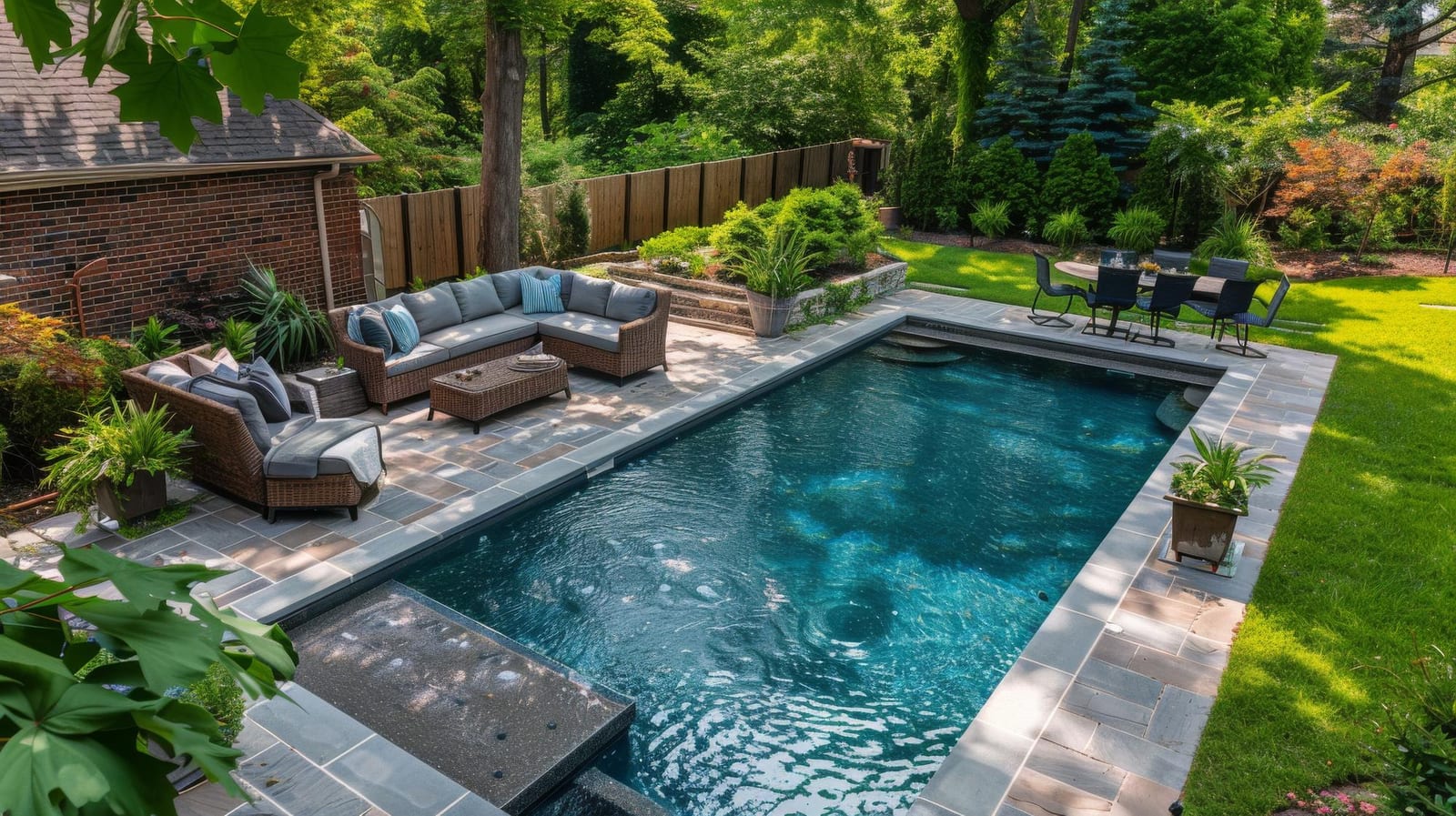
The classic rectangular pool remains the most familiar layout for a reason. Its straight walls and clean lines make it easy to brush, vacuum, and inspect. Homeowners like the look because it feels timeless. Technicians like it because the service pattern is predictable.
That predictability starts with access. Corners are easy to reach, the waterline is easy to see, and circulation issues usually show up in obvious places. Routine cleaning, chemical balancing, and equipment checks still matter, but the design does not fight the technician. When a pool has a simple footprint, you can move faster and spot problems sooner.
Rectangular pools also give you room to sell useful upgrades. Lighting, heating, and automatic covers all make sense on this style because the geometry supports them well. A technician can explain why those features improve safety, comfort, and year-round use without making the conversation feel forced. The result is a service visit that stays efficient while still creating room for revenue.
Infinity Pools
Infinity pools, also called vanishing edge pools, are built for visual impact. They are common on properties where the view is part of the design, and the pool is meant to blend into the background instead of sitting in the middle of it. That look is impressive, but it comes with added service complexity.
The key issue is circulation. Technicians have to pay close attention to the weir, overflow system, and water level. If the system is off, the visual effect breaks down fast. Chemistry also matters because a small imbalance can affect clarity and make the feature look wrong even when the water is technically safe. The surrounding landscape matters too, since debris, runoff, and plant maintenance can all affect performance.
A real-world example makes the point clear. If a homeowner on a hillside expects the waterline to disappear cleanly over the edge, a minor drop in level or a clogged overflow path becomes immediately visible. What would be a small issue on another pool turns into a customer complaint here. That is why technicians who understand the mechanics of infinity pools can solve problems faster and protect the premium look the client paid for.
This style rewards precision. Technicians who offer careful water testing, cleaning, and system checks can stand out quickly because the customer notices quality immediately. The service is still practical, but the standard is higher.
Above-Ground Pools
Above-ground pools fill a different need. They are a common choice for homeowners who want swimming without the larger commitment of an in-ground build. They can be easier to install, easier to remove, and available in a range of shapes and sizes. That flexibility makes them attractive, but it also changes the service model.
Technicians often deal with more seasonal use in this segment. Some owners set the pool up for part of the year and take it down later. Others keep it in place but use it differently than a permanent pool. That means service packages have to be practical. Seasonal openings, closing support, leak checks, and filtration guidance matter more here than polished upsells.
The best technicians in this segment do more than clean. They teach owners how to spot wear, check fittings, and handle winterization or reopening without causing damage. A customer who feels confident about those basics is more likely to call back next season instead of searching for a cheaper option. That makes above-ground pools less about one-off visits and more about building dependable service relationships.
Natural Pools
Natural pools appeal to homeowners who want a more organic look and a lower-chemical approach. Instead of relying on a standard chemical-heavy setup, they use biological filtration and plant systems to support water quality. The result is a swimming environment that looks more like part of the landscape than a traditional backyard pool.
For technicians, this style requires a different kind of knowledge. Plants are part of the system, not decoration. Water quality has to be monitored carefully because the balance depends on biological activity as much as circulation. A technician who treats a natural pool like a standard chlorinated pool will miss the details that keep it working.
The service opportunity here is education. Owners of natural pools usually want to understand how the ecosystem behaves and what they should expect season to season. Technicians who can explain plant care, filtration zones, and the role of water movement build trust fast. They can also offer maintenance support for aquatic plants, which adds value without changing the character of the pool.
Natural pools are still a niche market, but they reward technicians who know how to work in it. The more comfortable you are with the system, the easier it is to turn a specialized call into a loyal client.
Plunge Pools
Plunge pools are compact, deep, and designed for cooling off rather than lap swimming. They fit well in tighter spaces and appeal to homeowners who want a retreat without giving up most of the yard. Their smaller size can make them seem simpler, but they still need careful attention.
Because plunge pools are usually used for relaxation, the owner often cares more about comfort, clarity, and appearance than about swimming lanes or large-scale recreation. That changes how technicians prioritize service. Efficient cleaning, reliable water testing, and attention to temperature or heating options become the main conversation points. The pool may be smaller, but customer expectations can be very specific.
This is also where smart route management helps. A plunge pool does not always need the same amount of time as a larger backyard pool, but it still needs consistent service. Technicians who can move efficiently from one compact account to the next keep the day organized and protect margin. That is one reason this style works well in urban markets where space is limited and homeowners want a polished result without a large footprint.
What These Pool Styles Mean for Route Work
The pool style mix in a service area affects more than technique. It shapes scheduling, communication, and the kinds of jobs that fit together on the same day. A route heavy on rectangular and plunge pools may run differently from one full of infinity edges or natural pools. The technician who understands the mix can plan better and spend less time reacting.
It also affects customer expectations. Some owners want simple, reliable service and little more. Others want a technician who can explain system behavior, features, and maintenance needs in plain language. That difference matters when you are building trust. Clients stay with the technician who understands their pool type and speaks to it directly.
Training is where this pays off. A technician who keeps learning can move between pool styles without losing confidence or speed. That makes the business stronger, not weaker, because it opens the door to more account types and more service opportunities. It also helps when a route grows into a new neighborhood with different pool designs than the last one.
The practical takeaway is simple: do not treat every pool like the same job with a different address. The shape and system tell you how to work, where to look, and what to explain. That is the difference between routine service and service that feels professional.
For owners who want to expand, this knowledge matters just as much as it does for technicians in the field. A strong route is easier to manage when the work is consistent, and the demand for pool service stays steady because pools still need care no matter the style. That is why pool routes remain a solid business to build and grow.
If you want to learn more about the business side, explore pool routes for sale and see how the right route can match the skills you already have or want to build.