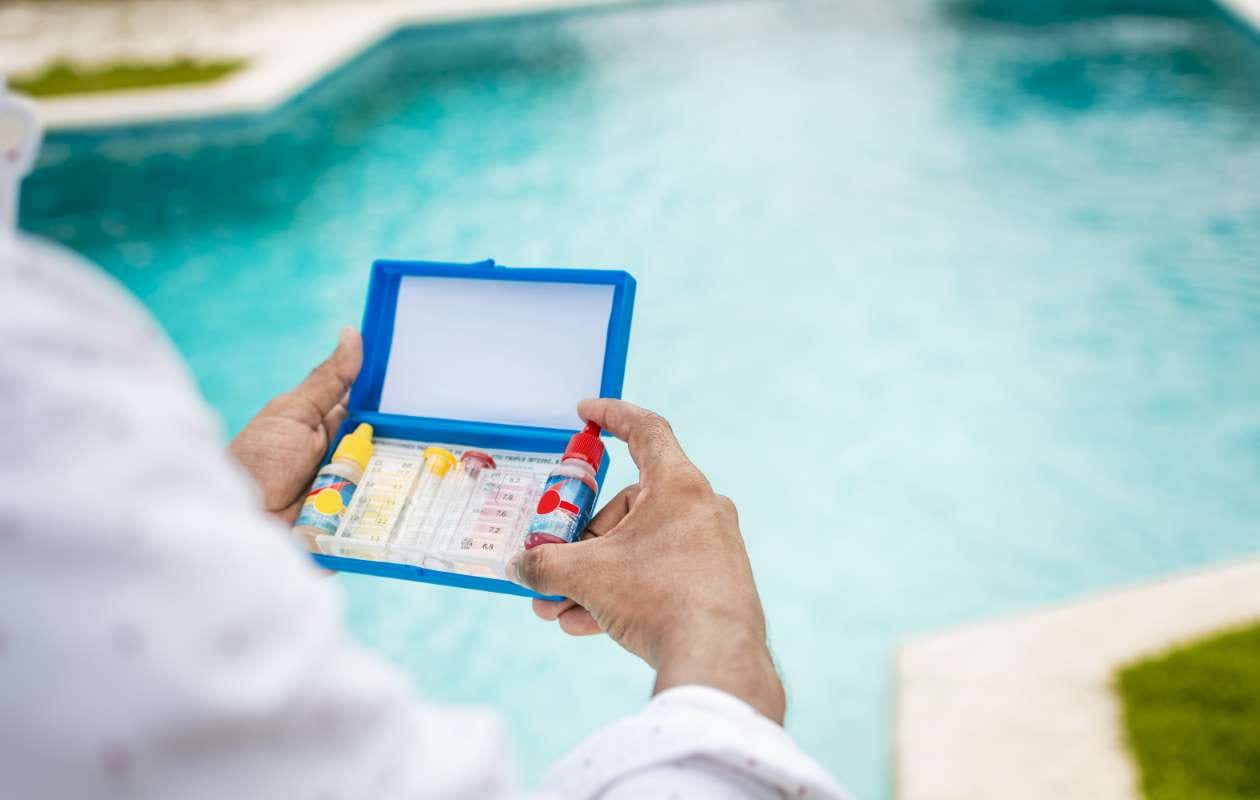
📌 Key Takeaway: Old chlorination systems depend on manual dosing and closer supervision, while modern systems use automation and steadier output to improve water quality, reduce labor, and simplify pool service work.
Chlorination sits at the center of pool sanitation. The system you service affects water clarity, swimmer comfort, equipment wear, and how much time you spend correcting problems that could have been prevented. For pool service professionals, that difference shows up in route efficiency as much as it shows up in water quality.
The core shift is simple. Old systems rely on manual control. Modern systems are built for consistency. That change affects how chlorine enters the pool, how often a technician has to intervene, and how stable the water stays between visits. If you understand that shift, you understand why some pools are easier to service and why others keep creating extra work.
A real-world example makes the difference obvious. A pool on a traditional tablet feeder can drift out of range after a hot week, a busy weekend, or a pump issue that reduces circulation. The tech arrives to cloudy water, a chlorine reading that no longer matches the target, and a frustrated owner asking what changed. A pool with a modern automated chlorination setup can still have problems, but it is less likely to swing that hard between visits because the system is designed to deliver chlorine more steadily and give the operator more control.
That same logic is why financing often comes up when operators upgrade sanitation equipment. The SBA 7(a) loan program continues to support small-business acquisitions across service industries, and its June 1, 2026 cycle is part of the reason some pool companies can move toward better equipment without waiting on cash reserves. In Texas, where the EIA reported residential electricity at 16.39¢/kWh in March 2026, operating cost also enters the conversation faster because equipment choices affect monthly overhead as well as service quality. Texas household income also gives that decision more context: Census ACS 2024 put median household income at $78,476, according to data.census.gov, dated December 31, 2024. That figure matters because operators in that market tend to weigh recurring costs carefully, which makes steady, low-friction sanitation equipment easier to justify. The loan does not change the chemistry, but it can change how quickly a business modernizes its service model.
Texas also shows why sanitation upgrades are often judged on more than upfront cost. A household income level like $78,476, per Census ACS 2024 dated December 31, 2024, usually means owners expect dependable service and clear value, not constant repair work. That gives modern chlorination systems a practical advantage because they support a cleaner, more predictable service experience without adding more manual correction to the route.
Understanding Old Chlorination Systems
Old chlorination systems depend on manual addition of chlorine tablets, granular products, liquid chlorine, or gas chlorine. The method is straightforward: add sanitizer, test the water, and repeat. The challenge is that chlorine demand changes with sun, bather load, rainfall, temperature, and circulation. A system that looks fine one day can be off the next.
The weakness is inconsistency. If the feeder is set too low, sanitation drops and algae can take hold. If it is set too high, swimmers feel it immediately, and the pool can develop odor, irritation, or corrosion issues over time. That leaves the technician doing constant correction instead of stable maintenance.
Gas chlorine and calcium hypochlorite each bring their own operational burdens. Gas chlorine is effective, but it demands careful handling, storage, and training because of the safety risk. Calcium hypochlorite also requires disciplined storage and handling. Neither one gives the operator the kind of automatic control that makes a route easier to manage. The technician still has to test, interpret, adjust, and verify.
Texas makes that manual approach more expensive to ignore. Census ACS 2024 put median household income at $78,476, according to data.census.gov, dated December 31, 2024. In a market like that, owners still pay close attention to recurring service expense, so equipment that cuts callbacks and stabilizes service often matters more than a lower upfront price. That kind of budget pressure also shows why operators favor systems that reduce repeat visits instead of adding another layer of correction. Put plainly, a market with more room for steady service still rewards efficiency, not guesswork.
For operators financing a route or upgrading a service business, that matters as much as the chemistry. SBA lending remains part of the small-business acquisition landscape, and pool companies use that kind of capital to add better sanitation equipment or standardize service. The financing changes the purchase decision, but it does not change the operating truth: older chlorination systems still demand more hands-on correction.
Older systems also tend to create more wear on surfaces and equipment when chlorine levels swing too far in either direction. That can mean more stress on finishes, seals, metal components, and fittings. For the service company, those swings lead to more callbacks and more time spent on correction instead of routine care.
The Rise of Modern Chlorination Systems
Modern chlorination systems were designed to solve the instability of older methods. Instead of relying entirely on manual dosing, they use automation, better delivery methods, and more precise control. Saltwater chlorination, UV systems, and ozone generators changed how operators think about sanitation because they reduce dependence on constant manual chemical handling.
Saltwater chlorination is the most familiar of the modern options. It converts dissolved salt into chlorine through electrolysis, which gives the pool a steadier supply of sanitizer. The system does not eliminate the need for testing or balancing, but it does reduce the size of the swings that often come with older feeders and hand dosing. That stability helps maintain clearer water and can improve the swimmer experience because the pool is less likely to feel harsh from uneven chemical addition.
Texas is a good example of why that matters. When residential electricity was 16.39¢/kWh in the EIA's March 2026 reading, operators had another reason to think carefully about equipment that supports consistent sanitation without adding service friction. Texas median household income was $78,476 in Census ACS 2024 data dated December 31, 2024, and that helps explain why owners weigh monthly operating discipline against the upfront cost of better equipment. A higher-income market does not remove cost pressure, but it does sharpen the conversation around value and reliability.
The same Texas income data helps explain why owners often compare service simplicity against first cost instead of looking at price alone. A pool company serving households that can support steady maintenance still has to protect margins, and that makes predictable sanitation equipment attractive when it cuts labor drift. For a closer look at the source, see data.census.gov, which lists the Texas median household income figure for December 31, 2024.
Modern systems also fit better with remote monitoring and automation. A technician can often check chlorine output, system status, or water conditions without treating every visit like a full reset. That matters on a service route because time is limited. When the system gives the operator more information and less variability, the technician can spend more of the day maintaining the route instead of rescuing problem pools.
That same shift helps owners who are financing improvements instead of paying cash. SBA lending remains part of the small-business acquisition landscape, and service operators use that kind of capital to buy equipment that lowers daily friction rather than adds it. The point is not that the loan changes the pool chemistry. The point is that the modern system makes the route easier to standardize once it is in place.
This is where modern chlorination becomes a business advantage, not just a technical upgrade. Stable systems support cleaner pools, fewer emergency visits, and more predictable service.
Comparing Safety Features
Safety is one of the clearest differences between old and modern chlorination systems. Older systems often depend on hazardous chemicals that require strict handling practices. Gas chlorine is the strongest example because it carries a serious risk if stored, installed, or serviced incorrectly. Even when the system works as intended, it still requires specialized training and careful procedures.
Modern systems reduce some of that risk by changing how chlorine is generated and delivered. Saltwater chlorination lowers direct chemical handling because the system produces chlorine on site from salt. UV systems go further by using ultraviolet light to disrupt bacteria and viruses, which reduces dependence on high sanitizer levels in the same way a traditional feed system does. These systems do not remove chlorine from pool care, but they change how sanitation is supported.
That matters for both technicians and owners. A system that reduces chemical exposure is easier to manage, easier to explain to customers, and less likely to create handling errors. It also helps operators present a more professional service package. Homeowners notice when a pool is simpler to maintain and when the service company can explain the system clearly without making sanitation sound complicated or risky.
Modern systems often include alerts and safeguards that help catch problems earlier. If output drops, equipment fails, or water conditions drift, the system can notify the operator before the issue becomes a bigger correction. That early warning gives pool service professionals a chance to respond before water quality declines.
The financing angle matters here too. SBA-backed purchases are part of why some operators can move from older, more manual sanitation setups to systems with better safeguards and less guesswork. The equipment still has to be installed and serviced correctly, but the day-to-day risk profile is better when chlorine delivery is more controlled.
Environmental Considerations and Sustainability
Environmental pressure has changed how pool owners and operators evaluate chlorination. Older methods can create more byproducts and demand more chemical handling, which affects both the pool environment and the work around it. Chloramines, for example, are a common sign that the water has been overburdened by sanitation byproducts and bather waste. They can create odor and discomfort, and they are one reason some pools develop a strong “chlorine smell” even when sanitation is not actually strong enough.
Modern chlorination systems help reduce some of that burden by stabilizing output and limiting the need for heavy manual dosing. Saltwater systems are especially attractive to owners who want a smoother-feeling pool and a lower-handling routine. They also fit the broader push toward more efficient pool care, where the goal is not to pour in more chemicals but to control sanitation with more precision.
Sustainability is about more than chemical reduction. It includes smarter water use, more efficient filtration, and equipment that runs with less waste. A modern system paired with a clean filter schedule and proper circulation usually supports better overall efficiency than a pool that relies on frequent corrective treatment. For pool service businesses, that creates a clearer service story: better systems reduce waste, and better maintenance keeps those systems performing as intended.
For operators planning growth, that story supports the business case for expansion. A service company that acquires or builds routes with better chlorination practices can keep labor focused on maintenance instead of repeat cleanup. Financing from programs like the SBA 7(a) loan program, as described in the June 1, 2026 cycle, can help make that transition practical without changing the core service model.
Cost-Effectiveness and Operational Efficiency
Modern chlorination systems often cost more upfront, but they usually repay that difference through lower labor and fewer corrections. Old systems need more manual oversight. Someone has to inspect feeders, test the water, make adjustments, and react when conditions drift. Modern systems reduce that labor because they hold the pool closer to target between visits.
That matters because route work runs on repetition and time control. A pool that constantly needs correction becomes expensive to service even if the parts themselves are cheap. A system that stays stable helps the technician stay on schedule and reduces the chance of a callback. Over time, that operational consistency is worth more than the sticker price of the equipment.
There is also a durability benefit. When chlorine delivery is steadier, surfaces and equipment are less likely to suffer from repeated swings in sanitizer levels. That can lower wear on components and help protect the long-term condition of the pool. Service companies feel that advantage too, because fewer corrosion issues and fewer imbalance problems usually mean fewer interruptions in the route.
Texas keeps that calculation grounded. The EIA's March 2026 residential electricity figure of 16.39¢/kWh is a reminder that operating expenses are part of every equipment decision, not an afterthought. A modern system that cuts down on service friction gives operators more control over both labor and overhead. Texas’s median household income of $78,476, per Census ACS 2024 data dated December 31, 2024, also helps explain why owners compare monthly operating discipline against the upfront cost of a better system. That budget mindset makes reliability a selling point, not a luxury.
For operators thinking about growth, this becomes part of route value. If a pool route includes more pools with modern chlorination systems, the work is often easier to standardize. That does not replace good service, but it does make the service model more efficient. The better the system control, the easier it is to build a route that runs smoothly.
Training and Support for Transitioning to Modern Systems
A modern chlorination system is only useful when the technician knows how to work with it. That is why training matters. Old systems are familiar because they are direct: add sanitizer, test, adjust, repeat. Modern systems require a broader skill set. A tech needs to understand automation, output settings, water balance, and the relationship between circulation and sanitation.
Superior Pool Routes includes training for this reason. A buyer should not be left guessing how to service a pool once the equipment changes. When training is built into the buying process, the transition becomes manageable. The technician learns how the system behaves, what readings matter, and how to avoid mistakes that lead to callbacks.
That support is valuable for new pool service entrepreneurs and for existing companies expanding into new areas. If a business is entering a pool route with different equipment standards than the team is used to, training shortens the learning curve. It also helps employees build confidence quickly, which affects service quality on day one.
Ongoing education matters as systems continue to change. Pool technology does not stand still. A company that keeps its technicians informed can handle upgrades, troubleshoot more effectively, and maintain a cleaner route. That steady improvement is part of what keeps a pool service business competitive.
Customer Perceptions and Market Demand
Customers notice the difference between old and modern chlorination systems even if they do not know the technical terms. They feel it in the water, smell it in the air, and see it in how often the pool needs attention. Homeowners who want a cleaner, more comfortable experience often prefer systems that reduce harsh chemical handling and keep the water more stable.
That preference creates a service opportunity. Pool companies that can explain modern chlorination in plain language earn trust faster. A customer does not need a chemistry lecture. They need to know why the water feels better, why the system is easier to manage, and why the service plan supports a cleaner pool with fewer surprises.
This is also where marketing becomes practical. A company that talks about steady sanitation, lower manual handling, and better swimmer comfort has a clearer message than one that just says it “does pool service.” Those benefits are concrete. They connect directly to the homeowner’s experience. They also help a service business stand out when competing for new accounts or when supporting existing customers who are considering equipment upgrades.
As more owners ask better questions about water quality and system design, service companies with modern chlorination knowledge gain an edge. They can explain the difference, recommend a path forward, and keep the conversation centered on results rather than jargon.
What Pool Service Professionals Should Take From the Difference
The difference between old and modern chlorination systems comes down to control. Older systems demand more manual correction. Modern systems give the operator steadier output, better monitoring, and less daily friction. That shift improves safety, helps protect equipment, and makes service more predictable.
For pool service professionals, the practical lesson is simple. Know how the system works, know what can go wrong, and build your service process around consistency. When you can explain the difference clearly to a customer, you do more than sell maintenance. You show that your service protects the pool, saves time, and keeps the water in better condition over the long run.
That is why modern chlorination is more than a technology trend. It is part of the way pool care has become more efficient, more precise, and easier to scale. A company that understands these systems can service pools better and build a stronger business around that knowledge.