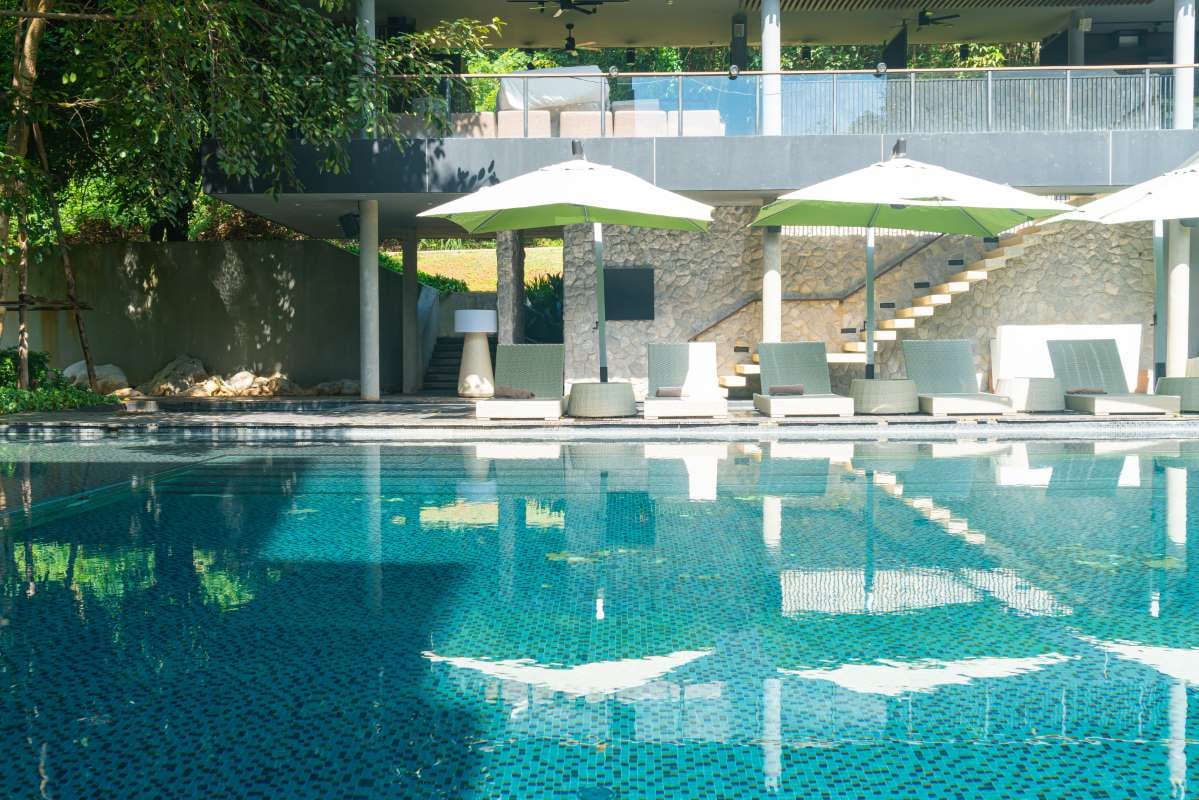
📌 Key Takeaway: Phoenix homeowners face intense sun, desert debris, fast chemistry drift, and heavier equipment wear, so pool care works best when it is routine, preventive, and built for the local climate.
Phoenix pools take daily abuse from heat, UV exposure, dust, and seasonal storms. A generic maintenance checklist does not hold up well here. Owners have to think about evaporation, sanitizer loss, debris control, equipment strain, and the timing of service visits if they want clear water and fewer repairs.
The good news is that these problems are predictable. Once you understand how Phoenix conditions affect a pool, the maintenance plan gets simpler. Instead of reacting to cloudy water or a failed pump, homeowners can stay ahead of damage and keep the pool usable through the hottest months.
For homeowners who need to finance equipment upgrades or a business purchase tied to pool service, the SBA 7(a) program still plays a role in service-industry acquisitions. The SBA 7(a) loan program dated June 1, 2026, remains a relevant option for buyers who want working capital and a longer runway while they build in a market like Phoenix.
Arizona’s pay scale also shows that pool work remains a real career path. The Bureau of Labor Statistics reported a mean annual wage of $51,940 for pool and facility maintenance workers in Arizona on May 1, 2025, which helps explain why dependable service and route density matter for operators. You can review the state data on the BLS Arizona occupational wage page.
This week in Phoenix, Arizona, daytime highs are averaging 82°F and peaking near 86°F, according to Open-Meteo on October 25, 2026. Even shoulder-season heat like that keeps evaporation, sanitizer loss, and service demand moving in the same direction.
Impact of the Arizona Sun
The Arizona sun drives many of the maintenance problems Phoenix homeowners face. Strong UV exposure breaks down chlorine faster, heats the water quickly, and puts extra stress on pool finishes and exposed equipment. That combination makes the pool harder to balance and more expensive to keep in shape if the basics slide.
Evaporation is one of the first signs of that strain. Water disappears faster in Phoenix because heat pulls moisture out of the surface all day long. When the level drops, skimmers work less efficiently and the circulation system has to pull from a shallower body of water. That affects cleaning performance and water balance at the same time. Owners often notice that they are adding water more often in summer, but the deeper issue is that water loss changes how the whole system functions.
UV exposure also weakens sanitizer performance. Chlorine does not last as long under intense sun, so a pool that looks fine in the morning can drift out of range by afternoon if it is not protected properly. Stabilizers matter in Phoenix because they slow chlorine loss and give the sanitizer a better chance to do its job. Covers and shade structures help too. They do not replace chemistry, but they reduce the amount of direct sunlight pounding the pool every day.
A real-world example makes the problem easy to see. A homeowner may balance the pool on Friday, then check again Sunday afternoon after a stretch of 110-degree weather and full sun. The chlorine reading drops, even though nothing “mysterious” happened. The heat and UV simply consumed the sanitizer faster than expected. That is why Phoenix pool care has to be proactive instead of occasional. Water testing, chlorine management, and physical protection from the sun all work together.
Surface care matters here too. Heat and UV wear on plaster, decking, and exposed fittings over time. The damage is gradual, so owners often overlook it until scaling, fading, or rough spots appear. Regular cleaning and balanced water slow that process. The pool lasts longer when the owner treats the sun as a constant factor, not an occasional inconvenience.
Debris and Landscaping Issues
Desert landscaping creates a different set of headaches. Phoenix yards may not deal with the same leaf load as a shaded suburban property in another region, but dust, small debris, plant matter, and wind-blown trash still collect fast. When organic material lands in the water and stays there, it clogs filters, strains skimmers, and gives algae a foothold.
The best defense starts outside the pool. Landscaping choices matter more than many homeowners realize. Gravel and rock mulch work better than loose organic ground cover around a pool because they shed less material into the water. Trimming shrubs and trees back from the deck also reduces the number of twigs, pods, and leaves that end up in the skimmer basket. The cleaner the surrounding area stays, the less time the owner spends chasing debris after every windy day.
Wind is a major part of the Phoenix equation. A calm-looking yard can still collect a surprising amount of dust and fine debris after a dry spell or a gusty afternoon. That debris does not always look dramatic from a distance, but it still changes water quality. Fine particles load the filter, dull the water’s appearance, and force the circulation system to work harder. A surface skimmer helps, but it is not enough by itself. Owners need a broader plan that includes yard maintenance, basket cleaning, and periodic filter attention.
This is also where routine saves money. A pool that gets skimmed often and kept clear of surrounding debris is less likely to suffer from cloudy water or filter strain. Owners who wait until the water looks bad usually end up doing more work later, because debris that sinks or breaks down becomes harder to remove. In Phoenix, prevention is cheaper than recovery.
Water Chemistry Challenges
Water chemistry in Phoenix is not difficult because the rules change. It is difficult because the environment changes the numbers faster. High temperatures, evaporation, and heavy use all push pH, alkalinity, and sanitizer levels around more quickly than in cooler climates. That means the pool can drift out of range even when the owner is using the right products.
Testing is the starting point. Homeowners who check their water regularly have a much better chance of catching problems before they become visible. A pool that looks clear can still be unbalanced, and in Phoenix that imbalance can move quickly. If chlorine falls, contaminants survive longer. If pH climbs, sanitizer becomes less effective and scaling risk increases. If alkalinity swings too far, the water becomes harder to stabilize. Each of these problems can create the next one.
The best approach is simple and disciplined. Test the water often, adjust in small steps, and keep track of how the pool behaves in extreme weather. That record helps owners spot patterns. If a pool consistently loses sanitizer after hot, windy days, the owner can respond faster the next time the same conditions return. That is a practical advantage, not just a maintenance habit.
Automated testing tools can help by making checks faster and more consistent. They do not replace judgment, but they reduce the chance that an owner skips a reading because they are busy. Regular shock treatments also have a place in the maintenance cycle when contaminants build up. The point is not to throw chemicals at the pool blindly. The point is to keep the water clean enough that small problems do not turn into major ones.
Local water conditions matter too. Phoenix homeowners often benefit from working with pool service professionals who understand how the climate affects chemical demand. The chemistry has to fit the environment, not just the label on the bottle. A balanced pool in Phoenix is usually the result of steady attention, not one big adjustment.
Pool Equipment Maintenance
Heat is hard on equipment. Pumps, filters, valves, heaters, and seals all work under more stress in Phoenix because the ambient temperature is higher and the equipment runs longer during peak season. When the system has to work harder, wear shows up sooner. That is why equipment care is not optional in this market.
A pump that runs hot or a filter that is overdue for service can affect the entire pool. Circulation slows, water quality slips, and the owner may not notice until the water turns cloudy or the system starts making noise. By that point, a small service issue can become a repair bill. Regular inspections catch those problems earlier. A quick check of flow, pressure, baskets, seals, and visible leaks can reveal a lot about how the system is holding up.
Energy use and durability also connect here. High-efficiency equipment can reduce strain over time because it moves water more effectively and often operates with less waste. That does not mean it removes the need for maintenance. It means the system gives the owner a better baseline to work from. In Phoenix, where the pool stays in use for much of the year, equipment that runs efficiently tends to pay off through smoother operation and fewer surprises.
The local labor market also shows why these service calls matter. The Bureau of Labor Statistics reported a mean annual wage of $51,940 for pool and facility maintenance workers in Arizona on May 1, 2025. That wage data reflects real demand for skilled service work in the state, and it helps explain why owners who keep equipment in good shape avoid bigger problems later.
Heaters deserve attention too, even in a warm market. They may not run constantly, but when they are needed, they need to perform without issue. Seals and electrical components are vulnerable to heat and age, and the owner who waits until the system fails usually faces more than one problem at once. Preventive service is cheaper than emergency repair, especially when the pool is needed regularly.
Routine checks at least twice a year make sense because they create a rhythm. One inspection before peak summer use and another before cooler weather or seasonal shifts gives the owner a chance to address wear before it becomes urgent. That cadence keeps the equipment from becoming an afterthought.
Further Challenges Faced by Pool Owners in Phoenix
Phoenix pool care does not stop with sun, debris, chemistry, and equipment. Seasonal weather shifts add another layer, especially when monsoon season brings sudden rain, wind, and dirt into the pool. A storm can move fast, dump debris, and change the pool’s appearance in a matter of hours. Even a pool that was cleaned earlier that day can look neglected by the next morning.
Storm preparation matters. Owners should keep water levels in a range that can handle rainfall without overflowing, and they should expect to clean baskets, skimmers, and filters after a storm passes. The goal is not to eliminate the effect of the weather. The goal is to make the cleanup manageable. A pool that is ready for weather swings recovers faster and usually needs fewer corrective treatments afterward.
Summer usage is the other side of the same coin. When a pool gets used more often, it needs more attention. More swimmers mean more contamination, faster sanitizer consumption, and more pressure on circulation and filtration. That extra load can show up as murky water, slippery surfaces, or a stronger chemical demand than the owner expected. In practical terms, peak season is not the time to back off on service. It is the time to tighten the schedule.
A homeowner may think of pool care as a once-a-week chore, but Phoenix often rewards a more disciplined routine. That can mean more frequent skimming, faster debris removal after a windy day, and closer chemistry monitoring during heat waves. Professional service becomes especially valuable during these stretches because a trained technician can see trouble before it becomes visible to the homeowner. Companies like Superior Pool Routes offer resources for individuals looking to acquire pool routes, which can provide immediate assistance and expertise to maintain pools effectively. That same local knowledge matters for service businesses that want to keep routes efficient in a climate where the workload changes with the weather. With daytime heat still sitting in the 80s on October 25, 2026, even late-season service in Phoenix can carry the same pressure on chemistry and cleanup.
Cost Considerations for Pool Maintenance
Cost is one of the biggest concerns for Phoenix homeowners because every maintenance problem has a price tag attached to it. Water loss means higher water use. Chemical drift means more product. Debris buildup means more labor and filter cleaning. Equipment strain means repair bills. The total cost is not just one line item; it is the sum of all the small issues that pile up when the pool is not managed well.
That is why budgeting for the full picture matters. Homeowners should think beyond routine chemical purchases and consider the cost of equipment service, basket replacements, filter cleaning, and possible repairs. A pool that gets regular attention tends to cost less over time because it avoids the expensive version of maintenance: fixing what could have been prevented. A neglected system almost always becomes more expensive than a maintained one.
The monthly cost of pool care can vary based on pool size, materials, equipment condition, and how much service the owner handles personally versus outsources. What matters most is not finding the cheapest possible approach. It is understanding which costs are recurring and which ones signal a deeper problem. A small chemical adjustment is normal. Repeated cloudy water or constant equipment noise is not. Those are signs that the owner is paying for a problem that needs attention, not just supplies.
Arizona wage data reinforces that point. With a mean annual wage of $51,940 for pool and facility maintenance workers on May 1, 2025, skilled service has real value in this market. Homeowners who hire help are paying for judgment, speed, and prevention, not just labor. That is usually cheaper than dealing with a breakdown after the fact.
A good budget also leaves room for seasonal spikes. Phoenix owners should expect more chemical demand in the hottest months and more cleanup after storm events. If they plan for those changes instead of treating them as emergencies, the pool is easier to manage and the financial shock is smaller. In that sense, regular maintenance is a cost-control strategy as much as it is a cleaning routine.
Why a Local Maintenance Rhythm Works Better
Phoenix pools stay healthier when care matches the climate. That means more than following a generic schedule. It means building habits around heat, UV exposure, dust, storms, and use patterns. A local rhythm keeps the pool cleaner because it addresses the problems before they spread.
For many homeowners, that rhythm includes weekly chemistry checks, regular skimming, prompt debris removal after storms, and periodic equipment inspections. Those steps sound simple, but together they prevent the chain reaction that causes trouble. A little evaporation changes the water level. The changing water level affects skimming. Weak sanitizer allows contamination. Debris feeds algae. A strained pump makes the whole problem worse. When one issue feeds the next, the fix becomes more expensive.
That chain reaction is exactly why Phoenix pool care rewards consistency. The owner who stays ahead of it spends less time recovering from problems and more time actually using the pool. The pool becomes an asset again instead of a maintenance burden.
Professional service also fits naturally into this model. Some homeowners want to manage the basics themselves and bring in help for chemistry or equipment. Others prefer full service. Either way, the advantage is the same: local expertise shortens the learning curve and reduces the chance of expensive mistakes. In a climate like Phoenix, that matters.
Keeping a Phoenix Pool Manageable
Phoenix homeowners do not need perfect weather to keep a pool in good shape. They need a maintenance plan that respects the conditions in front of them. Sun, debris, chemistry drift, equipment wear, and storm cleanup all create pressure, but none of them are random. They are predictable, which means they can be managed.
The owners who do best are the ones who treat maintenance as a system. They protect the water from UV exposure, keep the surrounding area clean, test chemistry often, service equipment before it fails, and adjust for seasonal weather. That approach saves money, protects the pool surface and equipment, and keeps the water ready for use when it matters most.
For homeowners who want less day-to-day burden, professional support can make the difference. For anyone thinking about entering the pool service business in Arizona, Pool Routes for Sale is the place to start looking at pool routes and learning how local service demand can be turned into a steady business. Either way, the underlying lesson is the same: Phoenix pools stay manageable when the maintenance plan is built for Phoenix, not borrowed from somewhere else. Related: Phoenix, Arizona