📌 Key Takeaway: Rainy season pool care demands fast action on chemical balance, drainage, and debris removal — and technicians who master these skills become indispensable to every client on their route.
Why Rain Wrecks Pool Chemistry Faster Than You Think
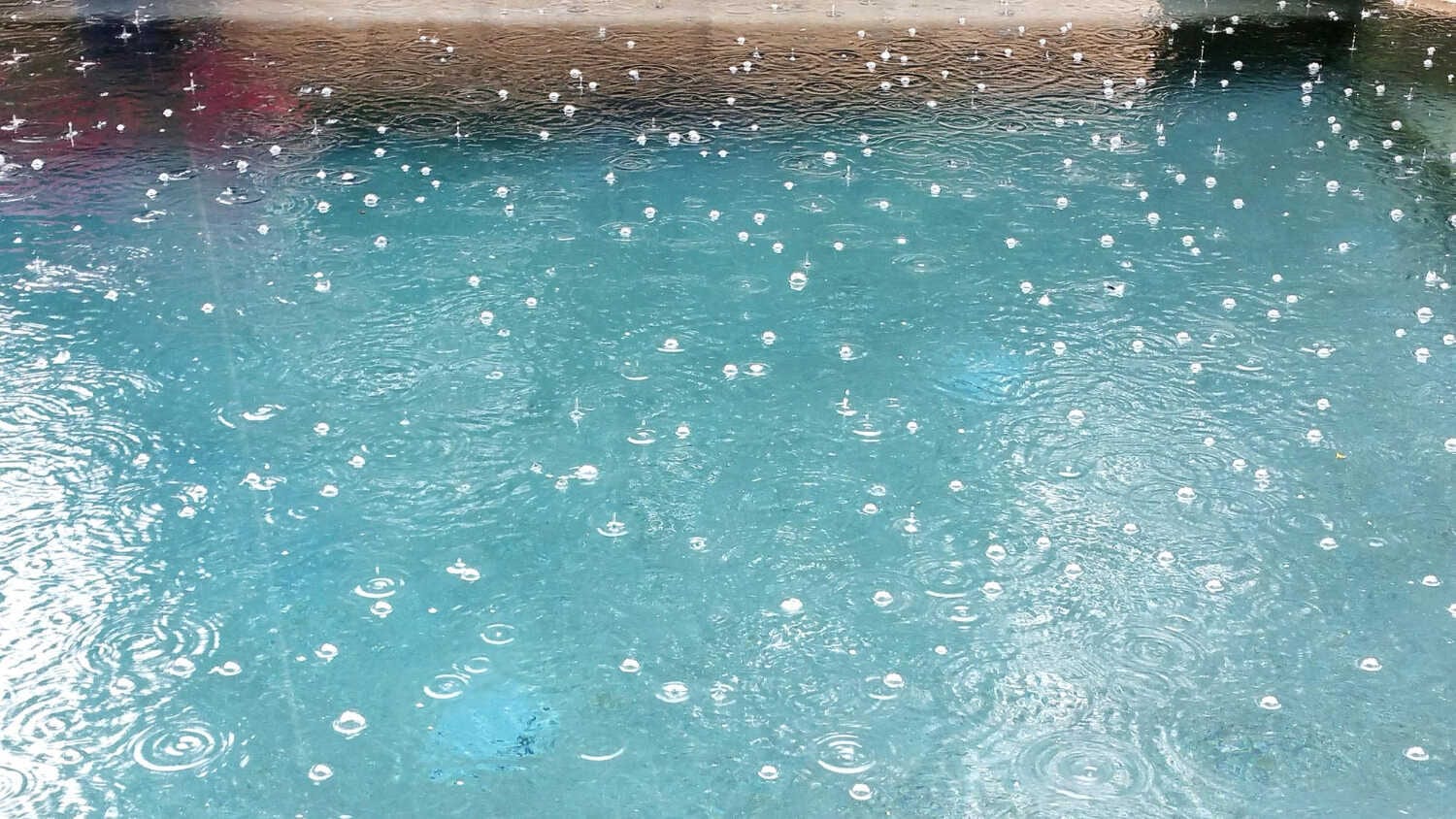
A single heavy storm can dump thousands of gallons into a residential pool, diluting sanitizer and driving pH out of range within hours. Chlorine levels that were balanced on Monday morning may bottom out by Tuesday afternoon if several inches of rain fall overnight. That dilution effect is compounded by runoff: rainwater carries lawn chemicals, bird waste, tree pollen, and topsoil directly into the water, introducing organic load that consumes free chlorine at an accelerated rate.
In Arizona, that issue lands on top of a market where household budgets are shaped by local conditions. The U.S. Census Bureau’s ACS 2024 profile for Arizona, dated December 31, 2024, shows a median household income of $79,964. For pool service companies, that matters because rainy-season response is part of the value customers expect when they pay for reliable maintenance.
For pool service technicians managing a route, this creates a practical problem. Customers rarely understand why their pool turned green two days after a service visit. Building a rainy-season protocol — and communicating it proactively — protects your reputation and reduces emergency call-backs.
Adjusting Chemical Protocols Before, During, and After Rain Events
The best defense against storm-related water problems is a pre-storm chemical buffer. When a significant rain event is forecast, bump free chlorine to the high end of the safe range (3–4 ppm) and confirm stabilizer (cyanuric acid) levels sit between 30–50 ppm. Stabilizer prevents UV degradation but also slows the rate at which rain dilution crashes chlorine, buying you an extra day before the chemistry collapses.
After the rain passes, test in this order: pH, total alkalinity, free chlorine, then combined chlorine. Rain typically lowers pH and alkalinity because most precipitation is slightly acidic. Correct alkalinity first (target 80–120 ppm) before adjusting pH (7.4–7.6), since alkalinity acts as a pH buffer and adjusting it first reduces the number of corrections needed. Shock the pool if free chlorine is below 1 ppm or if combined chlorine exceeds 0.5 ppm.
Keep a simple storm log for each account. Record rainfall amounts from a local weather station, pre- and post-storm readings, and the chemicals added. Over time this data tells you which pools are most vulnerable — north-facing pools with heavy tree cover, pools without covers, pools surrounded by mulch beds — so you can prioritize visits after storms and quote customers accordingly.
Managing Overflow and Drainage
Most residential pools are designed to overflow through a skimmer weir or deck drain when water rises above the tile line. During extended rainfall, water may rise so fast that the drainage system cannot keep pace, causing the pool to overflow onto the deck or into surrounding landscaping. Over-diluted water is one side effect; saturated soil around the pool shell is a more serious one, since hydrostatic pressure can crack the shell or pop a vinyl liner.
Check that skimmer baskets and main drain covers are clear before a forecasted storm — a clogged skimmer during a downpour guarantees overflow. If a customer's pool sits below grade or frequently floods the surrounding deck, recommend a submersible pump they can deploy quickly to lower water level before a major storm. This is a low-cost upsell that prevents expensive structural damage and positions you as a knowledgeable advisor rather than just a cleaning service.
After the storm, drain water back to the normal operating level (mid-tile line) before retesting chemistry. Testing a diluted pool before draining yields inaccurate readings and wastes chemicals.
Debris Removal: Speed Matters
Leaves, twigs, and grass clippings that enter the pool during a storm begin decomposing rapidly in warm water. Decomposing organic matter consumes chlorine, feeds algae, and can stain plaster or vinyl surfaces if left in contact for more than 24–48 hours. Prioritize debris removal on your post-storm route visits — skimming and vacuuming first, chemistry second.
For heavily debris-laden pools, run the pump on high speed for two to four hours after cleaning to circulate the water and push fine particulates through the filter. Backwash or clean the filter immediately after, since a clogged filter after a debris-heavy storm will reduce flow and allow cloudy water to persist for days.
Customers notice a cloudy pool long before they notice an off-balance pH reading, so visual clarity is your first metric to restore. A flocculent or clarifier can help bind fine particles for filter capture when normal filtration is not clearing the water quickly enough.
Turning Rainy Season Into a Route Growth Opportunity
Pool owners who have experienced a green pool after a storm are motivated buyers — they want a service professional they can trust to handle exactly these situations. If you are considering expanding your business, seasonal disruptions like the rainy season reveal which customers are underserved and which technicians have built genuinely loyal client bases.
In Arizona, that opportunity connects back to the broader market. The state’s median household income, reported by the Census ACS 2024 profile at $79,964, supports a service environment where customers will pay for responsiveness when storms hit and water turns quickly. Rainy-season reliability becomes part of the selling point, not just a cleanup task.
Investing in a proven route means inheriting accounts where the prior technician has already built rainy-season protocols, established chemical baselines, and trained customers on realistic expectations. That institutional knowledge shortens your learning curve considerably. Explore the pool routes for sale available through Superior Pool Routes to find routes in markets where seasonal demand patterns align with your service capacity.
Rainy season competence is also a differentiation point when marketing your services. A simple one-page handout or email explaining your storm protocol — what you check, when you visit, what customers should watch for — signals expertise and justifies your rate against lower-priced competitors who skip the follow-up visit.
Building a Reliable Rainy Season Schedule
Reactive service is more expensive than proactive service. Build storm response visits into your scheduling system so they trigger automatically when significant rainfall is logged for your service area. A half-dozen extra post-storm stops each month is far less costly than losing three accounts because pools turned green and customers blamed you.
If you are new to the industry and want a foundation that already includes training on seasonal challenges, Superior Pool Routes provides structured onboarding that covers chemical management, equipment maintenance, and route efficiency. Learn more about how pool routes for sale come with the support infrastructure to handle every season confidently.
Related Articles
- Coping with Monsoon Season in Arizona: Pool Care Adjustments
- Discover the best pool routes for sale in Peoria, Tempe, Goodyear, Glendale, and Flagstaff, Arizona. Learn about the development of highways that support pool routes, and explore why Superior Pool Routes is the leading provider in the industry.
- Explore prime pool routes for sale in Flagstaff, Buckeye, San Tan Valley, Goodyear, and Avondale, Arizona. Discover economic growth trends, industry insights, and why Superior Pool Routes is your best choice for reliable pool service opportunities.
- How to Avoid Burnout During Peak Season in Goodyear, Arizona