📌 Key Takeaway: Pool routes for sale in Granite Bay can offer steady, year-round demand when you buy for route density, neighborhood fit, and California operating realities.
If you are evaluating pool routes for sale in Granite Bay, focus less on hype and more on how the route will run week after week in a high-expectation California market. Granite Bay supports premium residential pool service, but that only translates into a strong route when the accounts are geographically tight, the service scope matches your crew and equipment, and the billing structure leaves room for healthy margins. In this part of California, quality of route design matters as much as the account count.
Why Granite Bay stands out for pool route buyers
Granite Bay is attractive because it combines affluent residential neighborhoods with a pool-owning customer base that values consistency, appearance, and reliable communication. That creates favorable conditions for operators who want recurring work instead of one-off cleanups. The key is understanding that this is not a price-first market. It is a service-standard market.
Customers in Granite Bay often expect more than basic chemical balancing and skimming. They care about water clarity, equipment uptime, clean tile lines, and proactive updates when a pump, filter, heater, or automation issue appears. That expectation can be a strength for route owners. Higher service standards usually support stronger retention when the operator delivers consistent work and communicates clearly.
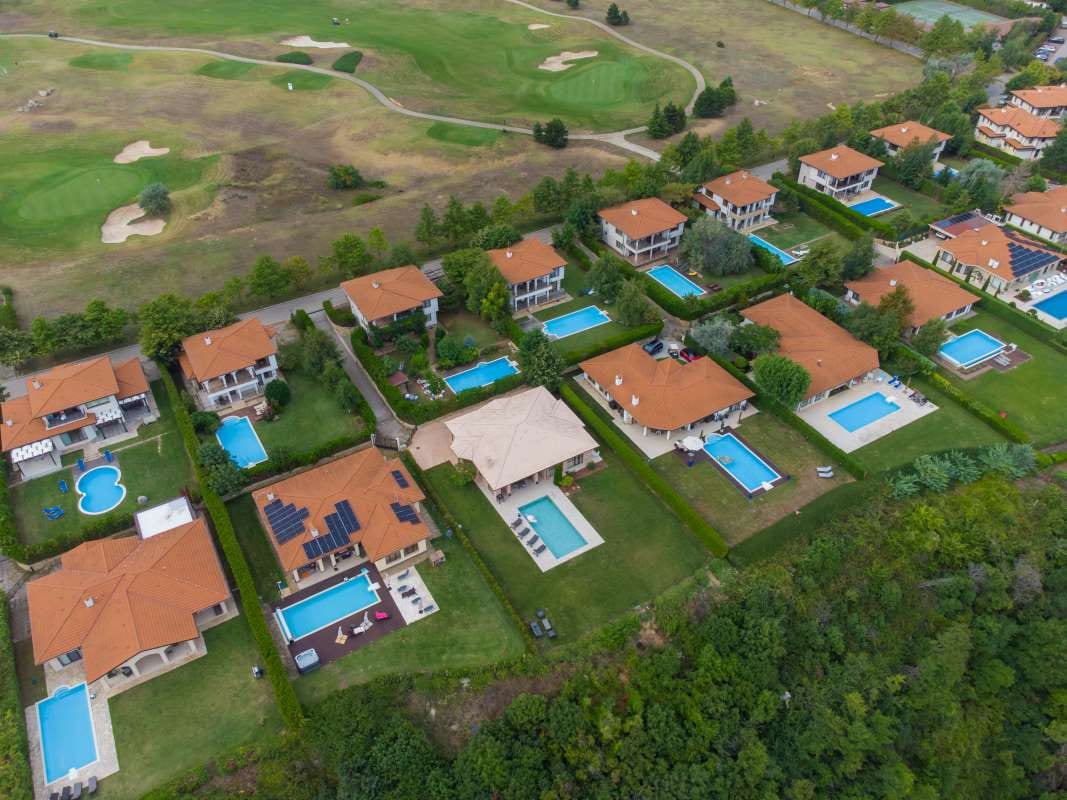
This local profile also rewards route density. In a compact residential area, fewer windshield miles mean better labor efficiency, tighter service windows, and lower fuel exposure. That matters in California, where operating costs can climb quickly if your accounts are too spread out. A route that looks good on paper can become inefficient if the homes are scattered across too many disconnected pockets.
Granite Bay also benefits from a climate that supports regular pool use for much of the year. Even when swimming slows seasonally, pools still need ongoing care. Water chemistry, circulation, debris removal, and equipment checks do not stop just because the calendar changes. That steadiness is one reason pool routes remain durable businesses. In a market like Granite Bay, that durability is reinforced by homeowners who want their pools kept ready, not neglected between peak-use periods.
What to evaluate in pool routes for sale in Granite Bay
When reviewing pool routes for sale in Granite Bay, start with geography. A tight route is easier to run, easier to scale, and easier to staff. If the accounts are clustered in and around Granite Bay neighborhoods, the route has a structural advantage over a route that forces long gaps between stops. Time lost in traffic is labor you cannot bill.
Next, look at service mix. Some routes are built around straightforward weekly residential maintenance. Others involve a heavier share of equipment oversight, green-to-clean work, filter cleanings, or customer requests that stretch beyond routine service. Neither model is automatically better. The question is whether the route matches your operating style. If you want predictable scheduling, routine residential service is usually easier to systematize. If you have strong technical capability and want additional invoice opportunities, a route with more equipment-related work may fit better.
Customer expectations deserve close attention too. In Granite Bay, response time and presentation matter. A route owner who shows up on the scheduled day, leaves the area clean, documents issues, and handles billing clearly will usually be in a stronger position than an operator who relies on low pricing alone. That means route quality is not just about account volume. It is about whether the customers fit a disciplined, professional service model.
Billing quality also matters. California routes should be judged in California terms, not compared loosely to numbers from other states. Labor, compliance, and utility-related operating pressures are different here. Review whether the monthly billing aligns with the actual work required, the age and type of equipment on the pools, and the travel pattern between homes. A route with underpriced accounts can create constant strain even if the area is attractive.
Finally, consider how easy the route will be to absorb into your current operation. If you already run nearby accounts, a Granite Bay route can improve density and reduce dead time. If you are entering the market for the first time, the route should still give you a clear operating footprint rather than a scattered starting point. Good route design lowers friction from day one.
California cost pressure changes how smart buyers underwrite a route
California buyers need to underwrite carefully because utility and operating costs shape real profitability. Pool service is not just labor and chemicals. Equipment run time, customer expectations around circulation, and conversations about energy use all affect how you manage accounts.
One useful signal is electricity cost. The U.S. Energy Information Administration reported California residential electricity at 35.25 cents per kWh in April 2026, according to its Electric Power Monthly dated April 1, 2026. That matters because homeowners often feel the effect of utility bills before they ask service questions. In practice, that means pool professionals in Granite Bay need to be ready to discuss pump run times, variable-speed equipment, seasonal programming, and ways to maintain water quality without wasting energy.
This does not mean electricity costs weaken the case for buying pool routes. It means better operators have an opening to add value. When a customer asks why a pump schedule should change, or whether an aging piece of equipment is driving unnecessary cost, a knowledgeable route owner can answer directly. That strengthens trust and reduces the risk that the relationship becomes a simple price comparison.
Higher utility costs also reinforce the importance of proper equipment observation during regular service. A route owner who notices inefficient settings, failing components, or unusual run patterns can help the customer protect the pool and control avoidable waste. In Granite Bay, where many homeowners expect informed service rather than bare-minimum maintenance, that kind of attention supports long-term account stability.
For buyers, the takeaway is simple: do not judge a route only by gross billing. Judge it by how well the accounts can be serviced under California conditions. Routes that support efficient scheduling, clear service standards, and informed customer communication hold up better when costs rise.
How route pricing works and what buyers should compare
Pool route pricing should be approached with a disciplined framework. At Superior Pool Routes, the structure is straightforward: routes with 40+ accounts are priced at 6× monthly billing, routes with 30–39 accounts at 6.5×, and routes with 20–29 accounts at 7× monthly billing. The broader industry standard is 12×. That difference matters because pricing directly affects how quickly a buyer can convert recurring service revenue into usable operating leverage.
Those multipliers are only part of the picture, though. A smart buyer compares what sits underneath the monthly billing. Are the pools similar in size and service needs, or is the route carrying hidden complexity? Are the homes near one another, or does the route burn time between visits? Are customers aligned with standard weekly service, or does each account demand a different process? The best route is not always the route with the biggest top-line appearance. It is the route that runs cleanly.
In Granite Bay, premium residential conditions can make a route attractive, but buyers should stay practical. A route with strong neighborhood concentration and service consistency usually has more long-term value than a route that looks larger but is operationally uneven. This is especially true if you plan to add technicians over time. A route that can be handed to a trained employee without confusion is far easier to scale.
That is one reason training and transition support matter so much. A route purchase should not leave the buyer to guess about customer communication, service cadence, or account handoff. Superior Pool Routes includes training with every route purchase, which helps turn a route acquisition into an operational system rather than a stack of invoices. The included support matters even more for first-time buyers entering a market like Granite Bay, where customer expectations are high and consistency is visible.
Route pricing should also be evaluated alongside warranty protection. A 60-day account replacement warranty creates a clearer buying environment because it addresses the practical reality that service businesses depend on account continuity. For buyers who want to expand into Granite Bay with confidence, structure matters as much as opportunity.
Building a route that works in Granite Bay over the long term
A good route in Granite Bay should be built to last, not just built to sell. Long-term strength comes from operational fit. That starts with account density, but it extends into service design, communication habits, and customer selection.
Residential customers in this market usually respond well to a professional routine. They want predictable arrival windows, visible results, and fast notice when something on the pad needs attention. If you run clean service logs, keep billing consistent, and handle small issues before they become expensive repairs, you put the route on firmer ground. Retention in pool service is often a product of reliability. Granite Bay tends to reward operators who make reliability obvious.
Equipment awareness is another long-term advantage. California pools commonly feature systems where efficiency and drought-conscious operation matter. A route owner who understands circulation settings, leak warning signs, filter condition, and automation basics can protect both the customer relationship and the route's economics. You do not need every account to be technically complex. You need a route structure that lets you spot and solve problems before they damage trust.
Staffing should be part of the plan from the beginning as well. If you intend to grow beyond owner-operator mode, ask whether the route can be taught. Clear service sequences, logically grouped stops, and customer expectations that fit a standard process make future hiring easier. A route that depends on constant improvisation is harder to scale and harder to protect.
This is where professionally built pool routes have an edge. When routes are designed around territory, buyer goals, and workable service density, they create a stronger operating base than random account accumulation. Granite Bay is too good a market to approach casually. The right route lets you enter with structure, protect your time, and build steadily.
Frequently Asked Questions
Are pool routes for sale in Granite Bay a good fit for first-time buyers?
Yes, if the route is built with tight geography and a service mix you can manage consistently. Granite Bay is a strong market for recurring residential pool service, but customer expectations are high. First-time buyers do best when they start with a route that is organized, trainable, and supported by a clear transition process.
What matters most when comparing pool routes in Granite Bay?
Route density matters most because it affects labor efficiency, fuel use, scheduling, and scalability. After that, review service mix, account quality, billing fit for California conditions, and whether the route can be absorbed into your current operating area or used as a clean starting footprint.
Why do California utility costs matter when buying a pool route?
Utility costs influence customer conversations and equipment decisions. In California, higher electricity costs make homeowners more aware of pump run times and system efficiency. A route owner who can explain those issues clearly adds value and is better positioned to keep accounts stable.
How should I think about pricing for a Granite Bay pool route?
Start with the route multiplier structure, then look deeper at the accounts behind the billing. A well-priced route should also have workable density, consistent service demands, and customers that fit a professional weekly service model. In Granite Bay, strong route design is what turns recurring billing into a durable business.