📌 Key Takeaway: The most profitable pool service zip codes balance high pool density, premium household income, manageable competition, and tight geographic clustering that lets you service 12 to 18 stops per day without burning hours on the road.
Picking your starting zip codes is one of the highest-leverage decisions you will make as a pool service owner. The wrong territory forces you to drive 25 minutes between stops, chase customers who haggle over $5, and burn through fuel margin you cannot recover. The right territory pays you to stay efficient. Below is a practical framework I use when scouting new ground, whether you are building from scratch or expanding an existing book.
Fuel costs can tilt the math even farther. The EIA reported weekly retail diesel in New England at $5.39 per gallon for the week of May 25, 2026, according to its weekly retail diesel data. When fuel is that high, route density matters more, because scattered stops eat into the margin you need to keep the business steady.
Start With Pool Density, Not Population
A zip code with 60,000 residents and 800 pools is worse than a zip code with 18,000 residents and 2,400 pools. Density is what drives route economics. Your goal is to minimize windshield time so you can finish 12 to 18 accounts per day and still get home before dinner.
Pull pool count data from county property appraiser sites. In Florida, Texas, Arizona, Nevada, and California, most counties tag pools as a property feature and let you export the data by zip code. Run the math: divide pool count by square mileage to get pools per square mile. Anything above 200 pools per square mile is a strong candidate. Below 75 and you will spend half your day driving.
Then layer in pool age. Older neighborhoods built in the 1980s and 1990s often have aging plaster, dated pumps, and owners who would rather pay a pro than DIY. Newer builds (post-2015) often have homeowners still in the honeymoon phase doing it themselves. Both can work, but the conversion economics are different.
Match Income to Your Service Model
Median household income determines which pricing tier will stick. If you plan to run a $150 to $200 per month full-chemical service, target zip codes where median household income exceeds $90,000. That household can absorb your bill without a second thought. If you are running a leaner $110 chlorine-tab route, $65,000 to $85,000 median income works fine and competition is usually thinner.
Pull income data from census.gov or use a free tool like ZipAtlas. Cross-reference with median home value. Zip codes with home values between $400K and $900K tend to hit the sweet spot: enough discretionary income to pay willingly, but not so wealthy that homeowners expect concierge-level service for the same price.
If diesel is pushing up your weekly operating cost, that income fit matters even more. A territory that supports stronger monthly billing gives you more room to absorb fuel swings without changing your service standards or chasing low-margin work.
Read the Competitive Landscape Honestly
Open Google Maps, search "pool service" in your candidate zip code, and count the named businesses with 20 or more reviews. Five or fewer is green light territory. Six to twelve means competitive but workable. Thirteen or more and you are walking into a knife fight unless you have a genuine differentiator.
Read the one-star and two-star reviews of established competitors. You are mining for service gaps: missed visits, poor communication, surprise chemical charges, no-shows on equipment calls. If three of the top five competitors share the same complaint pattern, you have an opening. Build your value proposition around that gap before you ever knock on a door.
Also check Nextdoor and local Facebook groups. Homeowners post about pool service constantly. You will quickly learn which companies are growing, which are slipping, and what pricing residents consider normal.
Geographic Clustering Beats Geographic Spread
A common rookie mistake is taking any account that calls, regardless of location. Six months in, you have 40 accounts spread across 80 square miles and you are spending more on gas than chemicals. Discipline yourself early: only accept accounts inside your target zip codes, even if it means turning down work.
Draw a tight polygon on a map covering two to four adjacent zip codes. That is your service area. When you advertise, market only inside that polygon. When you buy a route, prioritize listings where the accounts already cluster. Browsing pool routes for sale is a fast way to see what realistic density looks like in your state, since broker listings publish the geographic footprint of each book.
The same rule protects you when fuel spikes. Dense routes absorb higher diesel costs better than scattered competition because every stop adds value instead of just mileage. That is why a smaller, tighter service area often outperforms a bigger one that looks good on a map but bleeds time on the road.
Climate and Seasonality Matter More Than You Think
In year-round markets like South Florida, Phoenix, and coastal California, you bill 12 months a year and your route value multiplier is higher. In seasonal markets like North Texas, Georgia, or the Carolinas, you bill full price 7 to 8 months and reduced winterization rates the rest. Both models work, but the cash flow rhythm is completely different.
If you are choosing between a year-round zip code and a seasonal one with higher pool counts, run a 12-month revenue projection on each. Seasonal markets often look great on paper until February rolls around and you are scrambling for repair work to bridge the gap.
Fuel volatility adds one more reason to respect geography. A tight year-round route in a dense market gives you more control when diesel moves against you, while a spread-out territory turns every service day into a transportation problem.
Validate With a Drive-Through
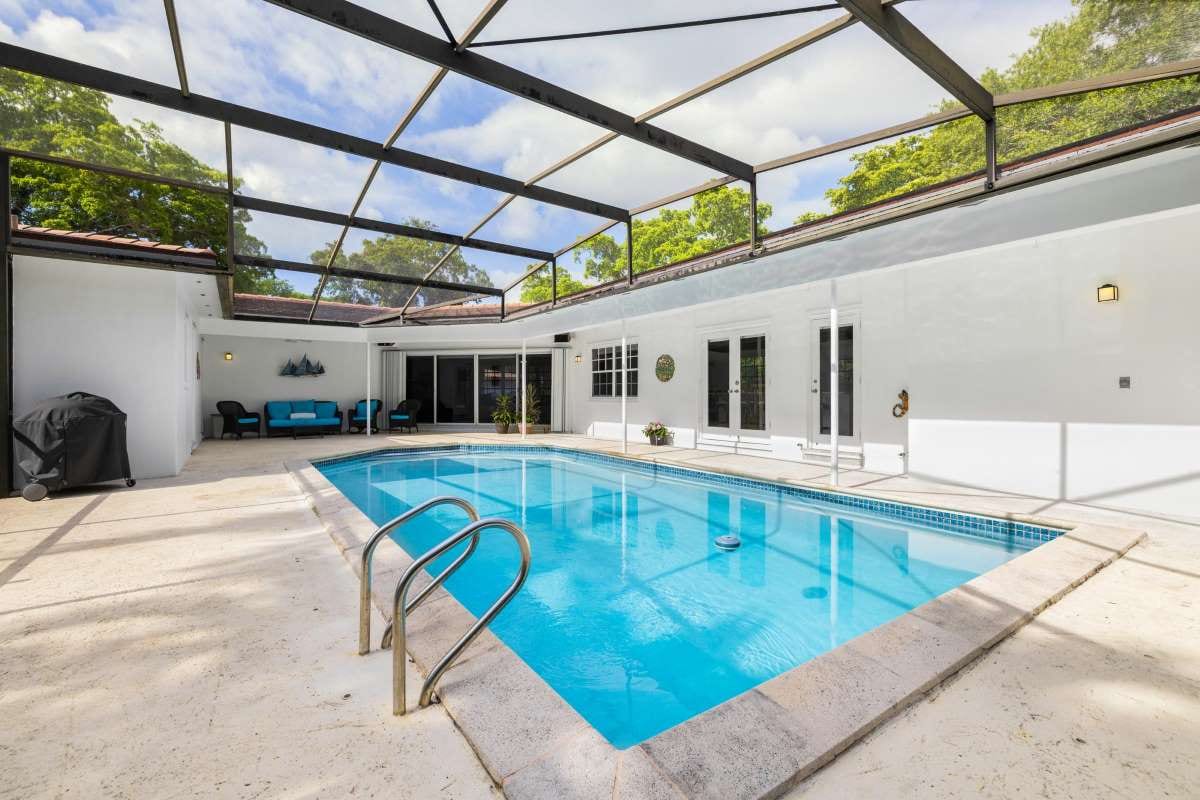
Before you commit, spend a Saturday driving every neighborhood in your target zip codes. Count the pool cages and screen enclosures visible from the road. Note the condition of landscaping (a proxy for whether homeowners outsource home services in general). Look for green water, algae lines, and equipment pads that have not been touched in months. Those are your future customers.
Also note HOA signage. Some HOAs maintain preferred-vendor lists that lock you out, while others have aging contracts you can displace. Knock on a door or two if you are comfortable. Ten minutes of conversation will tell you more than ten hours of spreadsheet work.
A drive-through also reveals whether the territory makes operational sense in real life. A zip code can look good on paper and still fail if the streets force constant U-turns, gated access delays, or long dead-head stretches between clusters.
Use Existing Route Data as a Shortcut
If the analysis feels overwhelming, you can compress months of research by buying into a pre-built book in a proven zip code cluster. The accounts are already validated, the routing is already tight, and the income flows from day one. Reviewing current pool routes for sale by location gives you a real-world benchmark for what density, pricing, and route geography should look like in markets across Florida, Texas, Arizona, Nevada, and California.
That shortcut matters when you want speed without guessing. You still need to know your zip codes, but you do not need to reinvent the territory screen every time you expand. A well-built pool route in the right area turns local data into predictable monthly service work.
Whether you build organic or buy in, the principle is the same: pick zip codes where the math works before you spend a single dollar on trucks, chemicals, or marketing. The territory you choose today will shape your margins for the next decade.