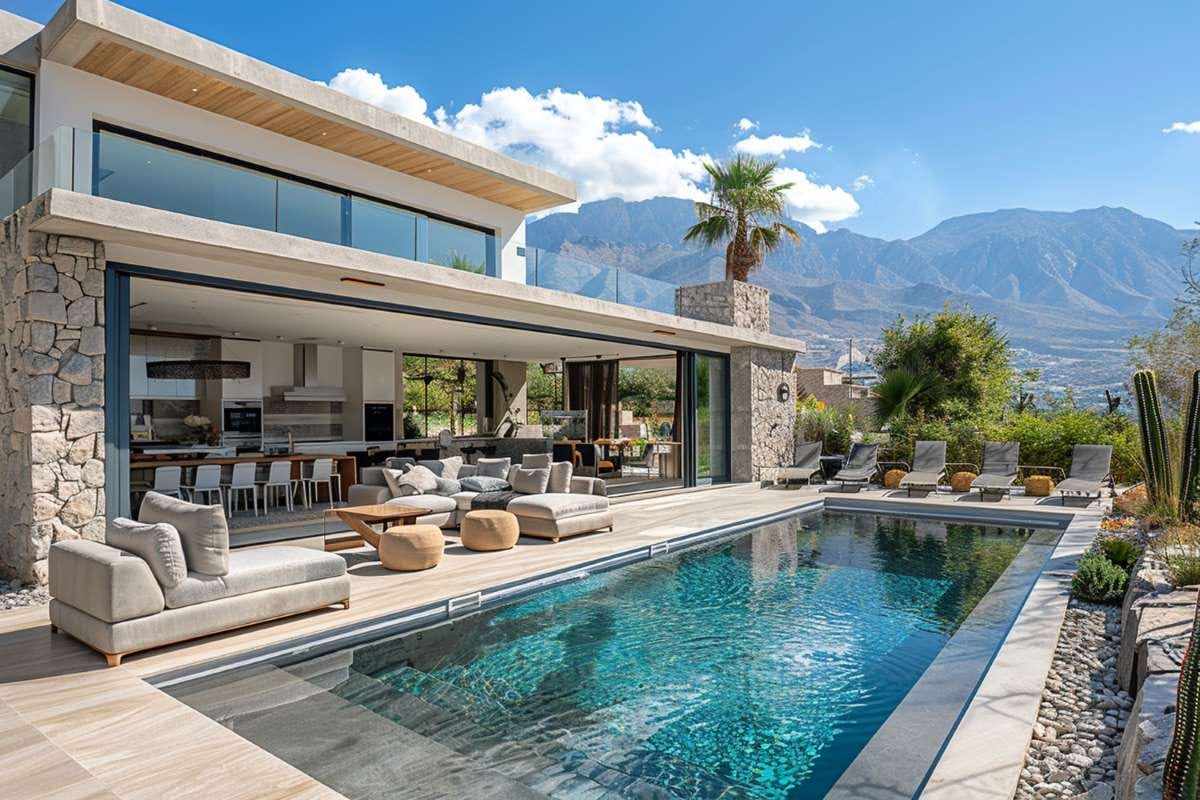
📌 Key Takeaway: Building a profitable pool route across Florida's diverse markets requires choosing the right neighborhoods, defining a tight service menu, and pairing day-one accounts with disciplined route density.
Why Florida Routes Outperform Most Service Markets
Florida's year-round sun, high pool density, and steady population growth make it one of the most attractive states in the country to operate a pool service company. In places like Osprey, Orlando, Jupiter, Stuart, and South Apopka, homeowners treat their pools as core lifestyle features, not seasonal amenities. That means weekly service is the norm, not a luxury add-on, and route operators can plan around recurring monthly revenue rather than seasonal spikes. Florida's median household income was $74,568 according to the Census ACS 2024 profile, dated December 31, 2024, which helps explain why service buyers in many neighborhoods will pay for consistency instead of shopping on price alone. For owners building from scratch, the challenge isn't finding demand. It's organizing that demand into a tight, profitable route that minimizes drive time and maximizes stops per day.
Picking the Right Submarket: Osprey and Sarasota County
Osprey sits between Sarasota and Venice along the Gulf, with a mix of waterfront estates, gated communities, and established single-family neighborhoods. Pool ownership skews high, and many properties are owned by snowbirds who want a reliable local technician handling weekly chemistry and equipment checks. When evaluating Osprey for a new route, drive the neighborhoods at midday on a weekday. Count visible pool cages, look for service truck signage, and note how many homes show signs of deferred maintenance. Those visual cues tell you where competitors are saturating and where there's room to win accounts. In markets where household income is stronger, homeowners are also less likely to delay maintenance work once they find a technician they trust, which supports better retention and cleaner route economics. Quality routes here tend to sell at a premium because customer retention is so strong.
Orlando and Orange County: Scale and Density
Orlando's residential pool count is enormous, and Orange County keeps adding new subdivisions every quarter. The opportunity is scale, but the trap is sprawl. A route that stretches from Winter Garden to Lake Nona will burn through fuel and labor hours faster than it generates revenue. Smart operators concentrate inside a single corridor, usually a 10-to-15-mile pocket, and refuse accounts that fall outside that zone until they can build a second cluster. If you're shopping pool routes for sale in Orange County, ask for the ZIP code distribution of the accounts before anything else. Tightness beats volume every time. The same income backdrop matters here too: neighborhoods with stronger household buying power are easier to price for full-service weekly care, especially when the route already looks organized and professional.
Jupiter and Stuart: Premium Coastal Accounts
Jupiter and Stuart sit on the Treasure Coast with a heavy concentration of high-end homes, country club communities, and saltwater pools. Customers in these markets expect punctuality, professional presentation, and detailed service reports. They also pay 20 to 40 percent more per month than the state average for full-service weekly maintenance. Building a route here means investing more in branded uniforms, a clean truck, and digital service tickets, but the per-stop revenue and referral velocity make up for it quickly. Many Jupiter and Stuart owners are referred by neighbors, so a single strong relationship inside a gated community can produce three or four additional accounts within a month. This is where Florida's income profile shows up in the field: higher-income households are more comfortable paying for a technician who shows up on time and documents the work.
South Apopka and the Greater Apopka Growth Zone
South Apopka and the surrounding Apopka submarket have been growing fast, with new construction pushing the residential footprint outward. New-build pools mean newer equipment, fewer surprise repairs, and homeowners who are actively shopping for a service provider for the first time. That makes it one of the easiest places in Central Florida to win first-time customers, especially if you canvass right after closing dates. Pair the South Apopka growth with adjacent Orlando density, and you can build a route that runs five productive days a week without long deadheads. In a state where the median household income sits at $74,568, even growing suburbs can support a disciplined service model as long as the route stays tight and the presentation stays clean.
A Practical Build Sequence
The owners who scale fastest follow a repeatable sequence. First, pick one geographic anchor and refuse to dilute it. Second, define exactly two service tiers, typically a chemistry-only plan and a full-service plan, so pricing conversations stay short. Third, set a minimum monthly price below which you will not take an account, even if the prospect is begging. Fourth, document every stop with photos and a digital ticket from day one so customers see the value they're paying for. Fifth, ask every happy customer for one neighbor referral at the 60-day mark. That single habit can compound a route from 20 stops to 60 stops inside a year. The reason this works in Florida is simple: the market supports recurring service, but only operators with discipline capture the margin.
Equipment, Chemicals, and Truck Setup
A new pool tech needs less gear than most people assume. A reliable mid-size pickup or van, a 35-gallon chemical tote, a leaf rake and vacuum head, a telescoping pole, a brush set, a Taylor K-2006 test kit, and a tablet for digital tickets will cover almost every weekly stop. Buy chlorine and acid in bulk from a local distributor rather than retail, and track your cost per account every month. Most underperforming routes leak profit through over-application of chemicals, not labor, so a simple chemistry log pays for itself within a quarter. In better-income neighborhoods, that professionalism also supports smoother renewals because customers can see a process, not just a truck.
Marketing Without Burning Cash
Pool route marketing rewards consistency over flash. A vehicle wrap, a Google Business Profile with weekly photo posts, and a simple referral incentive will out-produce most paid ad campaigns. If you want to accelerate, door-hangers in the streets immediately adjacent to your existing customers convert at far higher rates than cold mailers because neighbors already see your truck each week. Skip the expensive lead-generation contracts until you've maxed out organic referral capacity. That approach fits Florida especially well because the customer base is broad, recurring, and comfortable paying for dependable service when the route looks established by reputation, not by promises.
When to Buy Instead of Build
Building from zero takes 12 to 24 months to reach a livable income. Buying a book of business can compress that to a single afternoon. If your capital position supports it, evaluating curated pool routes for sale inside your target submarket lets you start with a predictable monthly revenue base, an existing customer relationship, and a defined service area. Whether you build, buy, or blend the two approaches, the operators who win in Osprey, Orlando, Jupiter, Stuart, and South Apopka are the ones who treat route density as the single most important metric on the dashboard. In Florida, that discipline matters even more because the state supports steady demand across a wide range of neighborhoods and income levels.
Related Articles
- How to Start a Pool Cleaning Business: Orlando, Orange County, Osprey, Sarasota County, Bonita Springs, Lakeland, and Estero, FL
- Swimming pool routes near me: Orlando, Orange County, Sarasota, Sarasota County, Jupiter, Palm Beach, North Port, Largo, Pinellas, Florida
- Buy Pool Routes in Orlando, Osprey, Jupiter, Doral, and West Melbourne, Florida
- Buy Pool Routes in Osprey, Sarasota County, Cape Coral, Lee County, Winter Haven, Apopka, and Spring Hill, Florida