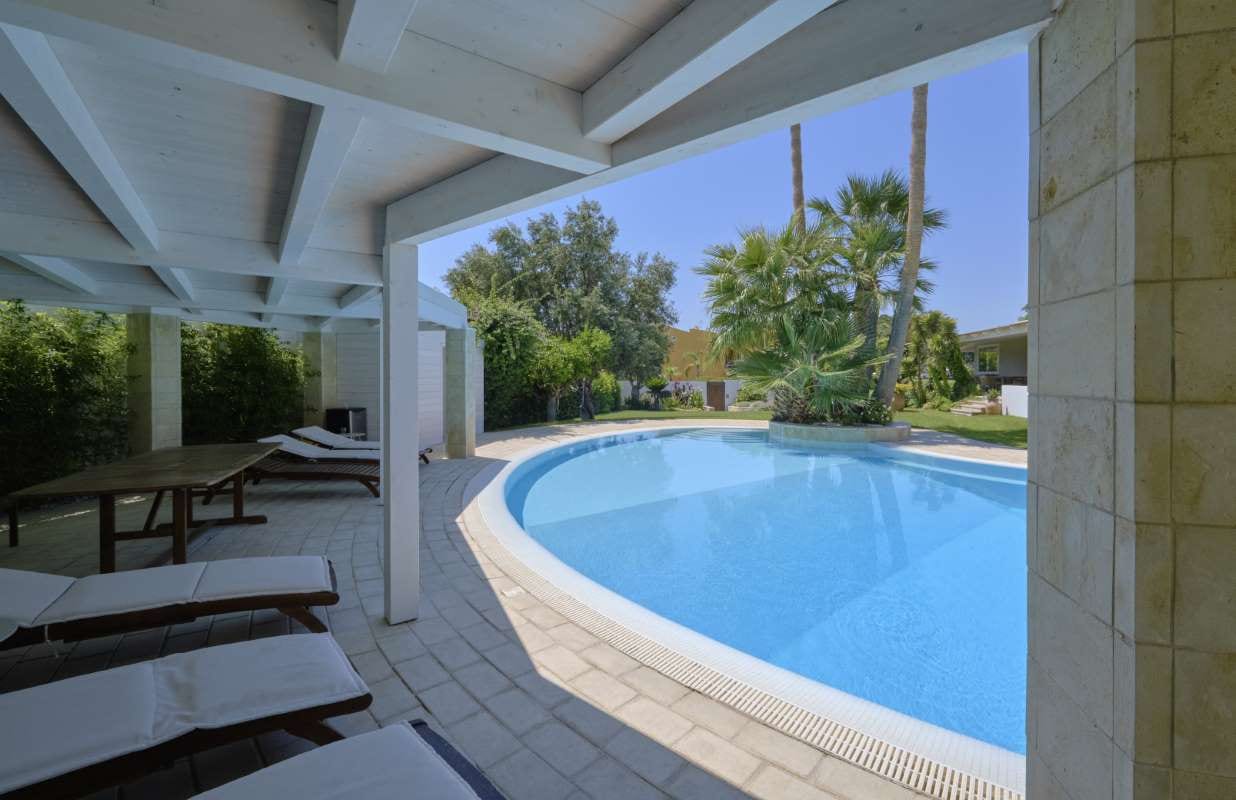
📌 Key Takeaway: Houston's combination of year-round pool usage, sprawling suburban growth, and a fragmented service market makes it one of the most attractive metros for buying, building, or expanding a pool service business right now.
Houston is one of the most pool-dense metros in the country, and the operators who treat it that way are the ones quietly building seven-figure service businesses. Between the heat, the new construction in Katy, Cypress, Pearland, and The Woodlands, and the steady churn of homeowners who would rather pay than skim leaves themselves, the demand side of the equation is doing most of the heavy lifting. The opportunity is in choosing where to plug in.
That demand profile gets even more interesting when you compare Houston with other growth markets. Arizona, for example, has strong pool-use habits and a different operating rhythm, but the Census ACS 2024 median household income there was $79,964, according to data.census.gov dated December 31, 2024. The point is not that one market wins every comparison. The point is that Houston sits in a class of its own because of its scale, density, and customer willingness to pay for reliable service.
Why Houston Rewards Pool Service Operators
The math in Houston works because the pool-using season is effectively year-round. Owners who shut down pools in Dallas or Atlanta keep them running here, which means weekly chemical and cleaning visits do not collapse to a biweekly winter schedule. That stability translates into predictable monthly recurring revenue, and predictable revenue is what makes route-based businesses financeable and resellable.
Density also matters. In neighborhoods like Memorial, Bellaire, Sugar Land, and the master-planned communities along the Grand Parkway, pool penetration in some subdivisions runs north of 40 percent. A technician who plans routes well can clean 18 to 22 pools a day with drive times under seven minutes between stops. Compare that to rural Texas markets where the same revenue requires twice the windshield time, and the per-hour economics of a Houston route start to make sense.
The customer mix helps, too. Houston has enough high-value residential pockets and enough volume neighborhoods to support both premium service and efficient route density. That combination lets operators build routes that can absorb fuel swings and labor pressure better than scattered service books.
Buying an Pool Route Versus Building from Zero
The fastest path into the Houston market is acquisition. Building a 60-account book organically takes 18 to 36 months of door hangers, Google Ads, and Nextdoor posts. Buying a comparable book from a retiring or relocating operator gives you that revenue on day one, plus the schedule, the chemical preferences, and the gate codes that took the previous owner years to compile.
If you are evaluating pool routes for sale in Houston, pay close attention to account tenure, billing method, and geographic clustering. A route where 80 percent of accounts have been on autopay for three or more years is worth meaningfully more than a route with the same gross billing but month-to-month relationships and manual invoicing. Tight clusters also matter: a 50-stop route spread across 35 ZIP codes will burn you on fuel and time even if the headline revenue looks identical to a tighter book.
That same logic applies if you are comparing Houston to nearby growth markets. The best pool route is the one that gives you compact service days, not just a big top line. In a city this large, the route map matters as much as the account list.
Operational Levers That Actually Move the Needle
Once you own accounts in Houston, three operational levers tend to drive the difference between a route that nets 35 percent and one that nets 55 percent. The first is chemical purchasing. Buying trichlor, cal hypo, and muriatic acid by the pallet from a regional distributor instead of by the bucket at a pool store can cut chemical cost per stop by 30 to 40 percent. At scale, that is real money.
The second lever is routing software. Tools like Skimmer, Pooltrackr, or even a well-configured Google Sheet with optimized stop sequences can shave 45 to 60 minutes off a tech's day. Multiply that across five techs and you have either room for more accounts or shorter days that help with retention.
The third lever is upsells. A pool that needs a new pump motor, a salt cell, or a heater repair represents two to ten times the margin of a monthly service visit. Operators who train their techs to spot and quote repairs on the spot, rather than scheduling a callback, capture work that would otherwise go to a competitor.
Houston also rewards operators who understand neighborhood-level differences in spending power. Premium pockets can support faster response times, stronger communication, and more repair conversion, while volume neighborhoods reward efficient routing and disciplined service delivery. The business still comes down to the same fundamentals: move efficiently, solve problems quickly, and keep customers on the books.
Strategic Expansion Plays Specific to Houston
For operators already in the market, Houston offers expansion paths that smaller metros do not. Commercial accounts at apartment complexes and HOAs in areas like Midtown, EaDo, and the Energy Corridor pay quarterly or annually, often at premium rates, and a single property manager relationship can yield 15 to 40 pools in one signature. The catch is insurance and bonding requirements, so make sure your coverage is in order before pitching.
Geographic expansion is the other obvious play. A book centered in West Houston can typically absorb a smaller route in Katy or Cypress without adding a truck, because the drive times overlap. Browsing current Texas pool service route listings periodically is a cheap way to spot these tuck-in opportunities before competitors do. The operators who grow fastest in Houston tend to buy two or three small routes a year rather than waiting for one giant transaction.
The broader Houston market also gives you room to stage expansion instead of forcing it. That matters when you want to add a truck, test a new tech, or push into a new suburb without blowing up your service density. Pool routes scale best when each new stop strengthens the rest of the route instead of stretching it thin.
Marketing, Technology, and Retention
Houston homeowners search for pool service the same way they search for everything else, which is on their phones. A Google Business Profile with current photos, weekly review requests sent through your CRM, and a website that loads in under two seconds will outperform paid ads in most ZIP codes. Local SEO in this market is still winnable for service businesses willing to put in 90 days of consistent effort.
Retention is where most operators leak revenue. A 5 percent monthly cancellation rate sounds small until you realize it means losing roughly half your book every year. Simple practices like leaving a printed service report at every visit, texting customers when you arrive, and following up personally when a cancellation request comes in can pull churn down to 1 to 2 percent monthly. That single metric, more than pricing or marketing spend, determines whether your business compounds.
Customer expectations are not abstract here. In a market this large, homeowners notice the difference between a business that communicates and one that disappears between invoices. The operators who stay visible, document their work, and respond quickly keep more accounts and spend less replacing them.
Compliance, Training, and Long-Term Defensibility
Texas does not require a license to clean pools, but Harris County health code applies to commercial properties, and any work involving gas heaters or main electrical panels requires the appropriate trade license or a subcontractor. Operators who get their CPO certification, document their chemical handling procedures, and carry general liability plus a commercial auto policy of at least one million dollars look meaningfully more professional to commercial buyers and to anyone eventually buying the business.
Training your techs is the long game. A tech who can diagnose a bad capacitor, balance water in a saltwater pool, and explain phosphate remediation to a homeowner is worth two techs who can only skim. Pay for the schooling, build the SOPs, and the business becomes something you own rather than something that owns you. Houston rewards that kind of patience, and the operators willing to play the long game here are the ones who will still be standing five years from now.
Houston also benefits from the same discipline that makes other warm-weather markets durable: year-round work, recurring visits, and a customer base that values consistency over bargain pricing. That is why pool routes in this market continue to look attractive for both first-time owners and existing companies that want to grow without starting from scratch.
Related Articles
- Explore prime pool routes for sale in Flagstaff, Buckeye, San Tan Valley, Goodyear, and Avondale, Arizona. Discover economic growth trends, industry insights, and why Superior Pool Routes is your best choice for reliable pool service opportunities.
- Growth Opportunities for Pool Companies in Travis County, Texas
- Growth Opportunities in Liberty County, Texas
- Growth Opportunities in Liberty County, Texas for Pool Companies