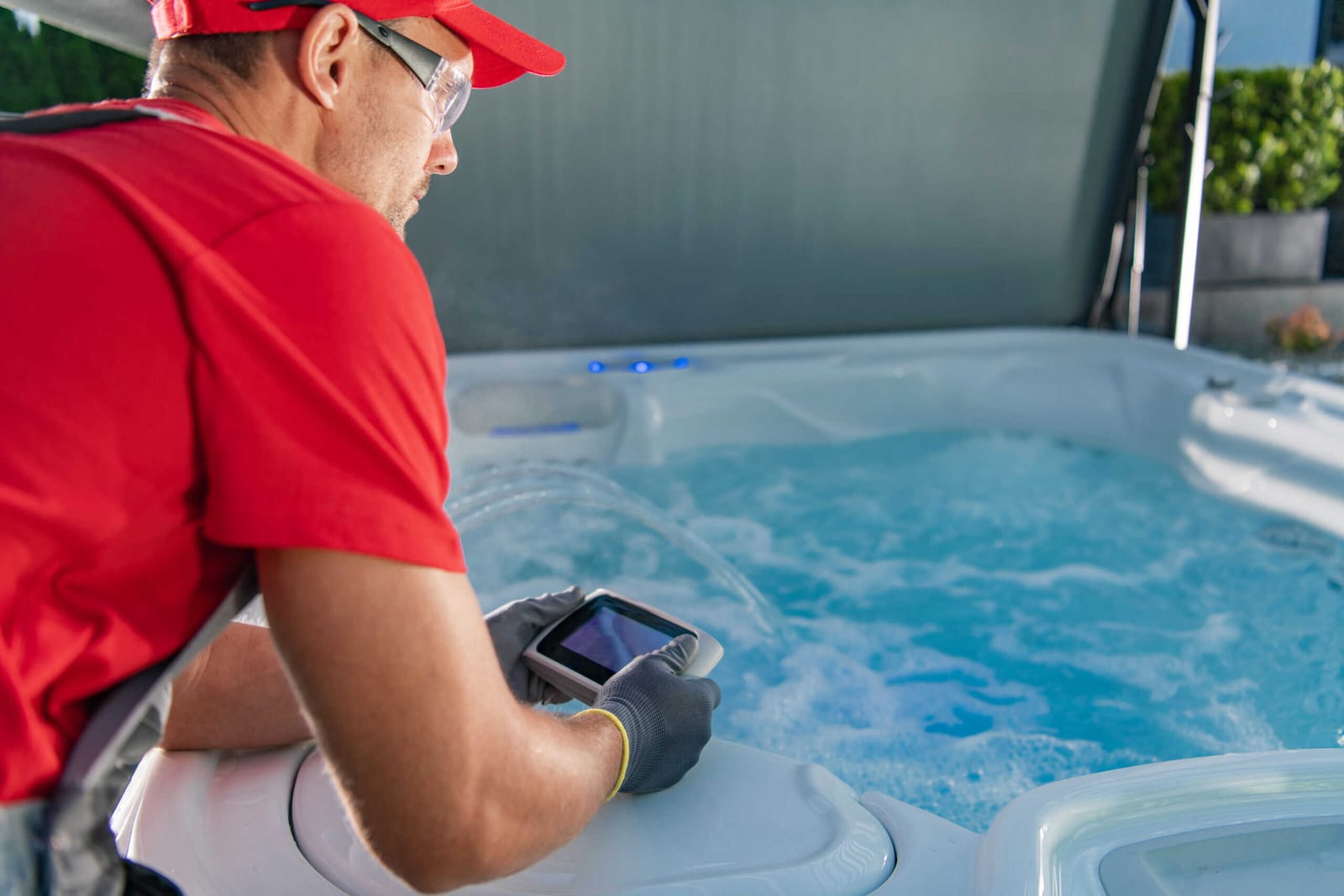
📌 Key Takeaway: In Queen Creek's fast-growing pool market, building tight geographic density into your service route is the single most effective way to lower your cost per stop, increase daily revenue, and create a business that compounds in value over time.
Queen Creek, Arizona has transformed from a sleepy agricultural town into one of the Phoenix metro's fastest-growing communities. Subdivisions with large lots, resort-style backyard pools, and year-round warm temperatures make pool maintenance a near-universal need here. For pool service entrepreneurs, that growth represents a real opportunity — but only if you approach route-building with a density-first mindset from day one.
Why Density Matters More Than Raw Account Count
A pool service business with 80 accounts tightly clustered within a few square miles will almost always outperform one with 120 accounts spread across a large territory. The reason is simple: travel time is dead time. Every extra minute spent driving between stops is a minute you cannot bill, and it silently erodes your profit margin whether you notice it or not.
In practical terms, high route density means:
- More stops per day without extending your hours
- Lower fuel and vehicle wear costs per account
- Easier scheduling when you need to fit in a repair call or emergency service
- Less technician fatigue, which translates directly into better service quality
When you are evaluating whether to take on a new account or acquire additional routes in the Queen Creek area, distance from your existing cluster should be one of the first filters you apply.
Mapping Your Target Zone Before You Grow
Before aggressively marketing or acquiring accounts, take time to define a geographic target zone on a map. In Queen Creek, this means identifying which ZIP codes and subdivisions anchor your current business, then drawing a realistic service radius around that core — typically 5 to 8 miles for a single technician.
Look at the density of pool homes within that radius. Queen Creek's newer master-planned communities (many built after 2010) tend to have high pool penetration rates, often exceeding 35 percent of single-family homes. Prioritizing those neighborhoods when marketing lets you fill your route faster and stack accounts close together from the start.
Once you have your target zone mapped, be disciplined about it. Accepting accounts outside the zone because they are "easy wins" is one of the most common mistakes new route owners make. A handful of outlier accounts can add 45 minutes to your day and make it nearly impossible to service the dense core efficiently.
Acquiring Existing Accounts to Jumpstart Density
Building density purely through organic marketing can take years. Acquiring accounts or purchasing an existing route is often the faster and more cost-effective path — especially in a market like Queen Creek where competition for new customers is intensifying.
When you browse pool routes for sale, look specifically for accounts that overlap with your existing service area or fall squarely within your target zone. Even a small acquisition of 20 to 30 accounts in the right neighborhood can tip a marginal route into a genuinely efficient one. The math changes quickly when you eliminate 30 minutes of daily driving.
Key things to evaluate when assessing an acquisition:
- The physical location of each account relative to your existing stops
- Average monthly billing per account (and whether rates are at market)
- The age and condition of equipment at each property
- Customer tenure — long-term customers churn less and typically accept rate adjustments more readily
A route with slightly lower average billing but excellent geographic overlap with your core territory may deliver more value than a higher-billing route that scatters your day across the East Valley.
Scheduling Strategies That Protect Your Density Gains
Route density is not just a geographic concept — it is also a scheduling concept. Even a geographically tight route can become inefficient if accounts are scattered randomly across your weekly calendar.
Organize your weekly schedule by neighborhood or subdivision, not by customer preference alone. Assign Monday to one cluster, Tuesday to another, and so on. When you add new accounts, slot them into the day that already serves their neighborhood rather than the day with the most open time slots.
This discipline pays off compounding dividends. As your Queen Creek route fills in, you will find that each additional account in an existing neighborhood adds almost zero incremental drive time. That is when profitability starts to accelerate.
Using Local Market Knowledge to Fill Gaps
Queen Creek's growth patterns create natural opportunities to stay ahead of demand. New subdivisions open regularly, and homeowners in brand-new communities are actively searching for pool service before their first summer season hits. Getting in front of those customers early — through neighborhood Facebook groups, Nextdoor, and HOA bulletin boards — lets you claim density before competitors do.
Pay attention to which parts of Queen Creek are currently underserved. If your target zone has a high concentration of pools but few established service providers, you have pricing power and can grow faster. If you are entering an area with entrenched competition, you may need to differentiate on service quality, communication, or response time rather than price.
For those ready to expand beyond organic growth, exploring pool routes available for purchase in the Queen Creek and Southeast Valley area can accelerate the process significantly. Buying into a customer base skips the slow early months and gets your route density to a functional level much sooner.
Retention: The Other Half of the Density Equation
High retention is what turns short-term density gains into long-term business value. Every account you lose punches a hole in your route and forces you to find a replacement customer in exactly the right location — which rarely happens quickly.
Protect your retention rate by:
- Communicating proactively when service is delayed or a problem is found
- Following up after chemical treatments or equipment repairs
- Conducting a brief annual review with customers to address any concerns before they escalate
- Keeping your pricing competitive with the local market while clearly communicating the value you provide
In a tight-knit community like Queen Creek, where neighbors talk to each other and share recommendations freely, a reputation for reliability and responsiveness is one of your most powerful growth tools. A single loyal customer in a dense subdivision can become the anchor for five or six additional accounts over time.
The Long-Term Payoff
A dense, well-retained pool route in Queen Creek is more than a steady income stream — it is an appreciating asset. Routes with strong geographic concentration and low churn command higher sale prices when the time comes to exit, because a buyer can clearly see the operational efficiency baked into the territory.
Whether you are just starting out or looking to expand an existing operation, density should guide every decision you make about where to market, which accounts to accept, and how to structure your schedule. The operators who build the tightest routes in this market will be the most profitable — and the most valuable — businesses in the years ahead.